Daniel Craig does the best work of his career as a drunk who wants a young man who will not quite want him back. For ninety minutes Guadagnino’s Burroughs adaptation is sharp and sad; then it takes a turn and loses its way.
Luca Guadagnino has filmed the short novel Guadagnino’s Burroughs wrote in the early 1950s: an American called Lee drinks his way round Mexico City, shoots heroin when he can get it, and falls hard for a younger man who is not sure what he wants. Daniel Craig plays Lee and Drew Starkey plays the young man, Eugene Allerton. The result is two films. The first is a sharp, sad, funny picture of a middle-aged man making a fool of himself for love. The second leaves the city and comes back with less than it went for.
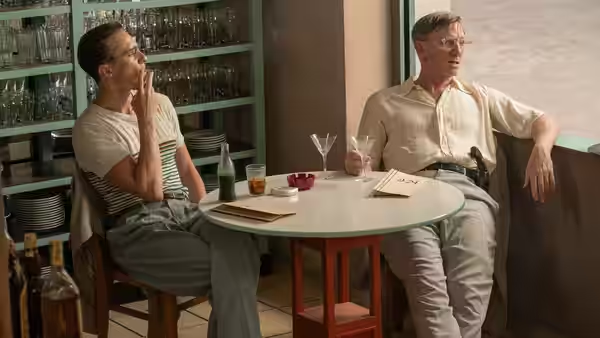
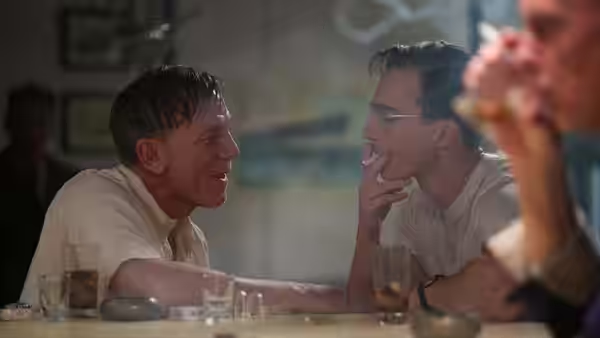
Craig is the reason to go. He gives Lee a cream suit, a hat, glasses and a walk that is half swagger and half stagger, and he makes the man ridiculous and impossible to look away from. He talks too much in bars, keeps telling a story after the listener has gone, and pleads with his eyes while his mouth is still being witty. There is no vanity in it. He is sweaty, needy, sometimes cruel and often funny, and when Allerton agrees to a second drink his face does something we have not seen it do before.
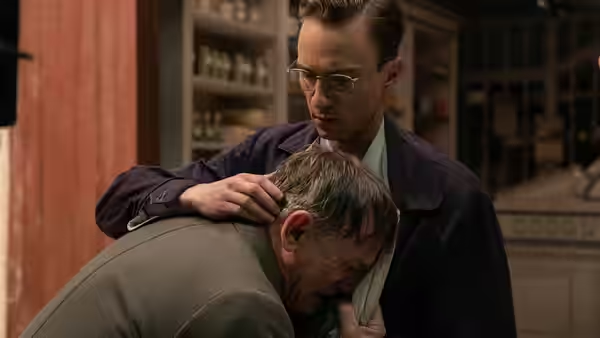
Starkey has the harder job, which is to be wanted and to give almost nothing back. He plays Allerton as a boy who accepts the drink, accepts the dinner, accepts more than that, and then looks at the door. Whether he feels anything is the question the film keeps asking, and Starkey is careful never to answer it. Jason Schwartzman, dishevelled and gossipy as Joe Guidry, supplies most of the laughs.
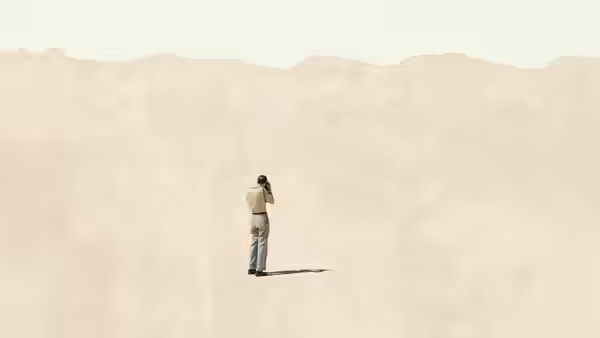
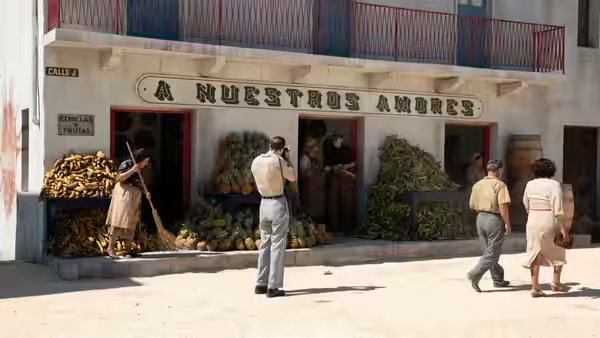
Guadagnino has built Mexico City on studio stages and does not pretend otherwise. Stefano Baisi’s streets end at a painted sky, the bars glow like lamps and the whole town looks remembered rather than photographed. Sayombhu Mukdeeprom shoots it in warm ambers by day and deep blues at night, so that Lee’s pale suit is always the brightest thing in the frame. Jonathan Anderson keeps Lee in that suit and Allerton in plain white shirts, so the eye goes where Lee’s goes. Trent Reznor and Atticus Ross supply a low, aching score, and Guadagnino lays songs recorded decades after the period over the pictures, which jars for a minute and then makes sense: this is a man’s memory of 1950, not 1950.
The film has one image it returns to and it is the one we took home. Lee sits beside Allerton in a cinema, and while his real hand stays in his lap a second, translucent hand reaches out and touches the boy’s face. It is a simple effect and it moved us more than we thought possible, because it shows exactly what it is to want somebody without permission. Lee says early on that he is not queer, he is disembodied, and the hand is that line made visible.
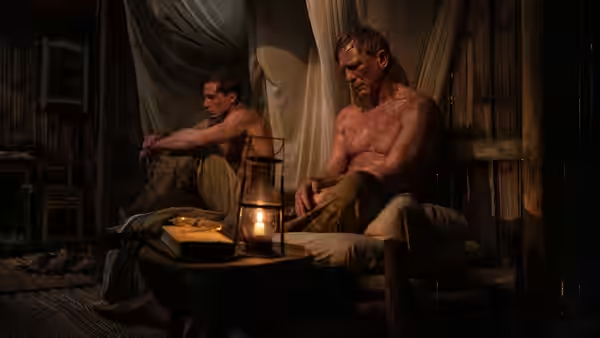
The second half takes a turn we will not describe. Lesley Manville arrives in it, good and odd for the twenty minutes she has. What we can say is that it runs far too long, that Guadagnino reaches for effects where Craig’s face had been doing the work, and that after the third such image we had understood the point and were waiting for the fourth. We were bored, then annoyed. Marco Costa’s editing, quick and elliptical in the city, goes slack here, and the epilogue is longer than it needs to be.
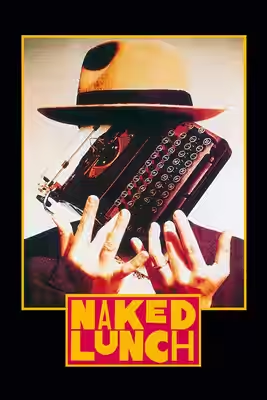
Justin Kuritzkes also wrote Challengers (2024), and the two films are about the same thing: wanting somebody who enjoys being wanted. There it was played fast, as a game. Here it is played slow, as an illness, and the first hour shows the slow version works. David Cronenberg’s Naked Lunch (1991) made Burroughs’s world filthier and stranger than this; Guadagnino makes it prettier and sadder, and anyone hoping for grime will find the sets have been swept.
It runs 138 minutes and carries an 18, deserved: the sex is explicit and the needles go in on camera. See it for Craig, who is doing the best work of his career, and for the first ninety minutes, which are a proper film about loneliness. After that, feel free to make a cup of tea; the film will still be away when you get back.