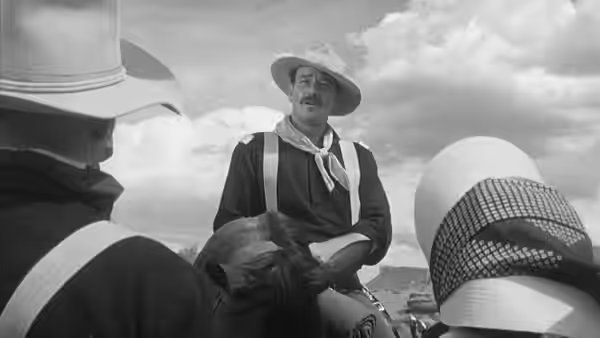
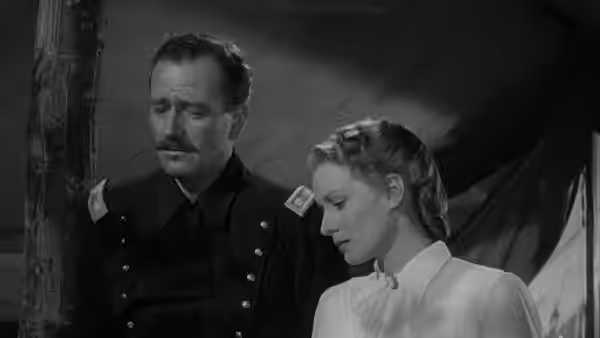
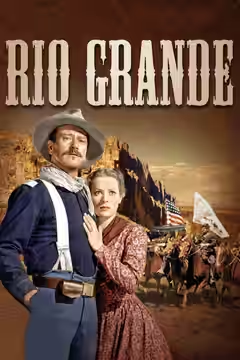
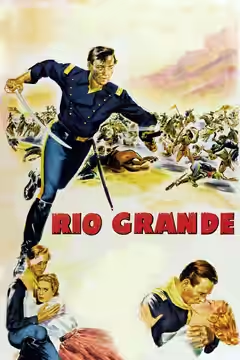
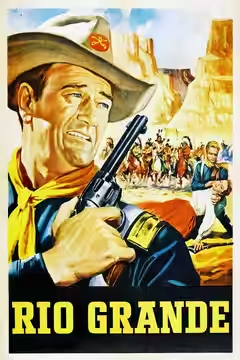
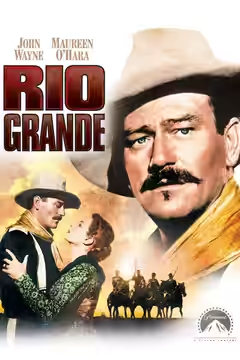
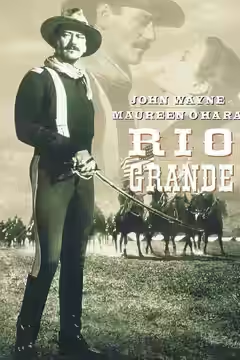
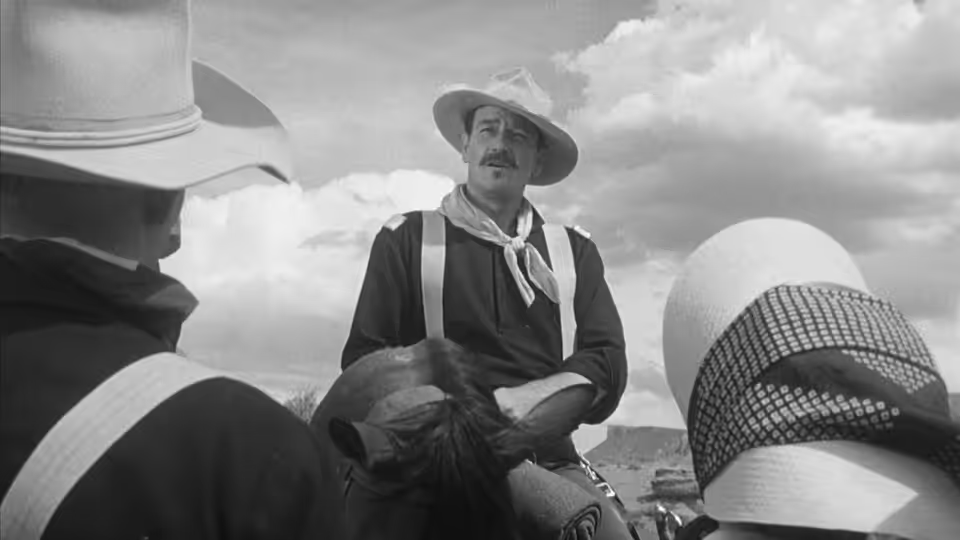
Kirby Yorke (John Wayne) sits on horseback among soldiers
Film review

Rio Grande

1950 · Directed by John Ford · 1h 45m

In a sentenceJohn Wayne has the rank; Maureen O’Hara has no particular reason to be impressed

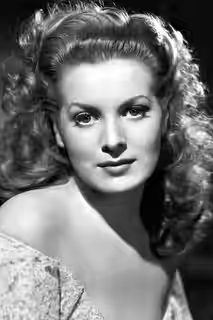
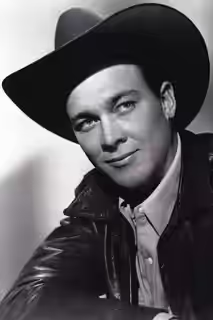
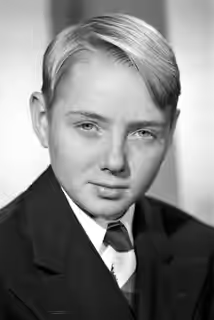
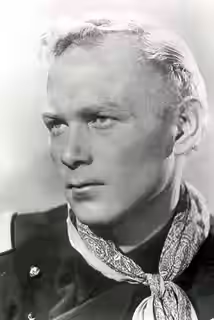
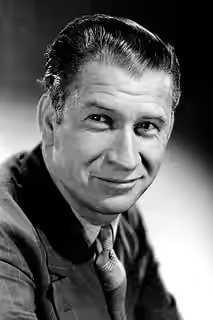
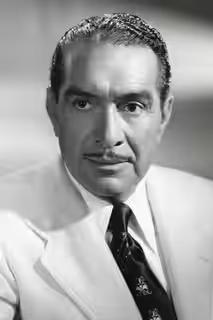
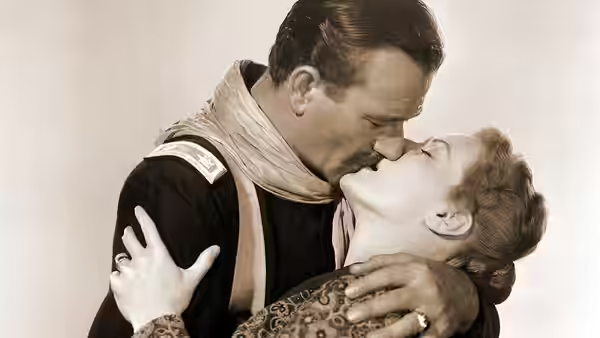
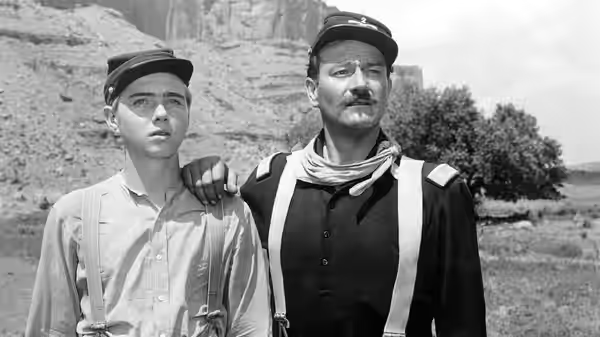
Lt. Col. Kirby Yorke (John Wayne) is a cavalry officer whose romance with Mrs. Kathleen Yorke (Maureen O’Hara) brings him up against someone with pride to match his own. Around them are Trooper Jefferson ‘Jeff’ Yorke (Claude Jarman Jr.), Trooper Travis Tyree (Ben Johnson) and Sgt. Maj. Timothy Quincannon (Victor McLaglen). The Southwestern landscape provides the setting for a Western concerned with military honour and the difficulty of giving ground in a personal relationship. Kirby and Kathleen’s attachment has to contend with their stubbornness, while cavalry life surrounds their private disagreements with questions of rank and duty.

Plays from YouTube when you press play; nothing loads from them until then.

Fi1m review

John Ford’s cavalry Western is warm, leisurely and at its most persuasive when John Wayne meets Maureen O’Hara’s stubborn pride. The romance earns our affection; the military reverence occasionally takes it for granted.

Rio Grande is a good Western whose romance gives us the strongest reason to stay with it. John Ford understands the attraction of military honour, open country and people who find admitting affection difficult, and he lets them occupy the same film without hurrying. The ease is appealing, though it sometimes becomes complacency. Across 105 minutes, there is enough warmth and humour to forgive the stretches when admiration for the cavalry feels rather too automatic.

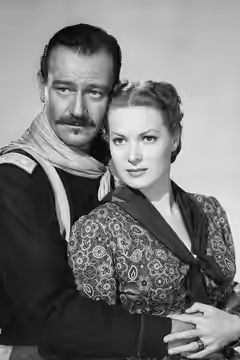
John Wayne’s Lt. Col. Kirby Yorke has the authority we expect from the rank, but Maureen O’Hara’s Mrs. Kathleen Yorke gives him someone who cannot simply be commanded. Their matching pride makes the romance credible: affection does not conveniently remove the difficulty of dealing with another person. We were moved by their stubbornness, because neither makes giving ground look easy. O’Hara is especially good at keeping Kathleen’s resistance alive without making the relationship feel like a contest arranged for Wayne to win.

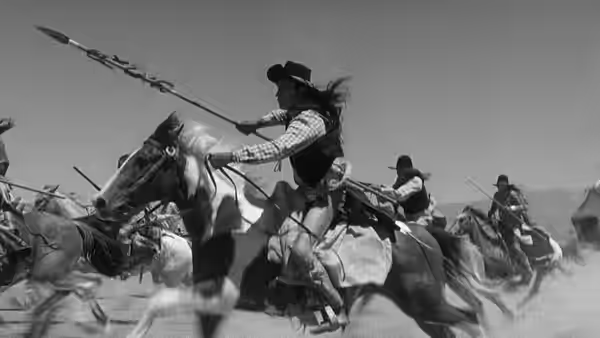
Bert Glennon’s black-and-white cinematography gives the Southwestern country enough presence to make the attraction of this life understandable. The landscape is worth lingering over, and Ford does not treat that pleasure as something requiring an apology. There is a reassuring solidity to the military setting, helped by Adele Palmer’s costume design and the clear distinctions of rank. The danger is that such an agreeable place to spend time can make us less curious about the men who belong to it.

James Kevin McGuinness’s screenplay is warmest when pride becomes a practical nuisance between people. Its humour keeps the men of honour from becoming entirely solemn company, and Ford’s fondness for them is easy to share. Yet the film is less searching about their values than it might be. We can enjoy the decency being offered and still wish the writing would make these men explain themselves a little more, rather than count on our approval of their profession.

Jack Murray’s editing accommodates the leisurely pace, giving the film room to enjoy its company rather than constantly pushing towards the next incident. That works for the romance, where haste would make the stubbornness seem trivial; elsewhere, the relaxed rhythm allows the film to drift. Victor Young’s music is similarly generous with feeling, sometimes more generous than the acting requires. With Wayne and O’Hara already supplying so much through their opposition, the score’s encouragement can seem unnecessary.

Westerns allow a great deal of bad behaviour to pass under the name of pride, and Ford is alert to how awkward that quality becomes between people who care for each other. That is the part of Rio Grande worth making time for, even if the cavalry business is what first attracts us. Expect a leisurely evening, and leave room for a romance in which nobody much enjoys being wrong.
Critical consensus AI synthesised

72
Positive
2
Mixed
3
Negative
0
Radio Times
★★★★★ · Allen Eyles
100

The critic calls it a great western and praises the powerful romance between John Wayne and Maureen O’Hara. They single out O’Hara as Wayne’s strongest leading lady and an equal match in stubborn pride.

Read the full review →
Empire
1 January 2000 · William Thomas
70*

Thomas finds the film skilful and enjoyable, though less soulful than Ford’s classics. He especially praises Ford’s rich appreciation of the Southwestern landscapes and men of honour.

Read the full review →
The New York Times
20 November 1950 · Bosley Crowther
64*

The page identifies this as a New York Times review of the film. The review text is inaccessible, so its verdict and specific praise or complaint cannot be determined.

Read the full review →
Time Out
· PT
64*

The accessible page identifies this as a review of Ford’s 1950 cavalry-trilogy film, but provides no readable critical verdict. Its visible description singles out Wayne’s returning Captain York and his troubled notions, without enough text to establish praise or complaint.

Read the full review →
Slant Magazine
7 August 2012 · ★★★ · Jaime N. Christley
60

Christley finds the film warm and humorous but less accomplished than Ford’s other cavalry trilogy entries. He praises its infectious charm and Ford’s assured handling of the climactic battle.

Read the full review →

Straight answers AI written, from our review

Is Rio Grande worth watching?
Rio Grande is worth watching for Western admirers who enjoy a leisurely romance as much as cavalry life, and we score it 74 out of 100. Wayne and O’Hara make their characters’ matching pride moving and funny, though the pace sometimes drifts and Ford’s admiration for military honour goes rather too unquestioned.
How long is Rio Grande, and what is it rated?
Rio Grande runs 1h 45m. It is a western film.
Where can I watch Rio Grande in Malaysia?
Rio Grande is not on any streaming or rental service in Malaysia at the moment. It is available in 29 other countries; change your country at the top of the page to see where. Availability is checked daily.
How does Rio Grande compare to The Quiet Man?
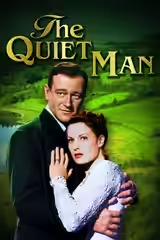
Rio Grande is our preference for the romance, while The Quiet Man offers a more fanciful Irish setting for Wayne and O’Hara’s stubbornness. We find the cavalry Western most persuasive when affection meets resistance; its military reverence is less convincing. The Quiet Man suits an appetite for picture-book fantasy, though its whiskey jokes and an ugly late scene weaken the pleasure.
What should I watch after Rio Grande?
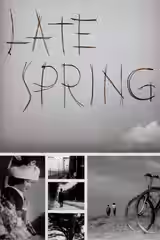
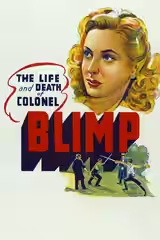
After Rio Grande, try The Quiet Man (1952, Fi1m 78): Wayne and O’Hara make stubbornness everybody else’s problem, this time in Ireland. Then Late Spring (1949, Fi1m 92): Family duty and private wishes collide quietly, with no cavalry to distract us; and The Life and Death of Colonel Blimp (1943, Fi1m 91): Military honour receives an affectionate examination that still asks difficult questions.

Cast

If you liked this, try…

  1. The Quiet Man (1952, Fi1m 78)Wayne and O’Hara make stubbornness everybody else’s problem, this time in Ireland.

  2. The Big Country (1958) · not on Fi1m yetAnother Western interested in pride, with considerably less patience for masculine posturing.

  3. Late Spring (1949, Fi1m 92)Family duty and private wishes collide quietly, with no cavalry to distract us.

  4. The Life and Death of Colonel Blimp (1943, Fi1m 91)Military honour receives an affectionate examination that still asks difficult questions.

  5. The Straight Story (1999, Fi1m 88)For another unhurried journey through open country towards unfinished family business.