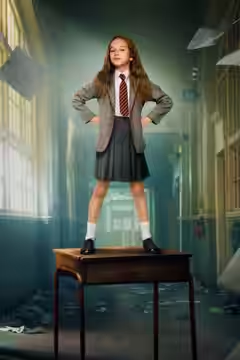
An energetic, moving family musical, led with assurance by Alisha Weir and softened by Lashana Lynch’s kindness. The children are worth the noise, though the staging sometimes needs to leave them alone.
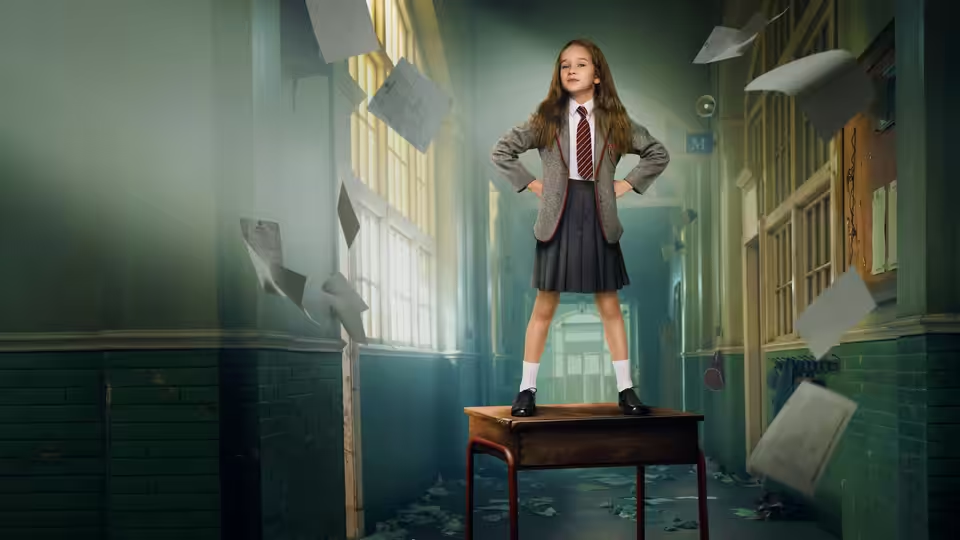
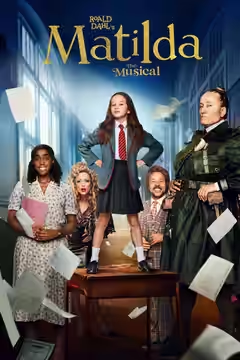
Matthew Warchus’s Roald Dahl’s Matilda the Musical is a funny, moving family film with an occasional need to calm down. Its anger at bullying gives the singing and dancing a purpose, and the children never seem like decoration around the adult stars. The rebellion matters because the cruelty is allowed to feel unpleasant, even when it comes dressed as a joke. We recommend it, with a caveat about the busy staging and a running time of 117 minutes that could use a trim.
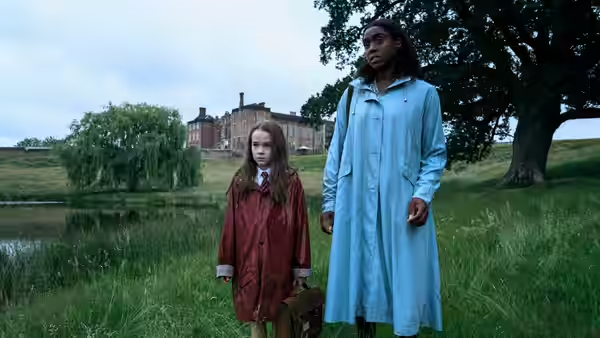
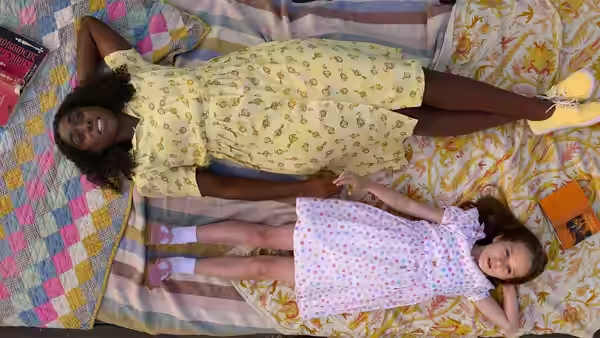
Alisha Weir makes Matilda Wormwood clever without making her smug, which is crucial when the adults are working so hard to be grotesque. She gives the defiance some vulnerability; we can believe that being right does not make being bullied any easier. Lashana Lynch’s Miss Honey is equally important, bringing a gentleness that does not look weak beside all the shouting. We were moved by their scenes together, because Lashana Lynch makes taking a child seriously feel like an enormous relief.
Emma Thompson plays Agatha Trunchbull with a physical commitment that makes the comedy faintly alarming. The exaggeration works because she never asks us to find the woman harmless underneath it, and the threat gives the children’s defiance something substantial to resist. Stephen Graham and Andrea Riseborough, as Mr. Wormwood and Mrs. Wormwood, make a cheerfully garish pair of parents. Their broadness gives Alisha Weir plenty to react to, and she does not have to match their volume to hold our attention.
The children are most persuasive when the film lets them work together. “School Song” is a good example: the tightly organised dancing makes them seem capable and resourceful without rubbing out their mischief. Tat Radcliffe’s mobile camera helps carry that energy across the screen, although its showier movements sometimes distract from the performers we came to watch. We would rather have a clearer view of the steps than another camera move.
Christian Huband and David Hindle give the sets an angular severity, with enough colour to keep the ugliness from becoming oppressive. Those shapes suit the exaggerated performances and make the surroundings feel as forceful as the adults. Christopher Nightingale’s music helps sustain the momentum, though its gentler passages are especially welcome in a film so eager to keep us stimulated. The tenderness registers more clearly when the surrounding bustle eases.
Dennis Kelly’s screenplay is less secure when it has to carry the story between the musical numbers. The story within the story feels laboured, asking for patience just when we want to stay with Matilda and the people immediately around her. Melanie Oliver’s editing does not quite solve that unevenness: the ensemble passages move briskly, but elsewhere the theatrical pacing hangs on. The digressions are the likeliest place for attention to wander.
Against the family-film habit of softening every difficult feeling, the willingness to let children be angry is welcome. Matthew Warchus also trusts Alisha Weir and Lashana Lynch to make kindness interesting, which is harder than making a bully noisy. Their companionship provides some reassurance without making the cruelty feel trivial. For younger children unsettled by bullying, some company on the sofa may matter more than the PG certificate.