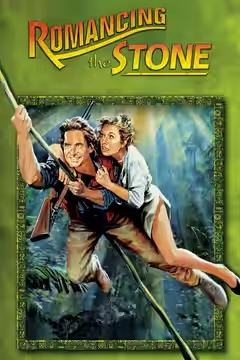
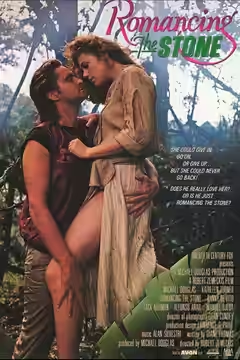
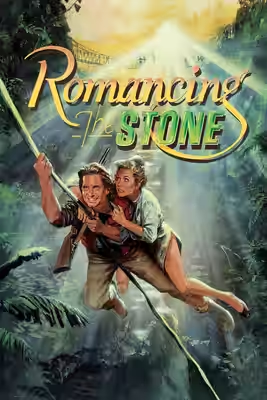
Kathleen Turner and Michael Douglas make this cheerful treasure adventure worth the detours. The plotting is familiar and the swagger occasionally tiresome, but the romance has enough wit to keep us interested.
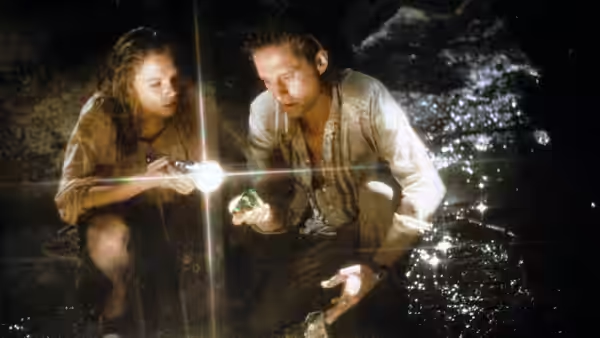
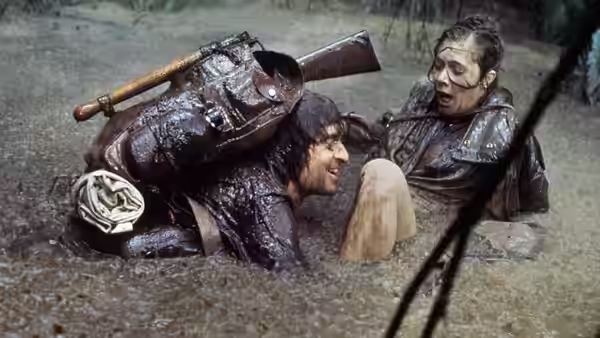
Romancing the Stone is an enjoyable romantic adventure with enough chemistry between its leads to carry a fairly familiar plot. Robert Zemeckis keeps the danger lively, but the prospect of another argument between Kathleen Turner and Michael Douglas is what makes us want the next scene. The treasure gives them something to pursue while they work each other out. The film understands how much entertainment there is in watching two attractive people take their time about admitting the obvious.
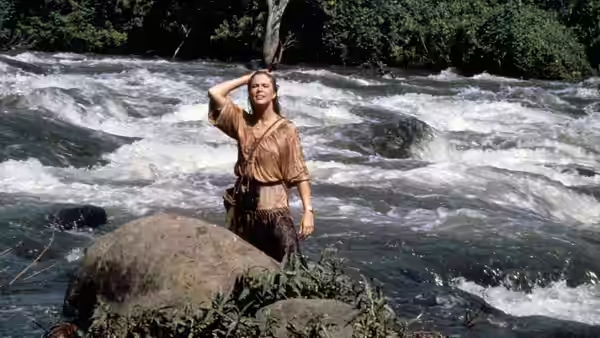
Kathleen Turner gives Joan Wilder the mixture of uncertainty and determination that this sort of adventure needs. The role depends on our wanting her to become more resourceful, and the performance makes that wish easy to share without treating her initial inexperience as stupidity. We found ourselves rooting for her more than we expected. Watching her hold her own in the verbal sparring makes her confidence matter to us, even when the surrounding complications are predictable.
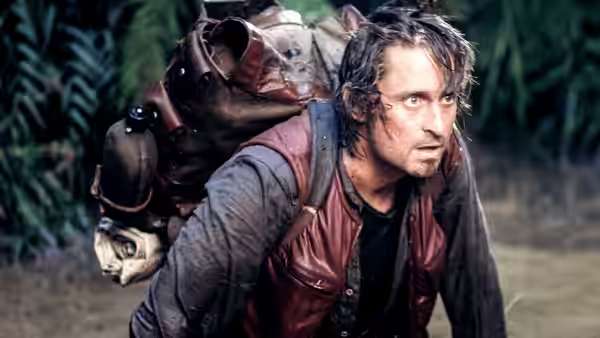
Michael Douglas makes Jack T. Colton’s self-assurance attractive enough to explain the romance, though the film indulges him a little too readily. He is funniest when his confidence meets resistance, and Diane Thomas gives the couple enough disagreement to prevent their attraction from becoming merely decorative. Danny DeVito, as Ralph, supplies a welcome additional source of comic energy. His contribution is especially useful when the leading man’s swagger threatens to become the whole joke.
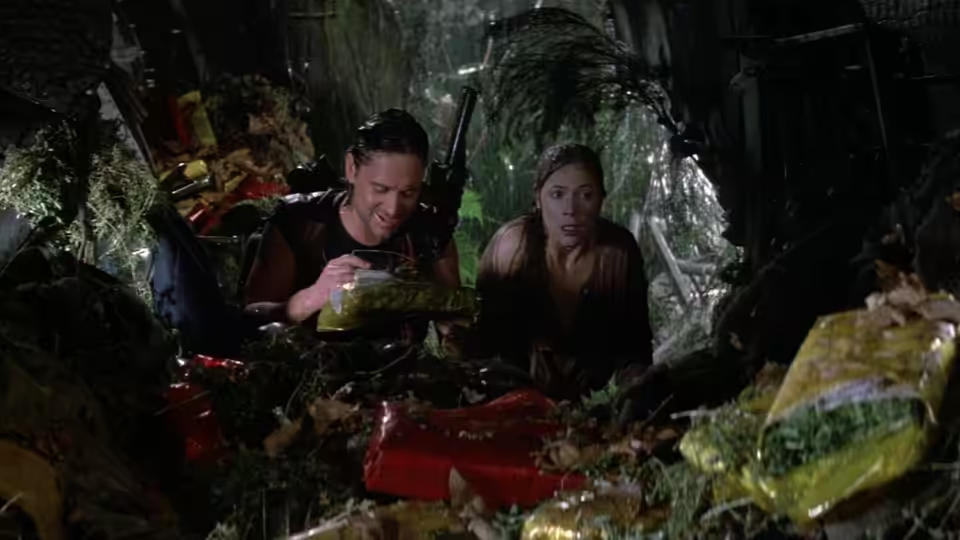
Dean Cundey’s cinematography keeps the action readable and leaves the performers room to compete with the commotion. That matters here: losing sight of how the couple respond to danger would remove much of the pleasure from it. Lawrence G. Paull’s production design gives the adventure sufficient substance, although the surroundings are more persuasive as places to pursue treasure than places where anyone might ordinarily live. The emphasis stays firmly on the visitors and their troubles.
Editors Frank Morriss and Donn Cambern maintain the forward movement without cutting away all the pauses that allow the comedy to register. The rhythm is particularly effective when an exchange between the leads briefly becomes more interesting than whatever they are supposed to be doing. Alan Silvestri’s score supplies urgency, though its encouragement can feel unnecessary when the action is already busy enough. At 106 minutes, the film has a sensible length for this mixture, even if some complications feel like delays rather than discoveries.
The limitations become harder to overlook whenever the romance steps aside. The film is too ready to treat people outside the central pairing as obstacles, assistance or comic interruptions, and its enthusiasm for its leading man sometimes makes the heroine’s independence seem conditional. These are familiar weaknesses in adventure escapism, but familiarity does not make them less noticeable. Diane Thomas’s writing is considerably more engaging when the couple are testing each other than when the plot is arranging their next difficulty.
The right mood for this is a desire for romance without an evening spent sitting still. Anyone seeking a tightly surprising adventure may be less forgiving of the expected complications and the occasional smugness. Choose it for Kathleen Turner and Michael Douglas, and be prepared to care rather less about the treasure.