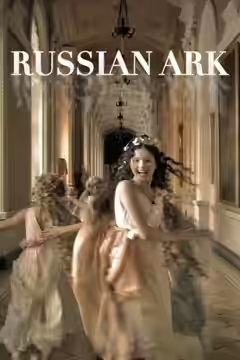
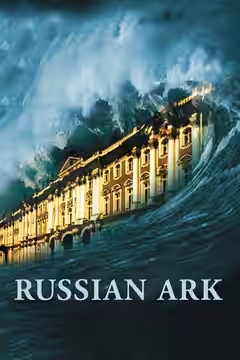
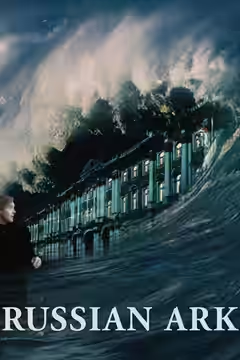
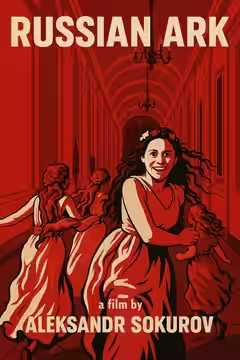
Alexander Sokurov’s continuous journey through the Hermitage is absorbing, sometimes moving and occasionally hard work. Its camera gives history a physical closeness that the solemn commentary too often interrupts.
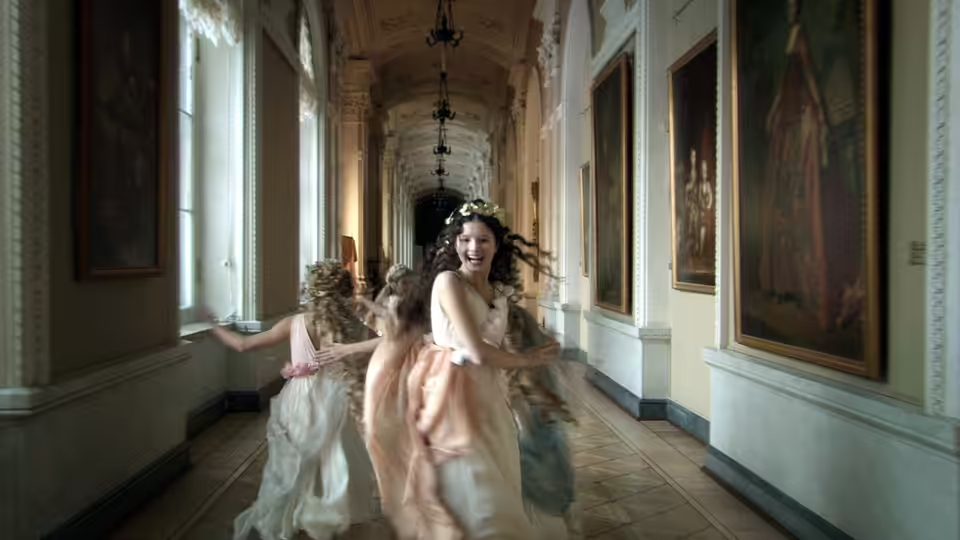
Russian Ark is worth the patience it asks for, though it occasionally asks rather a lot. Alexander Sokurov takes a continuous journey through the Hermitage and makes the simple business of entering another room feel uncertain. Russian history does not arrive in a helpful sequence, and the camera cannot cut away to explain where we have landed. The pleasure comes from looking, listening and accepting that some of the references will pass us by. Anyone expecting a history lesson with clear dates will have a long evening.
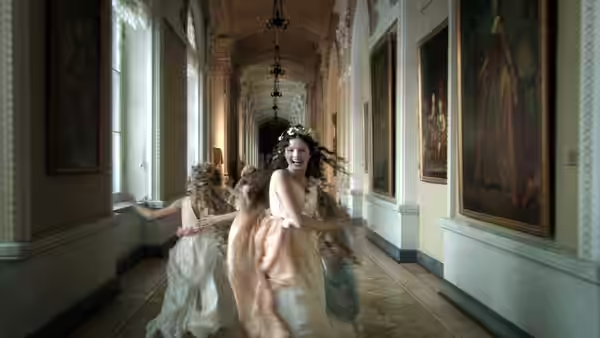
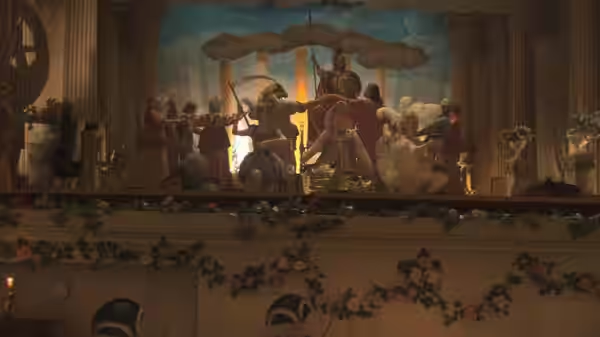
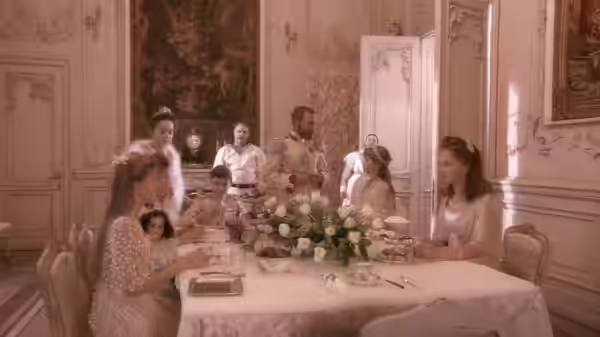
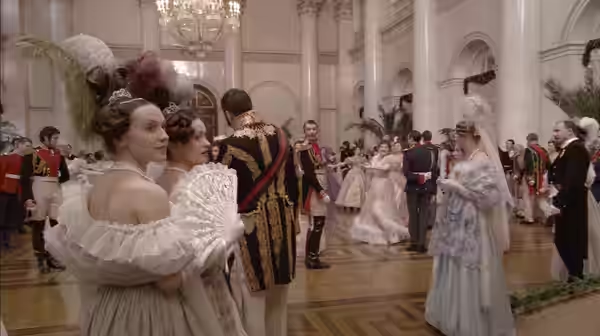
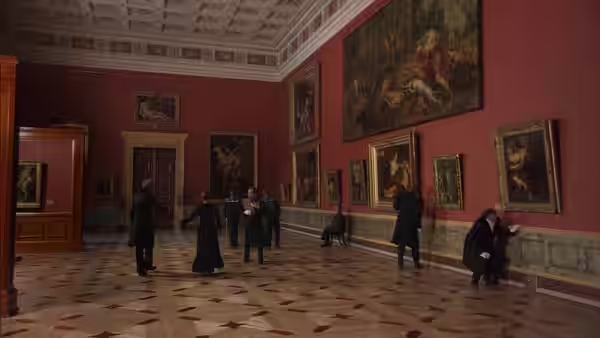
That single take matters because it changes how we attend to people. Tilman Büttner keeps moving among figures and through rooms, allowing us to notice how a space fills and how one person draws attention from another. The choreography is elaborate, but the movement rarely feels like an instruction to admire the organisation. We felt unexpectedly sad watching people pass out of view as the camera continued through the rooms. The unbroken movement gives us time to notice them, then carries us away before we feel quite finished looking.
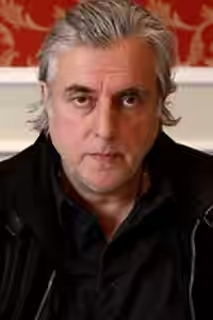
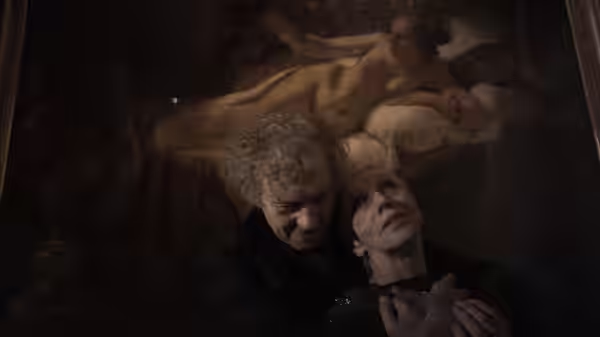
Sergey Dreyden, as Marquis de Custine, gives the film a welcome human focus. His presence helps prevent it from becoming a procession of handsome interiors, although the central performance can become as insistent as the commentary. We do not need every feeling about the past supplied for us. At its least persuasive, the offscreen melancholy sounds prescribed, and we would rather be allowed to listen and look. The film is more affecting when it stops telling us how sorrowful it is.
The Hermitage itself is crucial: these rooms give the historical encounters a shared place even when the period changes. Maria Grishanova, Tamara Seferyan and Lidiya Kryukova’s costumes help us read the people within that space without turning each arrival into an explanation. Sergei Yevtushenko’s music belongs comfortably to the film’s deliberate pace, although it cannot make every passage equally involving. There is enough to look at that the eye often stays occupied when our interest in the conversation begins to wander.
The editing credits belong to Betina Kuntzsch, Sergey Ivanov and Stefan Ciupek, but the usual remedy for a slow scene is unavailable within the continuous shot. A change of pace has to come from movement, a fresh encounter or a shift in our attention. That makes the slack stretches noticeable, and knowing about the technical difficulty does not shorten them. Still, we would not exchange this accumulating sense of time for a brisk collection of historical highlights.
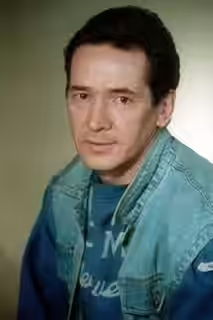
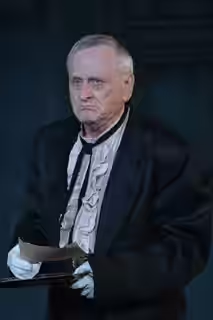
The presence of Catherine The Great (Mariya Kuznetsova) and Peter the Great (Maksim Sergeyev) does not turn this into a conventional account of rulers and their decisions. Alexander Sokurov is more interested in being near the past than in explaining it. That choice will frustrate anyone who wants events connected and motives examined. It also lets us spend time looking at people who would otherwise be hurried through as illustrations of a date.
Its 99 minutes require a kind of concentration that a longer, busier film might never ask of us. We recommend it to anyone who enjoys looking closely and does not require every question answered. Save it for an evening when nobody is likely to ask what is happening.