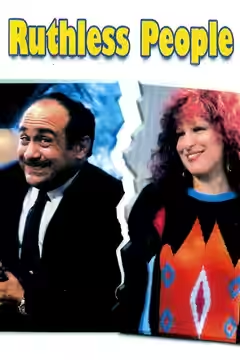
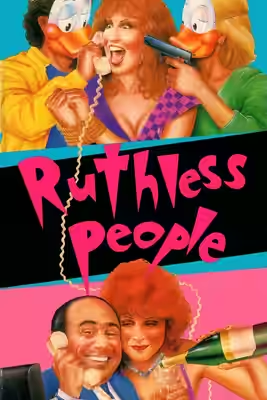
Ruthless People gets plenty of laughs from a husband delighted by his wife’s kidnapping. Danny DeVito and Bette Midler make the nastiness enjoyable, though the farce grows less convincing when it starts tidying up.
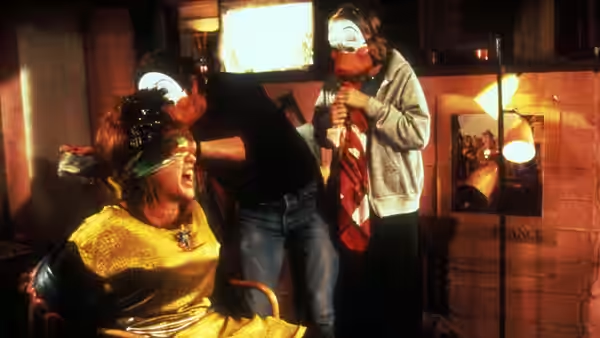
Ruthless People is a brisk, agreeably nasty farce, worth an evening if marital spite is your sort of entertainment. Sam Stone’s wife has been kidnapped, and he would rather she stayed that way: a premise that gives Danny DeVito plenty to work with before the complications even begin. Directors Jerry Zucker, Jim Abrahams and David Zucker recognise how much comedy there is in that simple failure of affection. Dale Launer’s screenplay keeps finding ways to make it everyone’s problem.
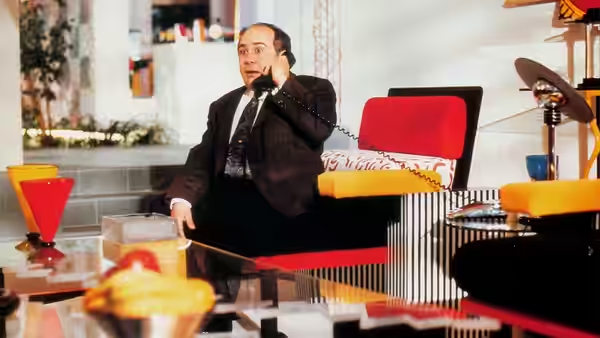
Danny DeVito makes Sam’s selfishness so thorough that ordinary concern would look suspicious on him. He does not ask us to discover a decent fellow beneath it, and the performance benefits from that lack of apology. We laughed at Sam’s pleasure in Barbara’s kidnapping, then felt slightly ashamed of how readily we had accepted it. His delight is so complete that we momentarily forget what he is delighted about.
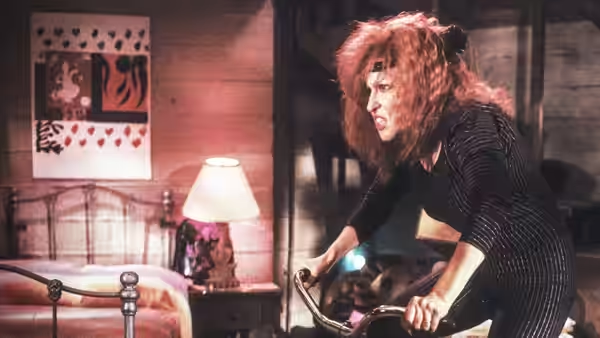
Bette Midler gives Barbara enough force to stop the film becoming a series of jokes about an unwanted wife. Her aggression is funny because she commits to it without asking for permission to be liked, and she makes the character feel capable of exhausting anyone in reach. There are stretches when the sheer insistence of the performance starts to wear down the joke. Even then, she keeps Barbara from seeming merely a convenient reason for everyone else to misbehave.
The pleasure of Dale Launer’s writing is in watching people calculate badly while remaining certain they understand the situation. Farce depends on our being able to follow those mistakes, and the screenplay generally keeps us sufficiently informed to anticipate trouble without knowing precisely how it will arrive. The complications mostly feel like consequences of the characters’ selfishness. A few require more indulgence than they earn, particularly when the script appears to be arranging people for its next clever move.
Jan de Bont’s cinematography gives the actors room to be funny; our attention stays with their reactions as the situation becomes more absurd. The visual energy helps, although there is little here we want to look at for its own sake. Editors Gib Jaffe and Arthur Schmidt give the accumulating complications enough space to register, and the 94-minute running time feels sensible for material this insistently worked up. The cutting keeps the misunderstandings clear even when several people are busy making matters worse.
Michel Colombier’s score makes less impression than the actors, and does little to sharpen the sense that these people can hurt each other. That becomes a broader weakness whenever the screenplay reaches for reassurance. The effort to make the plotting resolve satisfactorily introduces some conveniences that the earlier, sharper writing would have encouraged us to question. We would have preferred the film to remain as suspicious of its people as the opening premise encourages us to be.
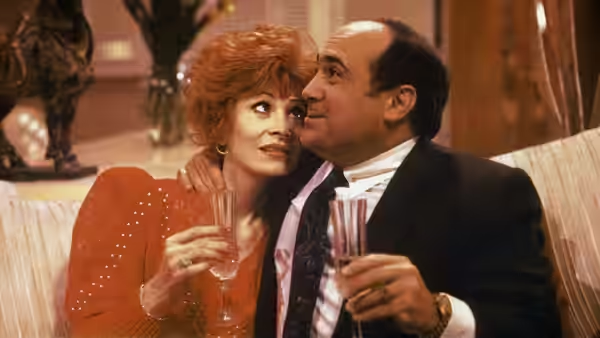
As a farce, though, it gets the essential business right often enough to survive those reservations. Danny DeVito and Bette Midler are particularly enjoyable when the script simply allows them to be unreasonable, without trying to account for every ugly impulse. The jokes depend on our willingness to spend time with people whose behaviour we would find intolerable outside a comedy. Choose it for the performances, and allow a little patience for the contrivances.