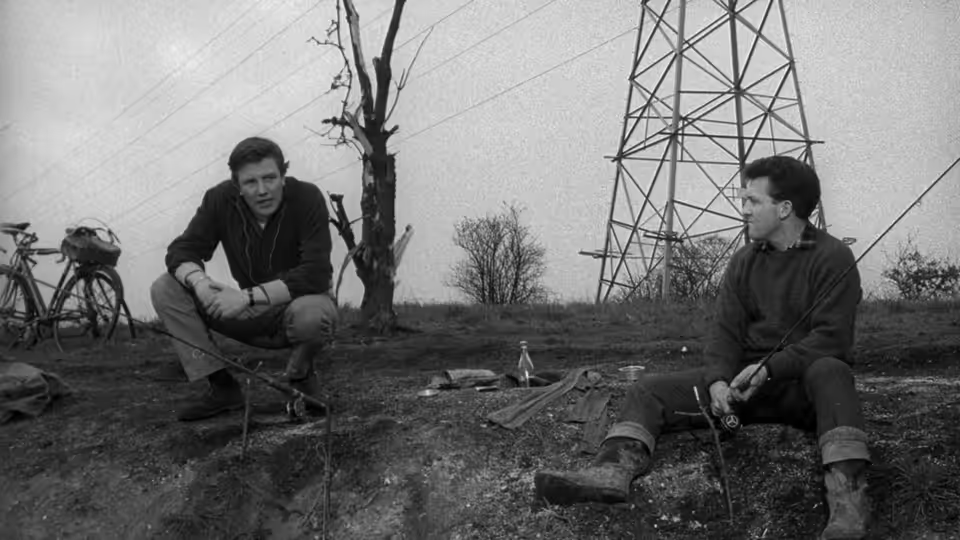
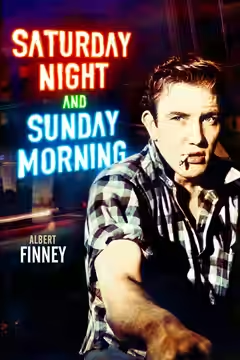
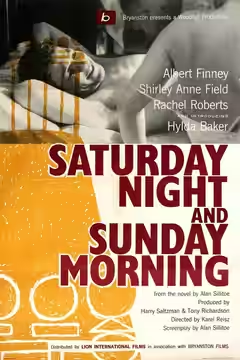
Albert Finney gives Karel Reisz’s drama a stubborn, uncomfortable energy. We recommend it for the performance and the assured direction, with one reservation: Arthur Seaton sometimes makes everyone else seem secondary.
Saturday Night and Sunday Morning is worth seeing for Albert Finney, and Karel Reisz gives him the space he needs. The performance makes Arthur Seaton’s cynicism engaging without making it especially admirable. There is pleasure in spending time with someone this difficult, even when his certainty about himself begins to wear. Alan Sillitoe’s screenplay, adapted from his own novel, gives the actor plenty to resist and remarkably little need to ingratiate himself with us.
The important thing about Albert Finney is that the belligerence never quite conceals the resignation. His Arthur Seaton can seem pleased with himself and already disappointed in what life has to offer, without either feeling cancelling the other. We found ourselves warming to him against our better judgement, because the weariness showing through the swagger makes his confidence seem less secure. That does not excuse him. It does make watching him more interesting than simply agreeing that he is trouble.
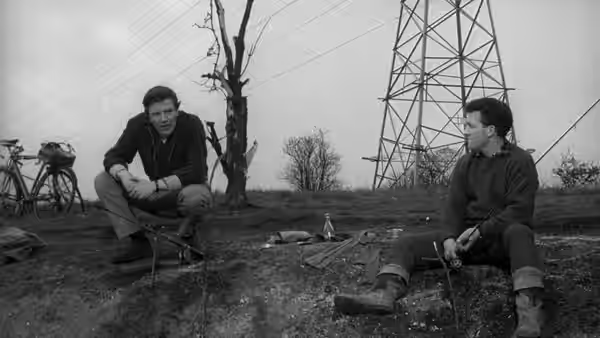
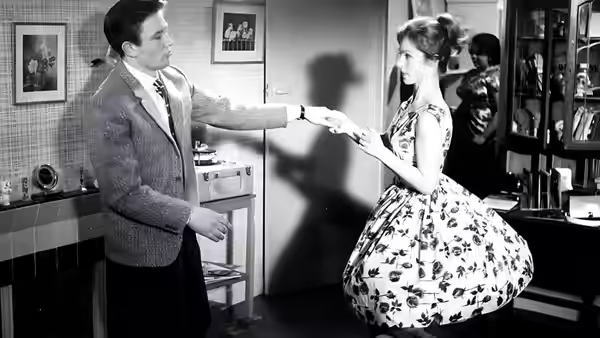
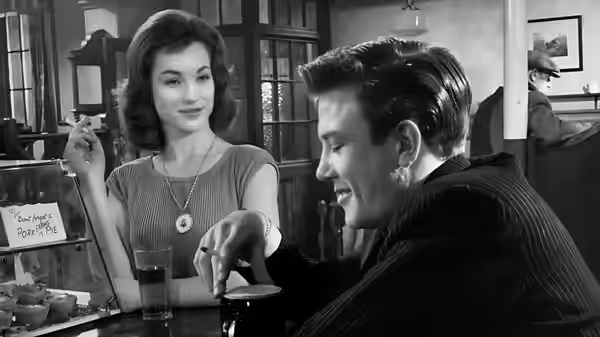
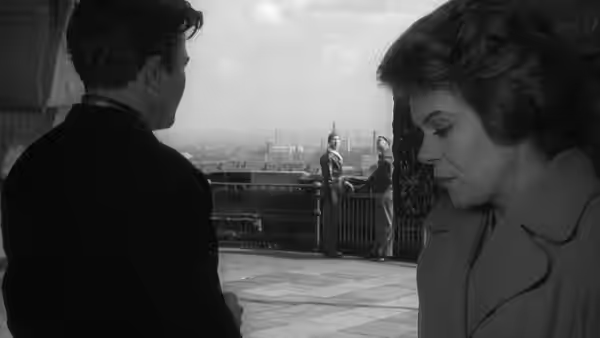
Freddie Francis’s cinematography helps by making the industrial-town surroundings feel substantial without turning them into an illustrated complaint. The people seem to belong in these interiors; the rooms never demand admiration separately from the performances. Karel Reisz’s direction has a similar patience with the place, allowing its ordinary appearance to carry weight. This matters because a more insistent treatment could make Arthur Seaton seem merely the inevitable product of his surroundings, and Albert Finney gives us someone considerably more awkward than that.
Seth Holt’s editing keeps the film compact without making the performances feel hurried. At 90 minutes, there is room for an attitude to become irritating, revealing or unexpectedly funny before the film moves on. John Dankworth’s music adds a useful restlessness, giving the drama movement without asking us to treat every grievance as a tragedy. Neither contribution calls much attention to itself, but both help prevent the film from settling into a solemn examination of its central character.
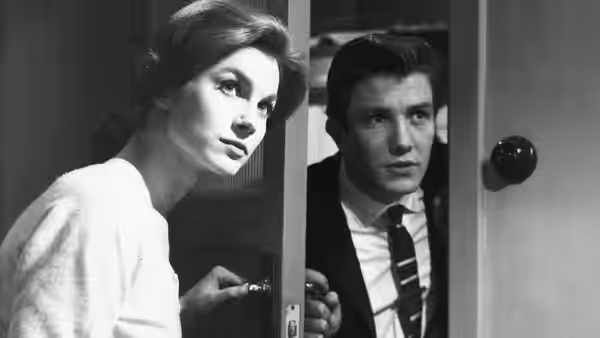
The reservation is how thoroughly that central character commands our attention. Shirley Anne Field, as Doreen, and Rachel Roberts, as Brenda, bring a seriousness that deserves more consideration than Arthur Seaton’s force of personality always allows. Their performances register, but we sometimes want the film to stay interested in them independently of its interest in him. This is partly the cost of casting Albert Finney: even his less attractive qualities are compelling. It is also a limitation that Karel Reisz does not entirely overcome.
Against the familiar habits of social drama, the film’s refusal to make its central figure exemplary remains a considerable strength. We are allowed to find him funny, selfish and tiring without being handed a different explanation for each response. Alan Sillitoe occasionally presses the defiance harder than necessary; once we understand the distrust, further insistence adds less. The performance is more persuasive when it lets uncertainty appear without underlining it.
There is enough assurance here to carry that imbalance, though it remains an imbalance. The film asks for an appetite for difficult company rather than a readiness to applaud rebellion on principle. Its pleasures depend on watching closely, especially when confidence begins to look like effort. Watch it for Albert Finney, and give Rachel Roberts and Shirley Anne Field your attention when he threatens to monopolise it.