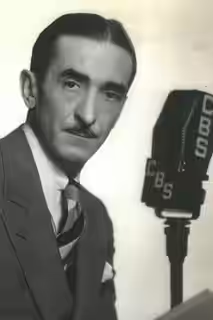
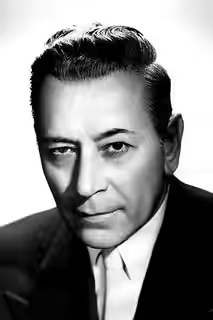
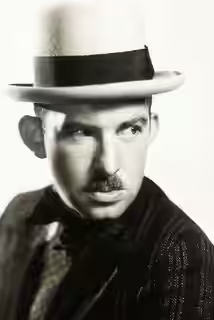
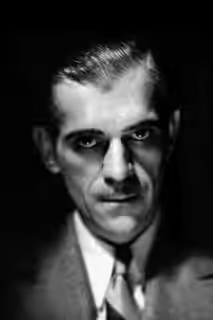
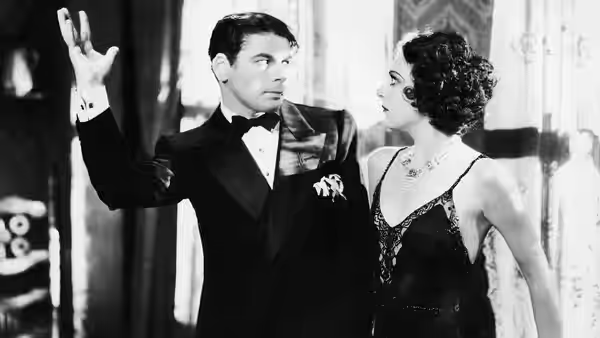
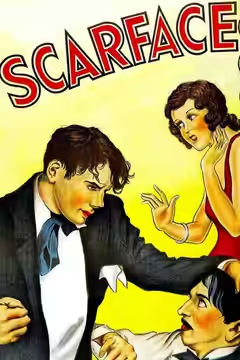
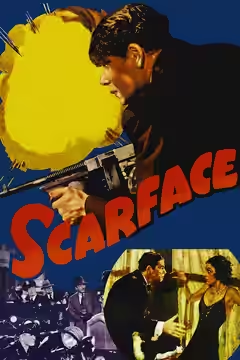
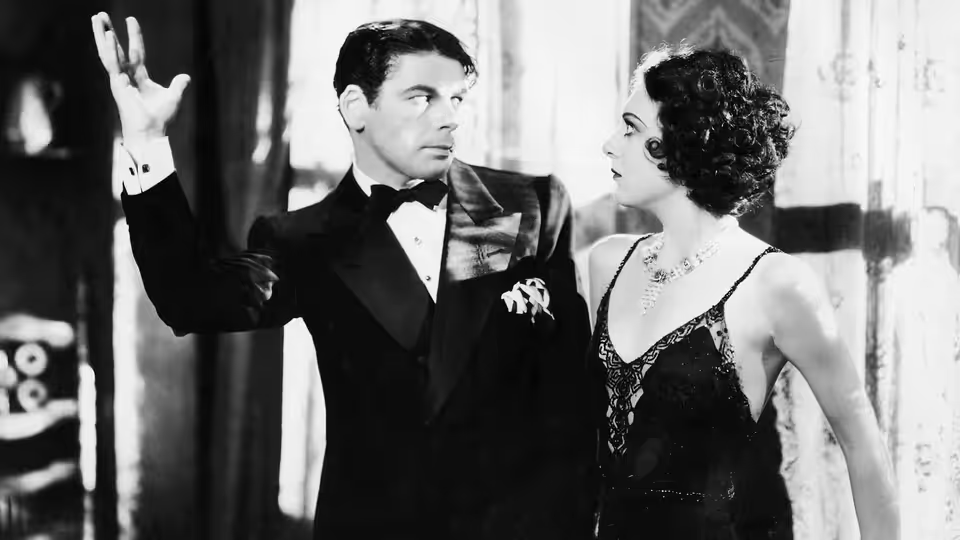
Tony Camonte (Paul Muni) raises a hand beside Poppy (Karen Morley) at a nightclub
Film review

Scarface

1932 · Directed by Howard Hawks · 1h 33m

In a sentenceGeorge Raft makes tossing a coin look like all the character development a gangster needs

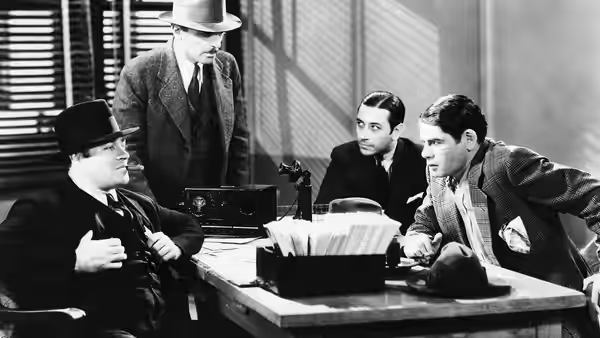
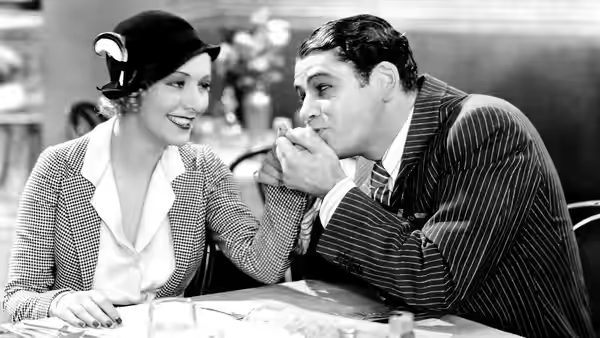
Antonio ‘Tony’ Camonte (Paul Muni) is a mobster with ambitions beyond his present position. Around him are John ‘Johnny’ Lovo (Osgood Perkins), Poppy (Karen Morley) and the coin-tossing Guino Rinaldo (George Raft). Insp. Ben Guarino (C. Henry Gordon) represents the law. Tony wants power, and the violence of the criminal world offers him a way to claim it. But there are other men with authority, and he has little inclination to accept their limits. His pursuit of control brings the prospect of advancement and the resistance of those who stand in his way.

Fi1m review

Howard Hawks’s Scarface is a vicious, funny gangster film we readily recommend. The moral lectures interrupt its momentum, but George Raft’s restraint and the restless camera give it pleasures beyond its historical importance.

Howard Hawks’s Scarface is a vicious, funny gangster film, and we recommend it with one substantial reservation: it keeps stopping to tell us that gangsters are bad. That would be less irritating if the rest were less assured. Ben Hecht’s screenplay gives criminal ambition an ugly sense of humour, and the direction lets us enjoy the swagger long enough to become uneasy about it. The excitement comes from watching dangerous people find their work agreeable.

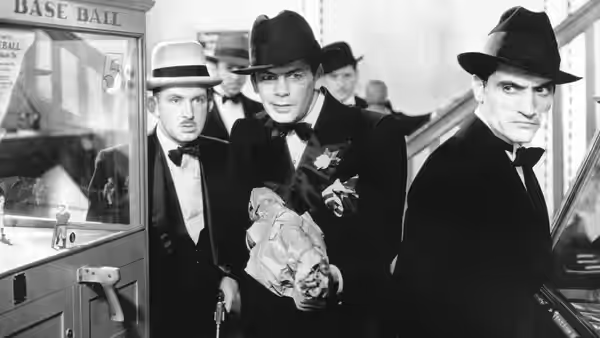
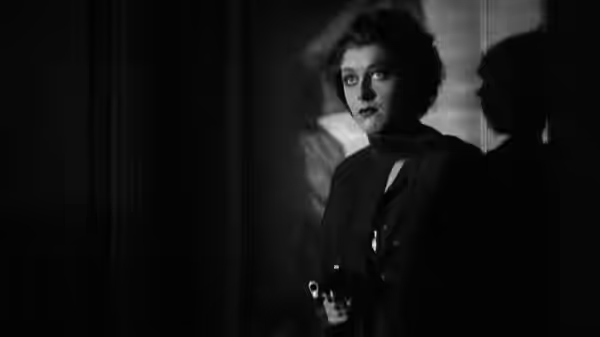
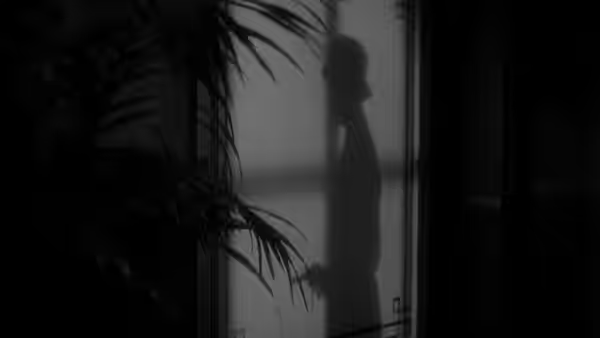
The opening tracking shot immediately makes the film feel alert and mobile. Cinematographers Lee Garmes and L. William O’Connell use stark contrasts and expressive shadows to give the images a threat of their own. Darkness makes us look harder, while the camera movement prevents the compositions from becoming merely handsome arrangements of light and shade. There is confidence here about how long to look and when to move.

Paul Muni plays Antonio ‘Tony’ Camonte with enough force to make the hunger for power feel exhausting, as it should. We are not encouraged to spend much time hunting for a misunderstood decent man underneath. His swagger occasionally becomes too insistent, and the performance benefits from the screenplay’s readiness to make criminal self-importance look ridiculous. The humour gives us a little relief without making Tony harmless.

George Raft, as Guino Rinaldo, provides a welcome change of scale. The coin-tossing gives us a small, repeated action to watch, and his restraint makes it more compelling than a larger display would be. We smiled at his composure, then felt uneasy about how readily we had taken to him. That casual handling of the coin suggests a man entirely comfortable with himself, and the surrounding cruelty makes his ease disturbing.

Edward Curtiss’s editing supplies much of the film’s growing speed, particularly in the rapid montages. The cuts have an impatience that suits Tony: there is always somewhere further to get, and little appetite for waiting. Adolph Tandler’s music matters less to that excitement than the editing, which keeps pulling us forward before we have quite settled. At 93 minutes, the film has room for its offbeat humour without letting the jokes hold everything else up.

The moral lectures are another matter. They slow the film precisely when its cruelty has already made the case against these men, and the instruction feels unnecessary. Howard Hawks is so persuasive when showing how attractive gangster confidence can be that the preachiness seems especially clumsy beside it. The change of pace does real damage: we are taken out of a film that has taught us to watch closely and made to sit through an explanation.

Scarface helped establish gangster-film habits that became familiar, but there is no need to treat it as homework. The wit still has bite, and George Raft’s economy would be worth watching in any company. Admirers of crime films should allow for the sermons and give the brisker, nastier passages their attention. We would sooner return to that coin-tossing than sit through another gangster explaining what sort of man he is.
Critical consensus AI synthesised

81
Positive
7
Mixed
2
Negative
0

Most critics regard Scarface as a major early gangster film whose force survives its historical importance. Praise centres on Hawks’s inventive direction: the opening tracking shot, expressive shadows, visual contrasts and rapid montage give the violence pace and character. The reviews also find considerable wit beneath the brutality, with several praising the dark humour, lively script and cast, while its depiction of gangster style is repeatedly credited with helping establish the genre’s conventions.

The spread is broadly favourable rather than unanimous, with seven positive assessments, two mixed and none negative. Reservations concern the film’s moralising and the handling of its cruelty: the Los Angeles Times notes the unusual combination of brutality and preachiness, while Variety finds it unusually cruel, though softened by moralising and punishment. Variety also singles out George Raft’s restrained, coin-tossing performance as a source of sympathy within that harsher assessment.

Radio Times
★★★★★ · Adrian Turner
100

Turner calls it the greatest gangster film of the 1930s, and even the greatest ever. He praises its gritty realism, while noting that Hollywood’s moral watchdog interfered with the production and ending.

Read the full review →
The New Yorker
6 July 2021 · Richard Brody
95*

Brody regards the film as a landmark of cinematic modernity, praising its audacity and lasting power. He especially singles out Hawks’s inventive direction, from the opening tracking shot to the striking visual contrasts throughout.

Read the full review →
Time Out
· PT
90*

The review presents the film as both historically seminal and still exhilarating. It singles out its brilliance as a landmark of early gangster cinema.

Read the full review →
Empire
21 March 2007 · Kim Newman
85*

Newman regards the film as a true classic of the gangster genre. He praises its atmospheric, darkly comic tone and sizzling script and cast.

Read the full review →
Evening Standard
10 April 2012 · The Standard
85*

The critic finds the film remarkably fresh and influential despite its age. They single out its vivid depiction of gangster style and the conventions it helped establish.

Read the full review →
Los Angeles Times
3 May 1991 · MARK CHALON SMITH
80*

Smith considers the film one of the best early gangster movies, praising its wit and building velocity. He singles out its consistently interesting visual style while noting its unusual mix of brutality and preachiness.

Read the full review →

Straight answers AI written, from our review

Is Scarface worth watching?
Scarface is well worth watching for crime-film admirers, and we score it 85 for its vicious humour, restless camera and George Raft’s restraint. The substantial caveat is its habit of stopping to lecture us about gangsters, interrupting a brisk film whose cruelty already makes the point.
How long is Scarface, and what is it rated?
Scarface runs 1h 33m. It is a crime and action film.
Where can I watch Scarface in Thailand?
Scarface is not on any streaming or rental service in Thailand at the moment. It is available in 17 other countries; change your country at the top of the page to see where. Availability is checked daily.
How violent or frightening is Scarface, and is it suitable for children?
Scarface carries a UK 15 certificate and is unsuitable for children, with gangster violence and a cruel atmosphere that make its humour uneasy. We recommend it for older teenagers and adults comfortable with threatening crime drama; the disturbing quality comes partly from how much these men enjoy their work.
How does Scarface compare to The Public Enemy?
Scarface and The Public Enemy both make gangster swagger disturbing, but we favour Scarface for its visual movement and George Raft’s quiet composure. The Public Enemy is the better fit for anyone drawn to James Cagney’s brash, frightening presence and brisk storytelling, particularly if Scarface’s interrupting moral lectures sound tiresome.
Is Scarface based on a true story or a book?
Scarface is adapted from a novel by Armitage Trail. We recommend approaching it as a gangster film without treating the book as required reading: Tony’s appetite for power, the ugly humour and the threatening atmosphere give a newcomer plenty to follow.
What should I watch after Scarface?
After Scarface, try The Public Enemy (1931, Fi1m 83): Another early gangster film whose swagger makes the violence harder to dismiss. Then Gomorrah (2008, Fi1m 84): A harsher look at criminal ambition, with little patience for the glamour.

Cast

If you liked this, try…

  1. The Public Enemy (1931, Fi1m 83)Another early gangster film whose swagger makes the violence harder to dismiss.

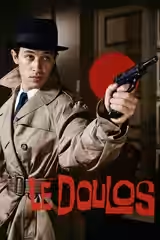
  2. Le Doulos (1962) · not on Fi1m yetFor criminal friendships conducted with enough suspicion to make conversation feel dangerous.

  3. Branded to Kill (1967) · not on Fi1m yetGangster vanity becomes stranger and funnier, with images that refuse to behave.

  4. The Friends of Eddie Coyle (1973) · not on Fi1m yetFor more criminals whose quiet working habits make them deeply unsettling.

  5. Gomorrah (2008, Fi1m 84)A harsher look at criminal ambition, with little patience for the glamour.