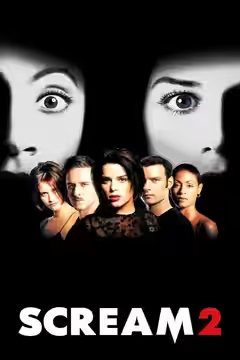
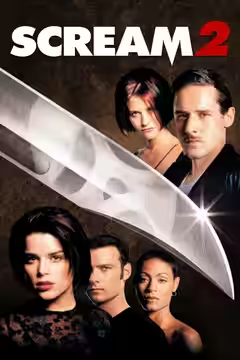
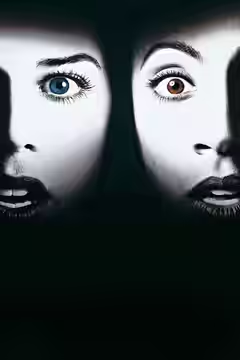
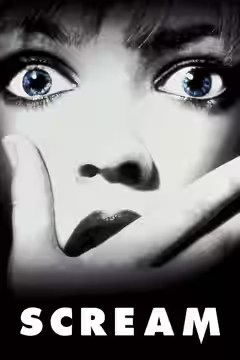
Wes Craven and Kevin Williamson take the mask to college and make a sequel that earns its jokes about sequels. The set-pieces are as good as anything in the first film; the ending explains itself at length and is the weaker for it.
Wes Craven and Kevin Williamson made Scream in 1996 about teenagers who had seen every horror film and were murdered by someone who had seen them too. The obvious next move was a sequel about sequels, and Scream 2 makes it. Early on, Randy Meeks (Jamie Kennedy) stands up in a film class and lists the rules: a higher body count, more elaborate deaths, never assume the killer is dead. For about a hundred minutes the film obeys the rules and cheats them at once. Then it starts talking.
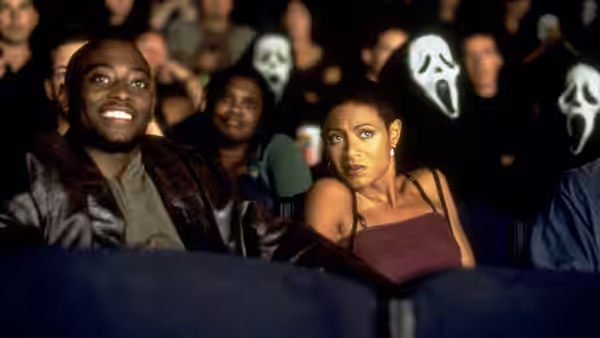
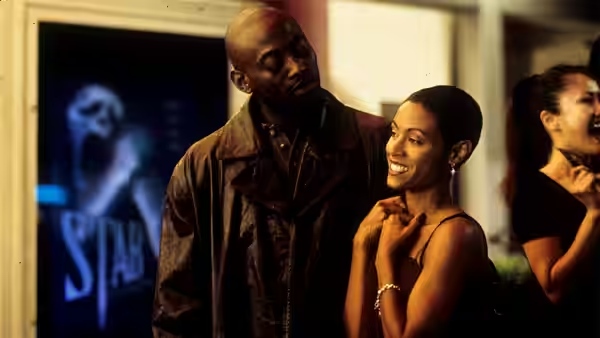
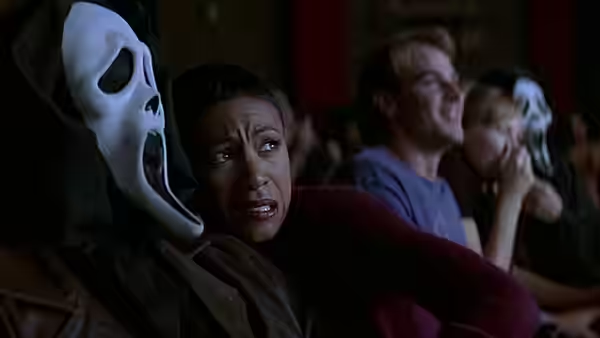
The opening is the best thing in the film. Maureen (Jada Pinkett Smith) and Phil (Omar Epps) go to the first screening of Stab, a film made from the Woodsboro murders, and the cinema hands out masks and plastic knives at the door. Peter Deming lights the auditorium only from the screen, so faces flare white and go black with every cut of the film they are watching. Patrick Lussier cuts between the murder in Stab and the seats until you lose track of which scream belongs to which film. We were more unsettled by this than by anything with a blade in it later: a room full of people cheering a killing they have decided is a stunt.
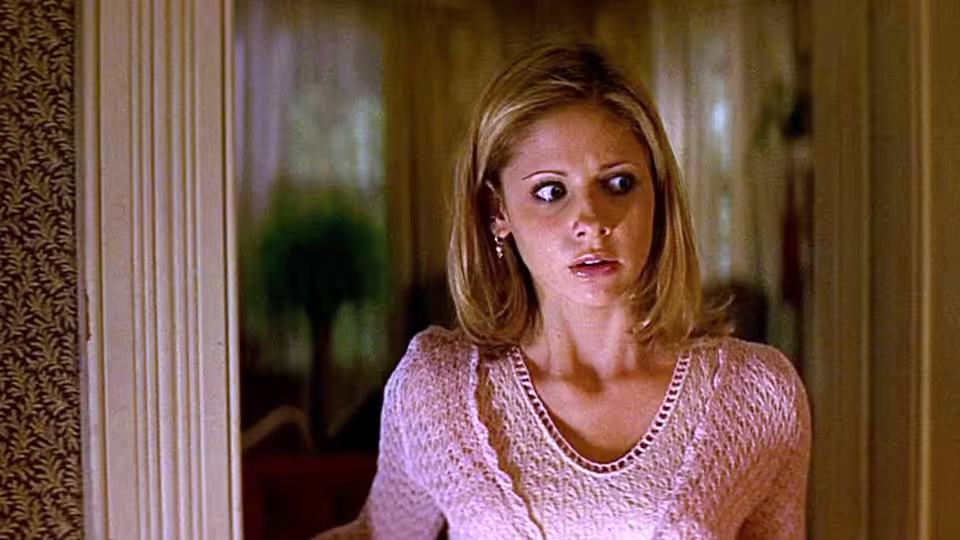
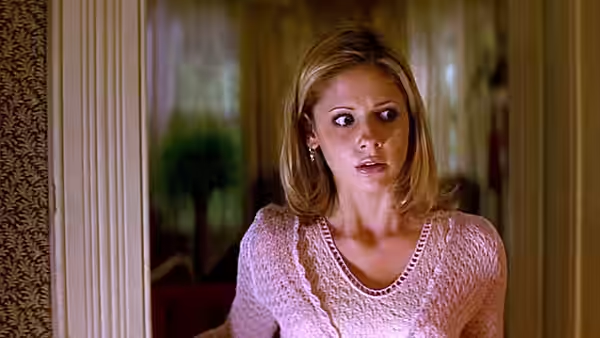
The set-pieces that follow hold the standard. Sarah Michelle Gellar’s Cici, alone in a sorority house while the party is elsewhere, gets a long, patient stalk through wide hallways, and Craven lets the camera drift ahead of her so we see the empty doorway before she does. A rehearsal of a Greek tragedy, on a black stage Bob Ziembicki fills with a masked chorus, surrounds Sidney with people who look like the man who wants to kill her. A sequence midway, involving a crashed police car and a masked man who may or may not be unconscious, we will not describe except to say we did not breathe for the length of it. Marco Beltrami’s score has grown since the first film: more brass, a wordless soprano over Sidney’s scenes, and a habit of going quiet a beat before Craven moves.
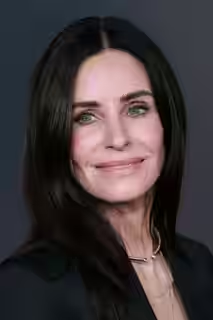
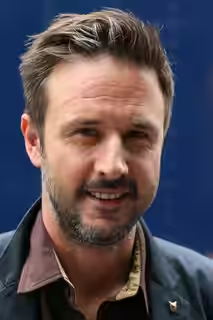
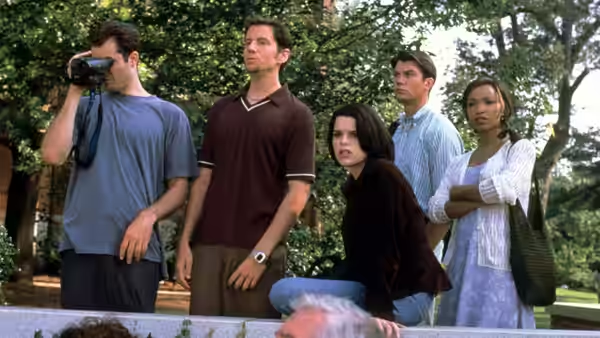
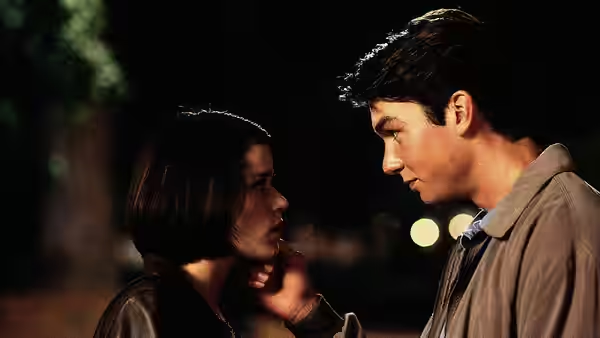
Courteney Cox is the reason to come back. Gale Weathers is nastier, funnier and better dressed than before, in Kathleen Detoro’s sharp-shouldered suits, and Cox plays her as a woman slightly appalled at how good she is at her job. David Arquette’s Dewey, walking with a limp he did not have last time, is the person she is rudest to and the person she keeps looking for. Neve Campbell plays Sidney Prescott tired rather than scared, and the performance is better than the script’s use of it. Liev Schreiber’s Cotton Weary, out of prison and hunting a television interview, gets the most uncomfortable scenes, and Laurie Metcalf is funny as the reporter who will not leave Gale alone.
The trouble is the last reel. Whoever is under the mask stops to explain, the explanation goes on for a long time, and it arrives at a motive that made us shrug where the first film’s made us sit up. Williamson has spent the film joking about how sequels let you down, and then the ending lets you down. Earlier, smaller problems: Sidney vanishes for stretches of the middle while the film enjoys Gale and Randy, and Craven lingers on the wounds more than before; the blood is redder and there is more of it, and it sits oddly beside the wit. At 120 minutes there is a quarter of an hour of campus we did not need.
Among slasher sequels this is rare company. The form’s rule is the same again with less; Scream 2 is the same again with the same wit. Against Craven’s own work it is a step down from Wes Craven’s New Nightmare, which made the film-about-films joke first and more strangely, and from the first Scream, whose ending it cannot match. Some critics have called it the better film; the opening and middle are stronger, and we still think the last twenty minutes decide it.
Watch it with the first film, in one sitting, with the landline plugged in. It carries an 18 certificate, for the reasons you would expect.