Film review

Scream 4

2011 · Directed by Wes Craven · 1h 51m · MPA R

In a sentenceEveryone in Woodsboro has seen every horror film ever made and still answers the phone

HorrorMystery

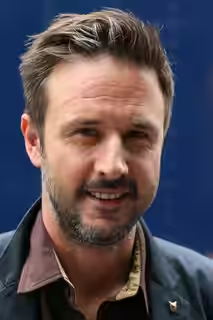
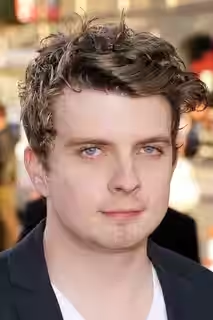
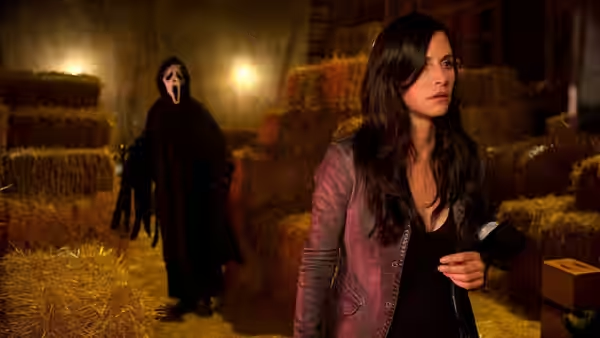
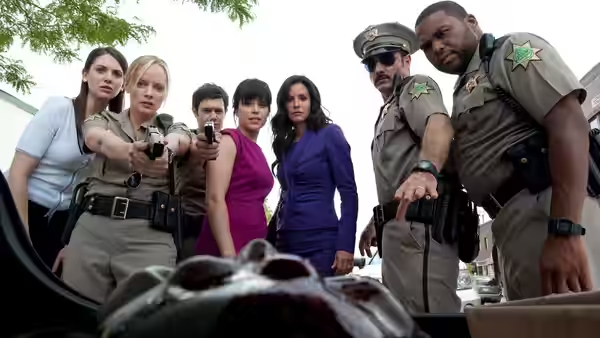
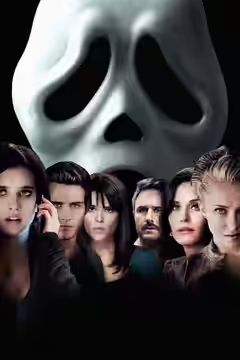
Fifteen years after the Woodsboro murders, Sidney Prescott (Neve Campbell) comes back to the town on the last stop of a tour for her memoir. Her cousin Jill Roberts (Emma Roberts) is still at the high school, with her friend Kirby Reed (Hayden Panettiere) and two boys from the cinema club, Charlie Walker (Rory Culkin) and Robbie Mercer (Erik Knudsen), who broadcasts his day from a camera clipped to his head. Dewey Riley (David Arquette) is now sheriff; his wife Gale (Courteney Cox) has stopped writing. The night before Sidney arrives, two girls are stabbed to death in a house across town, and a bloodied knife turns up in the boot of the car she came in. Then the calls start again, from a voice that has seen every Stab picture and wants to know her favourite scary film.

Plays from YouTube when you press play; nothing loads from them until then.

Fi1m review

Wes Craven and Kevin Williamson bring the knife back to Woodsboro with the jokes intact and the scares mostly missing. The opening and the last twenty minutes are the sharpest the series has been since the first film; the hour between them is deputies sitting in cars.

Fifteen years after the first Scream, Wes Craven and Kevin Williamson go back to Woodsboro and to the joke that made the original work: everyone in town has seen the films and knows what happens next. This time the target is the remake, and the phones the kids never put down. Scream 4 runs 111 minutes and the tagline promises new rules. It delivers some of them, in the first fifteen minutes and the last twenty, and spends the hour in between looking for the others.

The opening is the best stretch of writing Williamson has done for the series since the first one. It starts with two girls, a phone and a knife, and then it starts again, and the second start turns out to be a film inside the film, with characters complaining about the film they are in. Peter McNulty cuts these false starts fast, the ringtone landing on the edit, and the dialogue is quick and sour. We laughed, properly, several times in the first ten minutes. Then the joke came round once more and we felt it being explained to us, which is a feeling the film produces more than once.

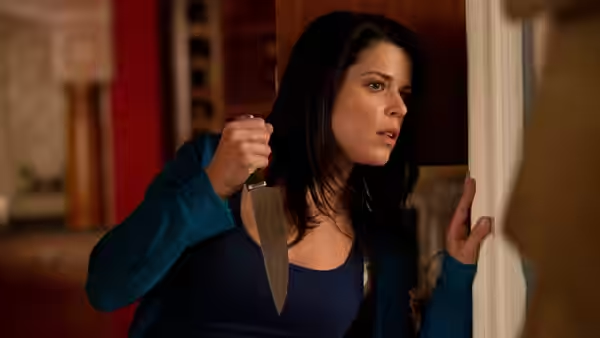
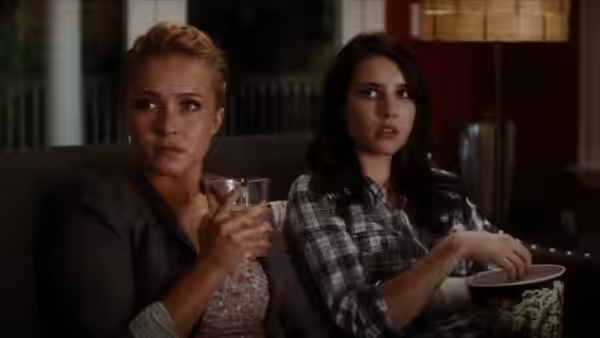
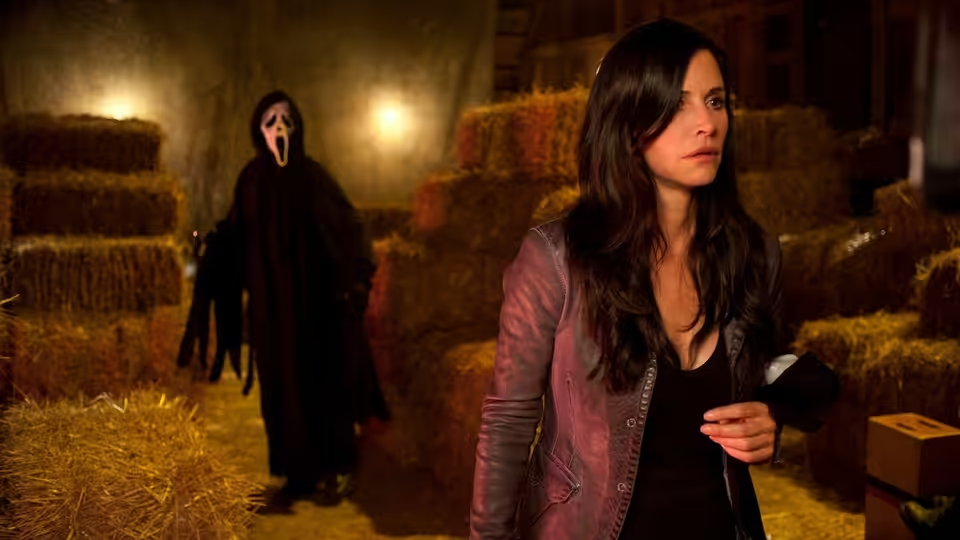
Hayden Panettiere’s Kirby Reed is the reason to sit through the middle. She plays a girl who knows every title and every rule and is not nearly frightened enough by either, and she gets the one scene of real suspense in the film. Courteney Cox has the best lines as Gale Weathers-Riley, a writer with nothing to write. Alison Brie, as Sidney’s publicist Rebecca Walters, is funny in her few scenes. Neve Campbell, top-billed, spends a good deal of the running time on her aunt’s stairs (Mary McDonnell is Kate Roberts), being told things, and the film has no idea what to do with a survivor who is now a grown woman with a book.

The middle is the problem, and the problem is staging. Peter Deming shoots the interiors bright and flat, like a television pilot, and the night exteriors in a blue-grey murk in which every lawn looks like every other. Craven built the first film’s set pieces on geography: you knew where the garage door was, and where the cat flap was, before either mattered. Here a girl runs down a corridor, a robe appears in a doorway, and we could not have drawn you a plan of any house in the film. Marco Beltrami’s stabbing strings do the work the images will not. Dewey Riley has three deputies, played by Marley Shelton, Anthony Anderson and Adam Brody, and their scenes in patrol cars go nowhere at all.

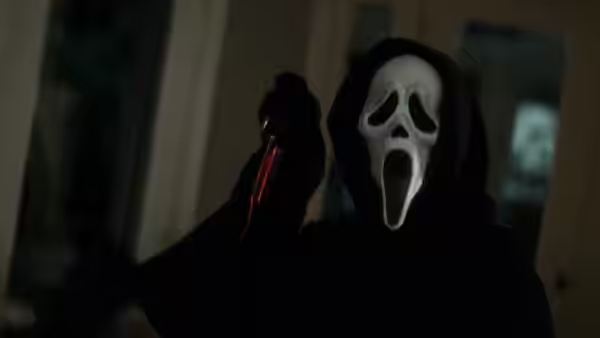
The violence is nastier than before, and this is the one place the film got at us. The knives go in and stay in, and Craven holds on the faces. One killing in a kitchen made us flinch and then feel a little grubby, because the scene before it had been laughing at exactly that kind of death. Adam Stockhausen’s Roberts house is a big suburban box of windows and half-landings, useful for a knife to come through, and Debra McGuire dresses the teenagers in the jeans and hoodies of an American teen network while leaving the robe exactly as it was. That is the right call. The costume is the one thing here nobody thought to update.

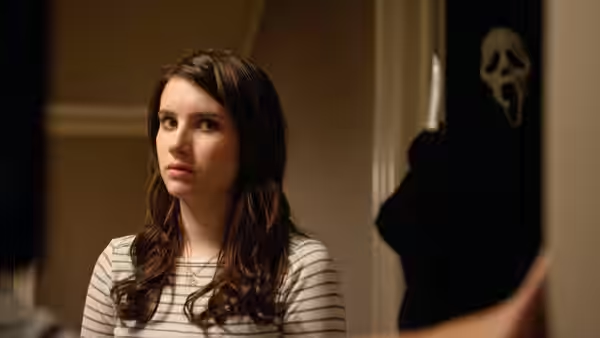
Emma Roberts, as Sidney’s cousin Jill, is sulky and a little blank, and Rory Culkin and Erik Knudsen, as the two boys who explain the rules of a remake to a room, are given a lecture rather than parts. Knudsen wears a camera on his head and streams his life, which the script treats as the whole of the internet. The film has things to say about fame and about wanting to be the girl in the story, and it says them, in dialogue, more than once. The last stretch takes turns we will not describe, and the reveal has a real idea in it. It is the only part of the film that uses the idea rather than announcing it.

Against Craven’s own record it is a middling entry: not the laziness of a studio sequel, since the people who made the first one are plainly still trying, but not the thing itself either. See it if you liked the earlier films and can quote the rules yourself. The 15 certificate is earned. Watch it with someone who will answer the phone halfway through; the film would approve.

Critical consensus AI synthesised

53
Positive
3
Mixed
10
Negative
4

Most critics land in the middle. The reviews agree the opening sequence is the sharpest stretch and that the jokes about reboots, internet fame and horror conventions still raise a laugh, even from those who tire of them later. Several count the final reveal a strength, and the stabbings are noted as crunchier and crueller than before. Warmer praise goes to Kevin Williamson’s script and to the newer cast members, with Hayden Panettiere and Alison Brie singled out for energy.

The reservations gather around the same self-awareness: a good number find it stale after eleven years, the middle stretch a run of red herrings, and the film too long and rarely frightening. The Hollywood Reporter adds that Neve Campbell is underused until the climax. The spread is wide, from Eye for Film calling it the best of the sequels to Collider finding it bitter and resentful.

Los Angeles Times
15 April 2011 · Betsy Sharkey
75*

The critic praises the return of writer Kevin Williamson for keeping the satire sharp and meta, while noting that the film lives up to its gory past with new terrors enabled by modern media. It values sarcasm alongside scares but delivers jump scares and clever references.

Read the full review →
Vulture
15 April 2011
65*

The review calls it a pretty fair hall-of-mirrors horror ride that opens wittily with a terrific climax and killer reveal, though much of the middle is a dead zone of red herrings. It singles out the graphic, sadistic violence—crunchy stabbings and one particularly cruel murder—as what keeps viewers engaged despite the campy self-awareness.

Read the full review →
Radio Times
★★★ · Josh Winning
60

The film manages to be more than a mere slasher curtain call with devilishly smart tricks, offering a wickedly entertaining dissection of internet fame and horror reboots. The meta jokes are funny, death scenes deliver post-Saw gore, and the twist is strong, though visuals are soupy and the script struggles with its large cast.

Read the full review →
Screen Daily
14 April 2011
60*

Scream 4 mixes murder, mystery and self-awareness to adequate if not exceptional effect as a piece of diversionary puzzlebox entertainment, but doesn’t pack the wallop of the best moments of its forebears. It succeeds on its own terms yet doesn’t really work or hold together as a scary movie in the conventional sense.

Read the full review →
Time Out
14 April 2011 · ★★★ · Nigel Floyd
60

The critic finds the film tries hard to recapture the original's self-referentiality but the over-cooked script fails to properly integrate modern horror trends or technology. It lacks the courage of its potentially subversive convictions and dissipates into a series of stabs in the dark.

Read the full review →
The Guardian
17 April 2011 · Peter Bradshaw
55*

The critic finds Scream 4 fun but more clever-clever than fiendishly ingenious. The film descends into familiar territory that circles until the horror-obsessed movie disappears up its own assiduity.

Read the full review →

Cast

If you liked this, try…

Scream poster86

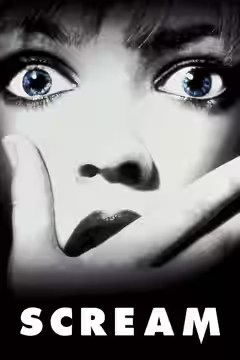
Scream

1996 · The original, when the joke was new and Craven knew where every door was.

Tenebrae poster

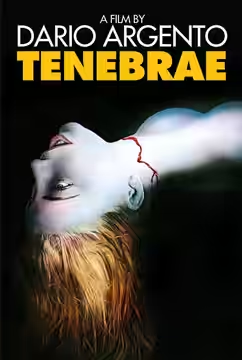
Tenebrae

1982 · Argento’s giallo about a writer whose killer is copying his books; the blood is very red.

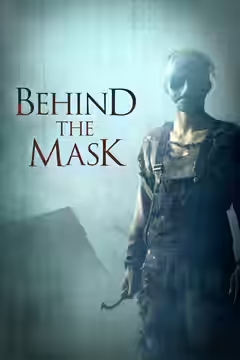
Behind the Mask: The Rise of Leslie Vernon poster

Behind the Mask: The Rise of Leslie Vernon

2006 · A slasher explains his own rules to a documentary crew; sharper than it sounds.

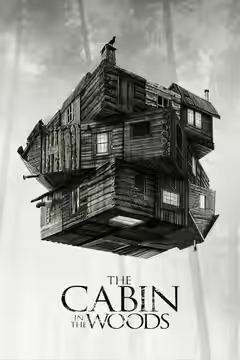
The Cabin in the Woods poster80

The Cabin in the Woods

2011 · The same year, the same joke, taken somewhere this film never dares.

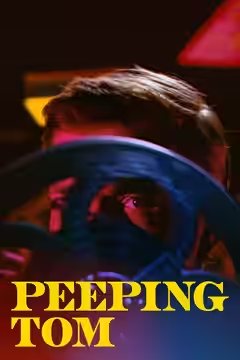
Peeping Tom poster

Peeping Tom

1960 · Michael Powell’s murderer films his victims; the camera-on-the-head idea, half a century early.