Film review

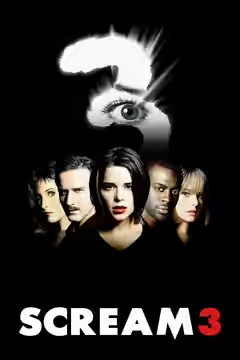
Scream 3

2000 · Directed by Wes Craven · 1h 56m · MPA R

In a sentenceParker Posey, dressed as Courteney Cox, is scarier than the man in the mask and funnier than everyone else on set

HorrorMystery

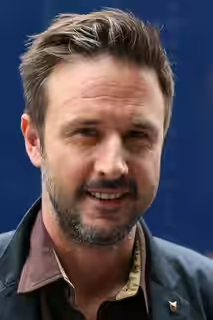
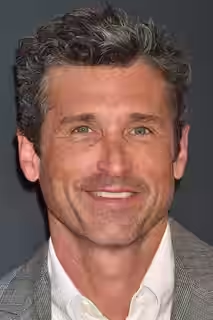
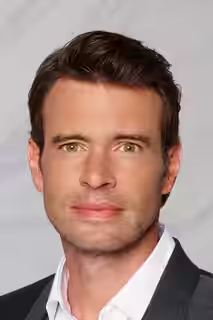
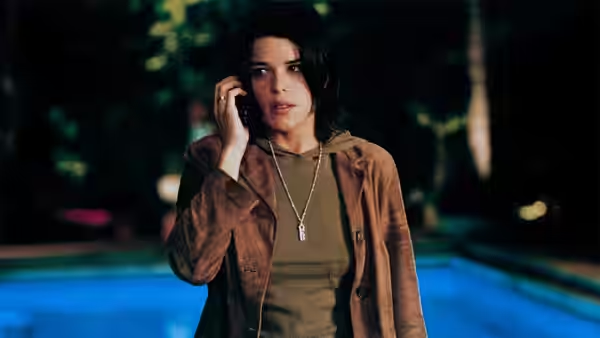
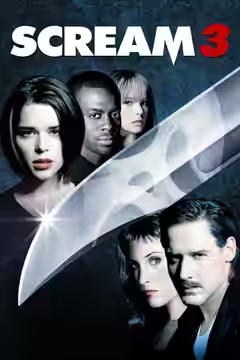
Sidney Prescott (Neve Campbell) has changed her name and lives alone in a house in the California hills, answering calls for a women’s crisis line. In Hollywood, a studio is shooting Stab 3, a film about the Woodsboro murders, with Jennifer Jolie (Parker Posey) as Gale Weathers and Roman Bridger (Scott Foley) directing. Then a member of the cast is killed, and a photograph of Sidney’s dead mother is left at the scene. Detective Mark Kincaid (Patrick Dempsey) takes the case. The real Gale (Courteney Cox) flies in, finds Dewey Riley (David Arquette) working as the production’s adviser, and the two are back in each other’s way. The killer has a device that lets him speak in any voice he likes, and he knows Sidney’s number.

Fi1m review

Wes Craven moves the murders to a Hollywood backlot and finds a good joke, mostly in Parker Posey. But Ehren Kruger’s script knows the rules of a trilogy better than it knows how to frighten anyone, and the phone calls have lost their sting.

Wes Craven’s Scream (1996) frightened people first and joked about it second. Four years on, the third film has moved the whole business to Hollywood, where a studio is shooting Stab 3, a film about the murders Sidney Prescott survived, and the killer has started working through its cast. It is a decent idea. Ehren Kruger’s script, taking over from Kevin Williamson, who stays on as a producer, gets a fair amount of comedy out of actors complaining about their parts as the parts are cut. What it does not get is a scare, and 116 minutes is a long time for a slasher to go without one.

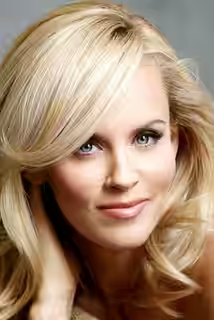
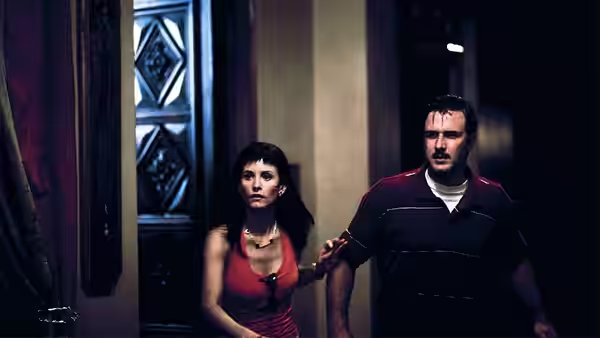
Parker Posey is the reason to watch. Her Jennifer Jolie is the actress playing Gale Weathers in Stab 3, and when the real Gale (Courteney Cox) arrives the two spend the film in near-matching suits, Abigail Murray having dressed Posey as a slightly louder edition of Cox, each appalled by the other. Posey delivers every line as though she has been personally wronged by it. We laughed more than once, and nearly every time it was her. Cox plays the straight woman and lets her.

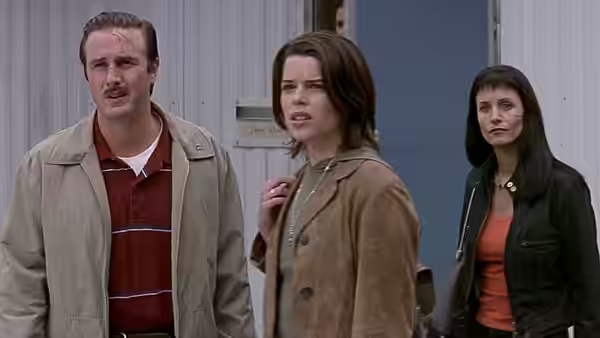
Neve Campbell has less to do than before, and the film is honest that this is the point. Sidney is hiding in a house in the hills with a false name and a crisis line, and the script spends much of its first hour away from her. When she does come to Hollywood, Campbell’s stillness is still the best thing the series has. David Arquette’s Dewey is now a technical adviser to the film-within-the-film, limping around a soundstage while Matt Keeslar’s Tom Prinze plays him as a hunk, and Arquette’s quiet hurt about that is the film’s warmest joke. Patrick Dempsey’s detective is pleasant and there to be suspected.

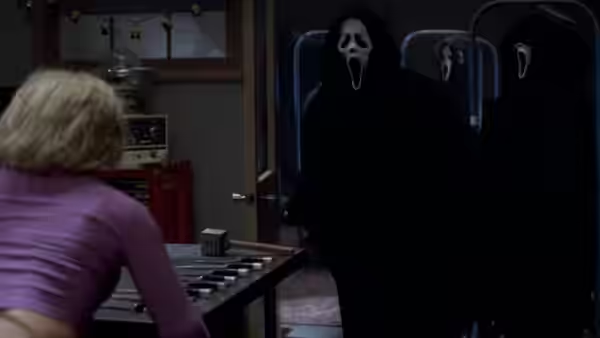
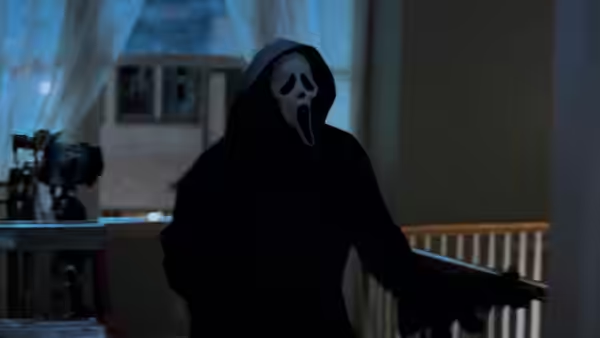
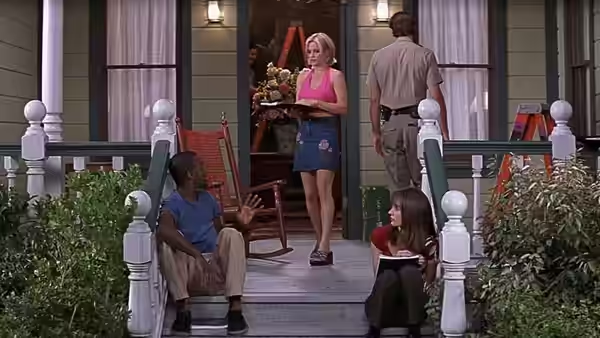
Bruce Alan Miller’s production design gives the film its one great set: Sidney’s Woodsboro house, rebuilt on a stage in plywood, the staircase in the right place and nothing behind the walls. Peter Deming shoots the real world in flat Californian daylight and the sets under working lamps, so that when someone runs from one into the other the light changes and so do the rules. One sequence in that fake house, later on, is the only time we sat forward: one woman, one corridor, a door that should not be open, Craven doing what he did in 1996. Patrick Lussier cuts the rest like a metronome, the jolt landing exactly where you expect it. Marco Beltrami’s score brings back the low Sidney theme and swells hard at every kill.

Here is what we felt, plainly. Somewhere in the first hour there is a killing on a studio lot, a person we have met twice, a knife, a photograph left behind, and we watched it as one watches a scene change. Nothing. The earlier films had us flinching at telephones for a week. The killer has a gadget that lets him speak in anyone’s voice, and the script uses it to move people around like chess pieces rather than to frighten them; every phone call is a plot device and none is a threat. And the answer to who is doing it, which we will not describe, is the thinnest of the three films, explained at length in a room while everyone stands still.

Craven had done this before, and better. New Nightmare (1994) put a horror film’s own cast in front of its monster and took the idea seriously. Scream 2 (1997) opened in a cinema and made the audience the victims. Scream 3 has a film crew explain how the third part of a trilogy works, then follows the rules without much conviction. Knowing the rules was the series’ joke; here it has become its excuse.

Most critics are split on this one and so are we, though we lean down. See it if you liked the first two and want Sidney, Gale and Dewey in the same room once more. Watch it at home, with someone who will enjoy Posey as much as you do. It carries an 18, which is generous; it is not violent enough to have earned it and not frightening enough to need it.

Critical consensus AI synthesised

56
Positive
6
Mixed
3
Negative
6

The reviews split almost down the middle, and a score in the mid-fifties reflects an argument rather than a shrug. Where most critics agree is on the humour: the in-jokes, the Hollywood film-set satire and the cameos are the elements singled out most often, and even the harsher notices grant it a few sharp gags. The cast draws steady approval, with Radio Times picking out Posey and Fisher and Roger Ebert praising Neve Campbell’s screen presence.

The reservations cluster on the horror. Several critics find the jolts mechanical, the plot over-stuffed and the sense of danger absent; Time Out calls it a poor copy of New Nightmare, and The AV Club sees Craven going through the motions. Sight and Sound finds the killer’s reveal weak. The spread is wide, from the Los Angeles Times, which finds it scary and amusing, to Paste, which calls it a mess. Film Stories, writing much later, argues the film has been misjudged.

Los Angeles Times
4 February 2000 · Kevin Thomas
90*

Scream 3 brings a blood-drenched, bravura conclusion to the trilogy with its smart, sharp edge intact; it is genuinely scary and highly amusing, regaining the edge lost in the previous installment.

Read the full review →
Screen Daily
7 February 2000
90*

A devilishly clever, supremely entertaining thrill ride, funnier and more intriguingly plotted than previous entries, with smart in-jokes and expertly staged setpieces.

Read the full review →
The Guardian
28 April 2000 · Andrew Pulver
70*

The critic praises the film's logical self-referential structure set on a Hollywood film set and its smart-alecky dialogue that reproduces the series' style. It appreciates the movie-industry satire and Hollywood references while hoping the trilogy ends there.

Read the full review →
The New York Times
4 February 2000 · NYT Critic’s Pick · Elvis Mitchell
70*

The film is funny and brisk with enough good lines to make the comedy more satisfying than the routine jolts; it functions as much as a personality show as a slasher film.

Read the full review →
Variety
7 February 2000
70*

Hyped as the final chapter, Scream 3 is a crafty and well-crafted wrap-up that brings a satisfying sense of closure to the franchise through its witty handling of the series' conventions.

Read the full review →
Empire
1 January 2000 · Clark Collis
65*

The film delivers satisfying comedic schlock horror with energy and strong cameos, but the premise is starting to wear thin as the trilogy concludes.

Read the full review →

Cast

If you liked this, try…

Wes Craven's New Nightmare poster

Wes Craven's New Nightmare

1994 · Craven’s earlier and sharper film about a horror film’s cast meeting its own monster.

Scream 2 poster74

Scream 2

1997 · The middle film, with the cinema opening this one never comes close to matching.

Peeping Tom poster

Peeping Tom

1960 · A killer on a British film set, shot by Michael Powell; still uncomfortable.

Tenebrae poster

Tenebrae

1982 · Argento’s writer stalked by a fan of his own books; the mirror image of this.

Behind the Mask: The Rise of Leslie Vernon poster

Behind the Mask: The Rise of Leslie Vernon

2006 · A slasher explains his rules to a documentary crew; funnier and more frightening.