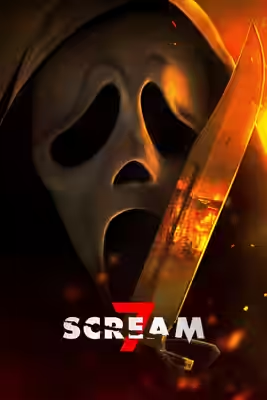
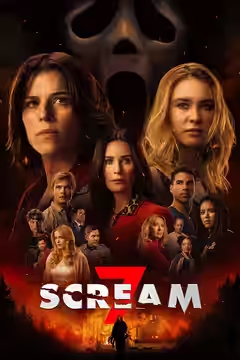
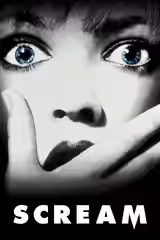
Kevin Williamson directs his own script at last, Neve Campbell is back and on form, and the film around them is the least sharp the series has produced. Competent murders in the dark, suspects you will spot from the sofa. For the faithful, and only just.
Kevin Williamson wrote Scream in 1996 and Wes Craven directed it, and the joke of that film was that its characters had seen the same horror films as the audience. Thirty years on Williamson is directing for the first time, from a script he wrote with Guy Busick, on a story by Busick and James Vanderbilt. Sidney (Neve Campbell) is Sidney Evans now, with a husband, Mark (Joel McHale), a daughter, Tatum (Isabel May), and a life that has been quiet for long enough to be suspicious. The phone rings, as it must. It is watchable, it is not stupid, and it is the first entry in the series with almost nothing to say about horror films.
The opening states the problem. It is a long prologue about the rules of the genre and the rules of this series, and it goes on well past the point where the rules are established. The 1996 film did this in three minutes because nobody had done it before. Here the routine runs and runs, and by its end we were already checking how much of the 114 minutes remained.
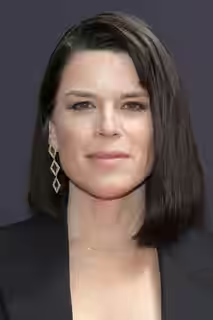
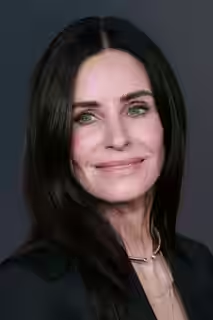
Campbell is the reason the film is not worse. She plays Sidney as a woman who has been managing fear for so long that it has become a set of habits, checking doors, choosing where to sit, and Williamson gives her room to do it without a speech. When Courteney Cox arrives as Gale Weathers the film briefly has a pulse. Thirty years of playing these parts has given them a shorthand, and every scene they share is better played than the scenes around it. We were gladder to see them than we expected to be, and we noticed that the gladness was doing work the script should have done.
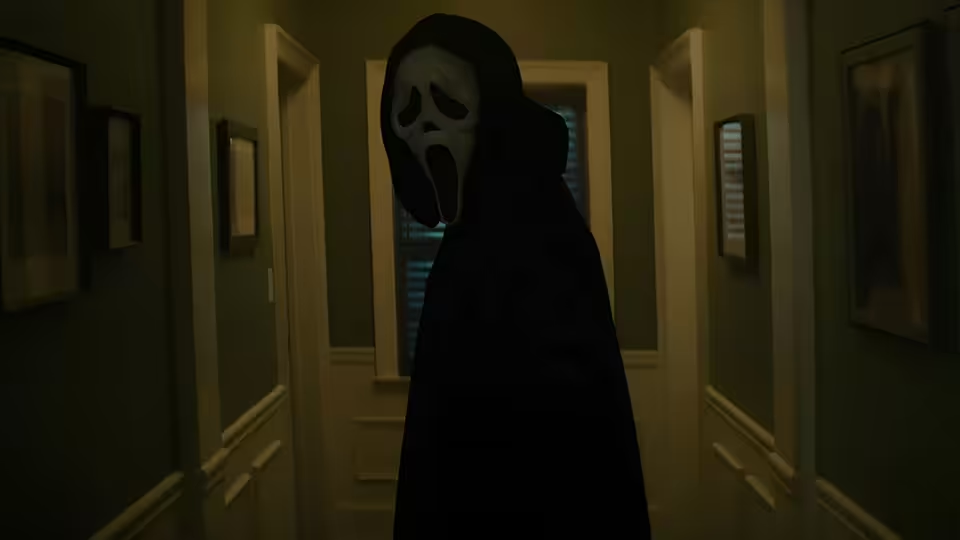
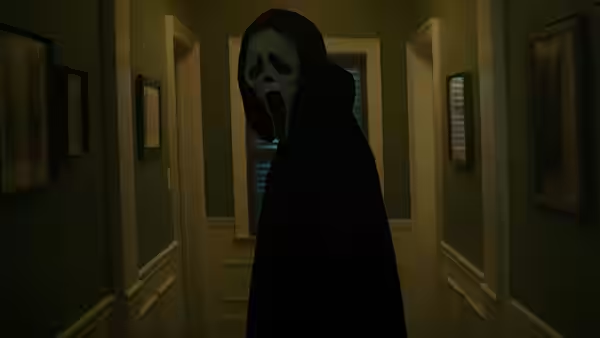
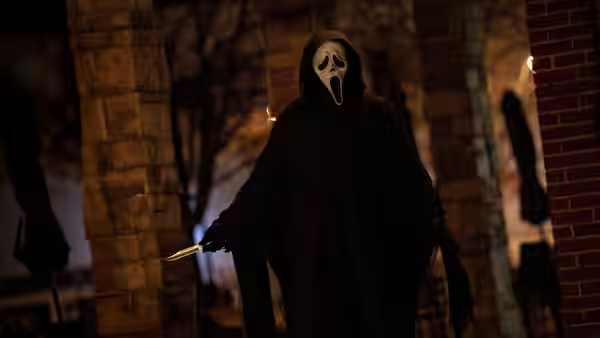
The murders are the trouble. Tim Ives and Ramsey Nickell shoot most of them at night in a murk that hides the layout of each house, so that we often could not tell which door the mask had come through, and a stalking scene where you cannot read the space is not frightening, only noisy. Jim Page cuts them to a similar shape each time, approach, lunge, escape, so that the fourth plays like the second. We were bored by the halfway mark, and then we were cross about being bored, because these are the scenes the series exists for.
The younger cast are given costumes and a grudge each and not much more. Anna Camp, Celeste O’Connor, Sam Rechner, Asa Germann and Mckenna Grace stand around Tatum as a ring of suspects, and the film points at them so evenly that two announce themselves early. Isabel May is fine, and stuck; the script wants Tatum to be the new Sidney and keeps handing the interesting decisions to the old one. Jasmin Savoy Brown and Mason Gooding, so good in the two previous films, are here mostly to remind us of them.
Marco Beltrami, who scored the original, returns with a score that leans on his old themes, and John Collins’s production design and Leigh Leverett’s costumes keep everything in the flat suburban key of 1996. This is a return to the first film’s ground, made by the man who drew the map. What it lacks is the thing that made the first film matter, a point of view about the genre it was standing in. Roger L. Jackson’s Voice still asks its questions down the line. Nobody in this film has an answer he has not heard.
Most critics have landed roughly where we have, divided between the mildly entertained and the fed up. Against the series’ own best, the first film and the last two, this is the entry with the least on its mind. Against the run of ordinary slasher sequels it is tidy and acted by grown-ups.
See it if you have seen the other six and would feel odd stopping now; the 18 certificate is honestly earned and Campbell will not let you down. Everyone else can wait, except for the surprise of the suspects, which the film has already given away.