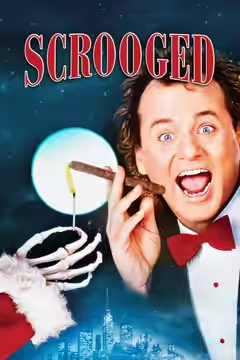
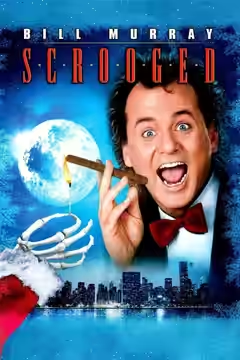
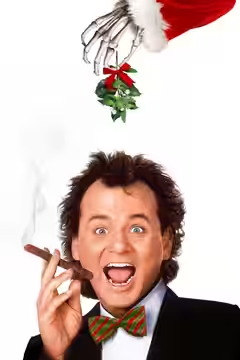
Bill Murray’s bad temper supplies most of the pleasure in this uneven Christmas comedy. The ghosts have bite, but Richard Donner struggles to make the warmer passages as persuasive as the cruelty.
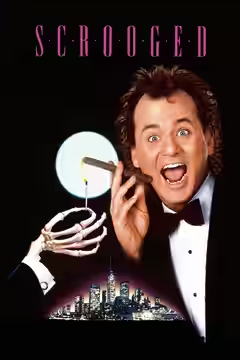
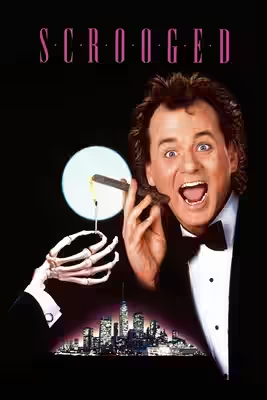
Richard Donner’s Scrooged is a fitfully funny Christmas comedy, worth considering for Bill Murray’s bad temper rather than for any dependable supply of festive warmth. Writers Michael O’Donoghue and Mitch Glazer give Francis Cross enough cruelty to keep the early scenes sharp. The difficulty comes when the film wants a broader range of feelings without making its other characters equally interesting. At 101 minutes, it still finds time to repeat effects that were more amusing before they became so insistent.
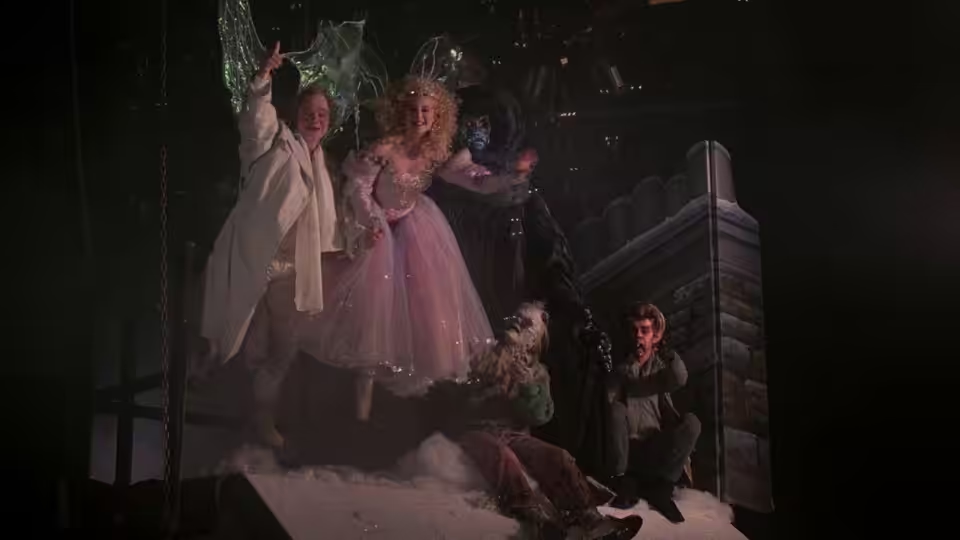
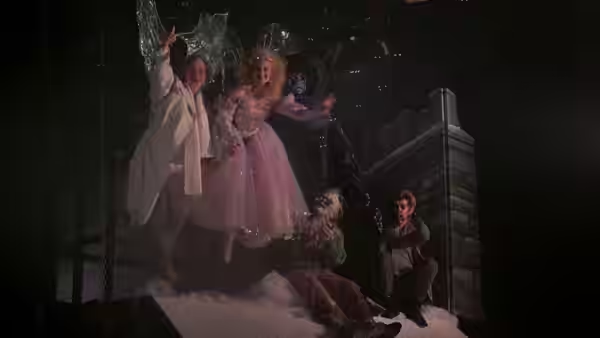
The attack on Santa’s workshop is a good indication of what works. We laughed at it because the violence makes such nonsense of the expected Christmas cosiness. J. Michael Riva’s production design gives the festive imagery enough solidity for its mistreatment to register, rather than letting everything look like a disposable joke. Richard Donner understands how much pleasure there can be in upsetting a familiar seasonal picture, and the opening has the confidence to do it without apology.
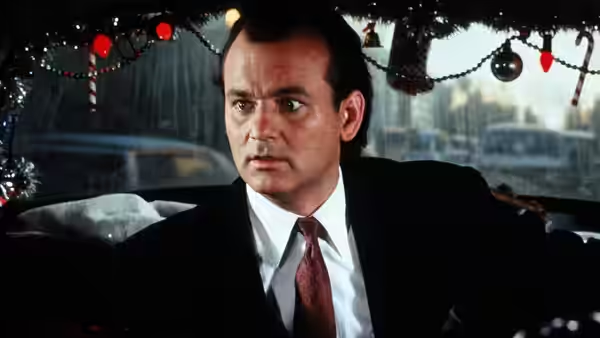
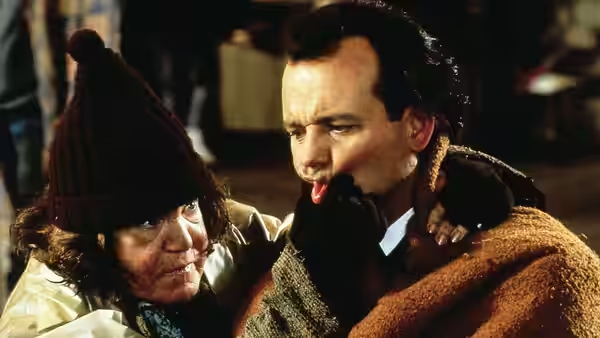
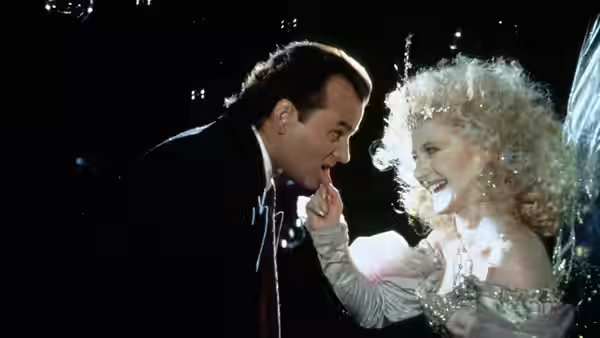
Bill Murray makes Francis Cross unpleasant without asking us to congratulate him for being daring. His sour expression is often funnier than the louder business, because it suggests that even the smallest demand on his goodwill is an affront. Alfre Woodard, as Grace Cooley, provides a welcome change in emphasis: her performance makes ordinary decency seem credible in surroundings that encourage caricature. We wanted more of that steadiness, particularly when the lead’s increasing volume begins to do the work of an actual joke.
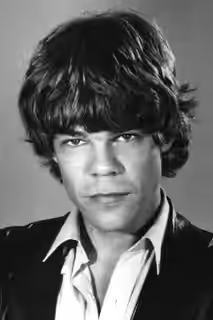
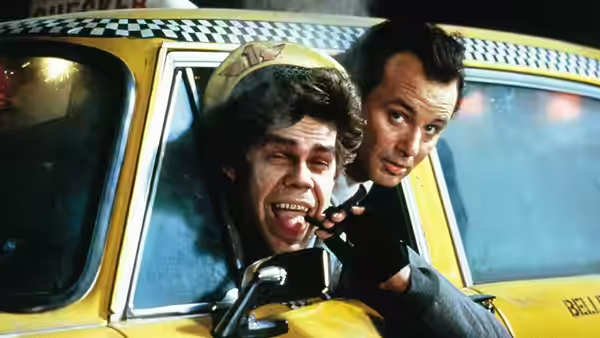
David Johansen’s cab-driving Ghost of Christmas Past is another useful interruption, with a comic roughness that suits the film’s appetite for discomfort. Carol Kane’s Ghost of Christmas Present is more forceful still, and her directness gives the comedy a needed change of pace. Michael Chapman’s cinematography helps the supernatural material feel threatening enough to disturb the joking. The ghosts work because they can be funny without making the prospect of their company remotely appealing.
The less successful passages are the ones that keep pushing after the comic point is clear. William Steinkamp and Fredric Steinkamp’s editing allows the frantic stretches to run on, so that force gradually replaces surprise. Danny Elfman’s music is more persuasive at sustaining the supernatural unease than at helping the film towards tenderness. The craft gives the ghost story weight, but it cannot supply the quieter attention to people that the script too often neglects.
A Christmas comedy can be abrasive and still earn its moments of generosity. Here, the warmer passages ask for more sympathy than the writing has prepared us to give, and the change in tone can feel imposed. Richard Donner is more assured when unsettling us than when allowing a feeling to develop without pressing it. Against the expectations of the Christmas ghost story, this is a substantial weakness, even when the actors give him something worth leaving alone.
The PG certificate is worth noting alongside the sour humour and the film’s taste for frightening imagery. This is a poor choice for an evening that needs uncomplicated reassurance. If the attraction is Bill Murray in a sustained bad mood, allow for some noisy stretches between the laughs.