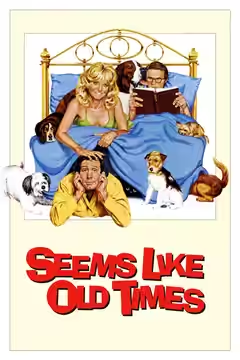
Neil Simon’s try at a 1930s screwball comedy is pleasant, slack and often funny, and nearly all the funny is Charles Grodin, whose district attorney watches his house fill with dogs, criminals and his wife’s ex-husband. Worth an evening; do not expect speed.
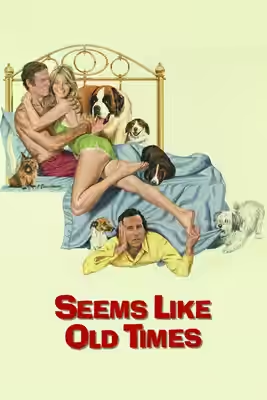
Neil Simon has written a 1930s screwball comedy and set it in 1980. The pieces are all the old ones: a divorced couple who still finish each other’s sentences, a respectable second husband, a dinner party that must not go wrong, and a house with too many doors. Jay Sandrich, whose career was in television comedy, directs it the way he would a half-hour show, with the camera standing back and the actors doing the work. Some of them do a great deal of it. One of them does almost all of it.
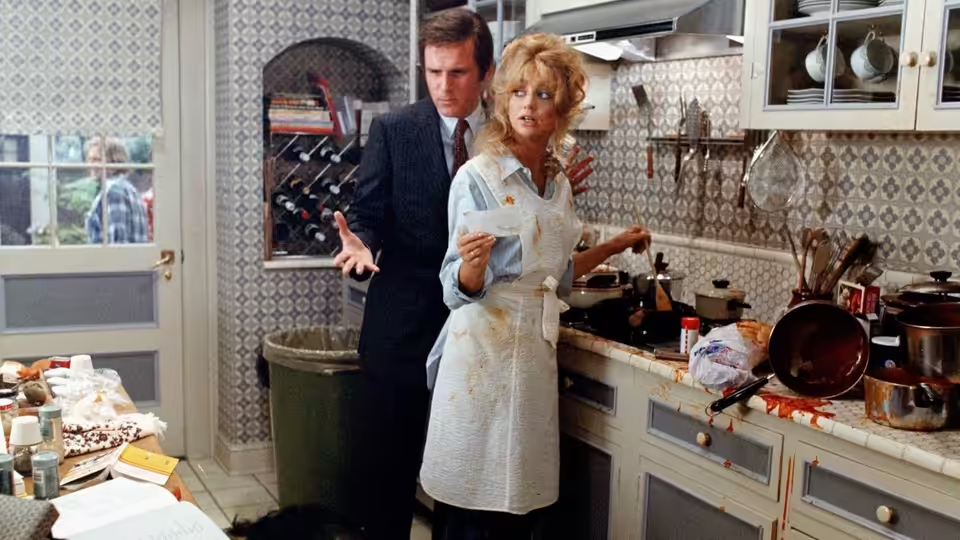
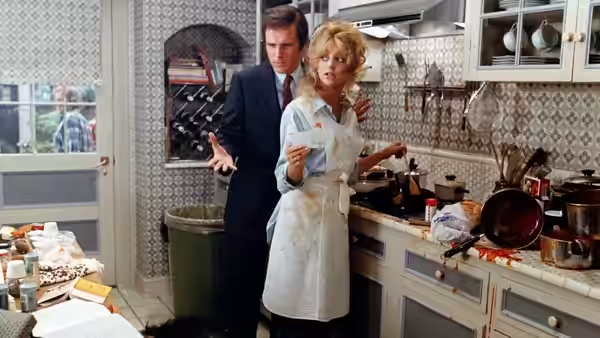
That one is Charles Grodin. Ira Parks is a careful, decent man who keeps being handed things he cannot account for: a strange car in his drive, a strange man’s shoes, a wife who answers every question with a question. Grodin plays him without a single raised voice. He pauses, he looks at the thing, he looks at his wife, and he decides, visibly, not to ask. We laughed out loud, more than once, at the dinner for the Governor, where Ira sits at the head of his own table accepting compliments on a meal he did not cook, from a man he wants to impress, while the fugitive he is prosecuting works the stove on the other side of a swinging door. Grodin’s face across that table is the best thing in the film.
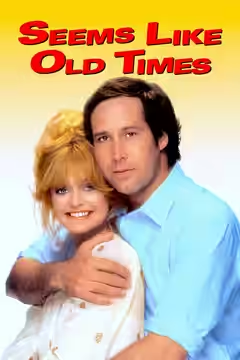
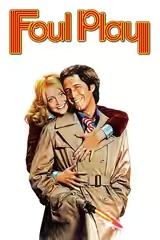
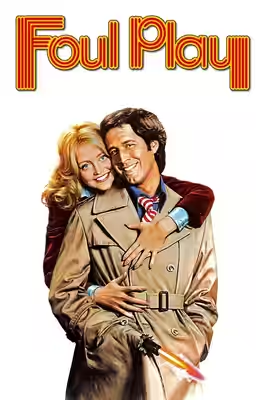
Goldie Hawn and Chevy Chase had already been paired in Foul Play (1978), and they are easy together here. Hawn’s Glenda is a lawyer who believes everyone and is usually right to, and Hawn plays her as warm rather than dim, which is harder than it sounds. Chase is the weaker half. He plays Nick as a man who already knows he is the hero and finds the whole business faintly beneath him, and the smile he gives Hawn in their first scene back together is the smile of someone checking a mirror. When Simon’s dialogue is quick enough he keeps up with it. When it slows, he waits for it.
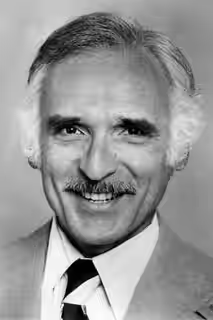
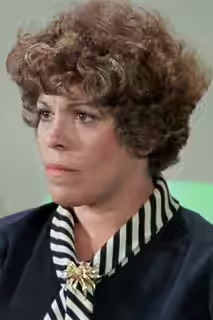
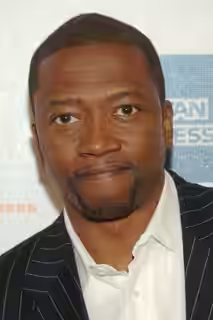
The house staff are the film’s reliable second line. T. K. Carter’s Chester is a chauffeur who has plainly never driven anything, and the car’s repeated failures to get through the gate are timed as well as anything here. Yvonne Wilder’s Aurora is a maid who meets every crisis by fainting, which the script uses exactly the right number of times and then once more. Robert Guillaume, as Fred, Ira’s colleague at the office, gets the dry lines and delivers them drily. Harold Gould turns up as a judge, and we will leave it there.
The craft is modest and knows it. David M. Walsh lights every room evenly and brightly, which suits the sitcom timing Sandrich wants and takes away the shadows a farce door could use. Gene Callahan gives the Parks house a tiled hall, a long staircase and a kitchen built around that swinging door, and the geography is always clear, so we know who is behind what. Betsy Cox keeps Hawn in sensible courtroom suits and leaves Chase in the same clothes for most of the film, as a fugitive would be. Marvin Hamlisch’s score is brass and bounce, and the old standard of the title keeps drifting back in like a guest who will not go home. Michael A. Stevenson cuts gently; scenes are allowed to run a beat or two past their last laugh, and 102 minutes feels a little longer than that.
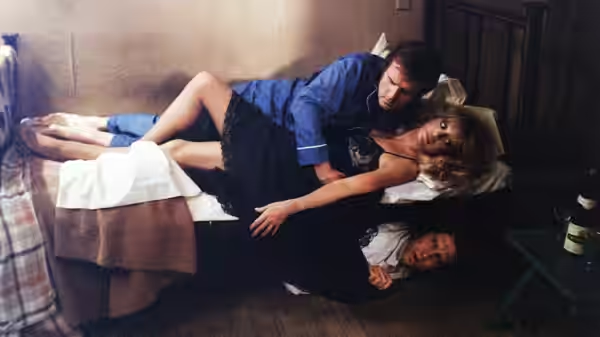
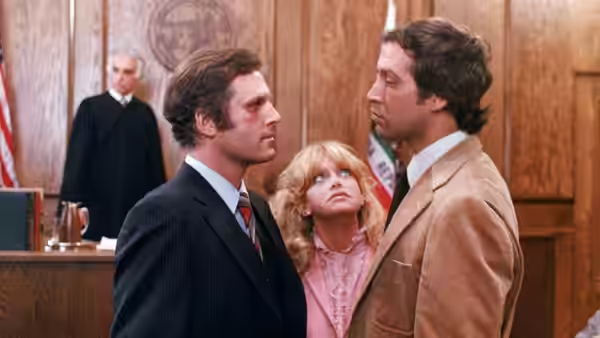
That slackness is the real complaint. The Odd Couple put two men in one flat and tightened the screws. This puts a husband, a wife, an ex-husband, six dogs, two cats, a maid, a chauffeur and a governor in one house, and then lets them wander. The second half moves to a courtroom and takes a turn we will not describe, but it is the kind of turn that announces itself from the next room. We were never bored; we were never surprised either, and a screwball comedy ought to manage one of those.
Watch it on an evening when you want to be amused rather than startled, with someone who likes Charles Grodin or is about to. It is kind, it is tidy, and it is funnier than its pace deserves.