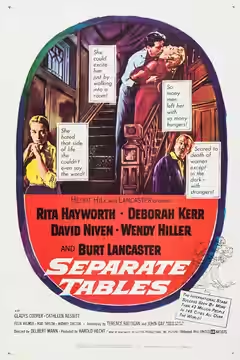
Half of Delbert Mann’s Rattigan adaptation is as good as English screen acting of its period gets, with David Niven and Deborah Kerr at the centre. The other half is Burt Lancaster and Rita Hayworth being unhappy at each other, and it never fits.
Terence Rattigan wrote Separate Tables as two one-act plays set in the same Bournemouth hotel, and on the stage one pair of actors played both sets of lovers. Delbert Mann’s film, from a screenplay by Rattigan and John Gay, runs the two stories at once, in the same dining room, with four actors instead of two. It is decent carpentry and the joins do not always hold. Half of this film is as good as English screen acting of its period gets. The other half is Burt Lancaster and Rita Hayworth being unhappy at each other in a seaside lounge, and it never quite belongs in the building.
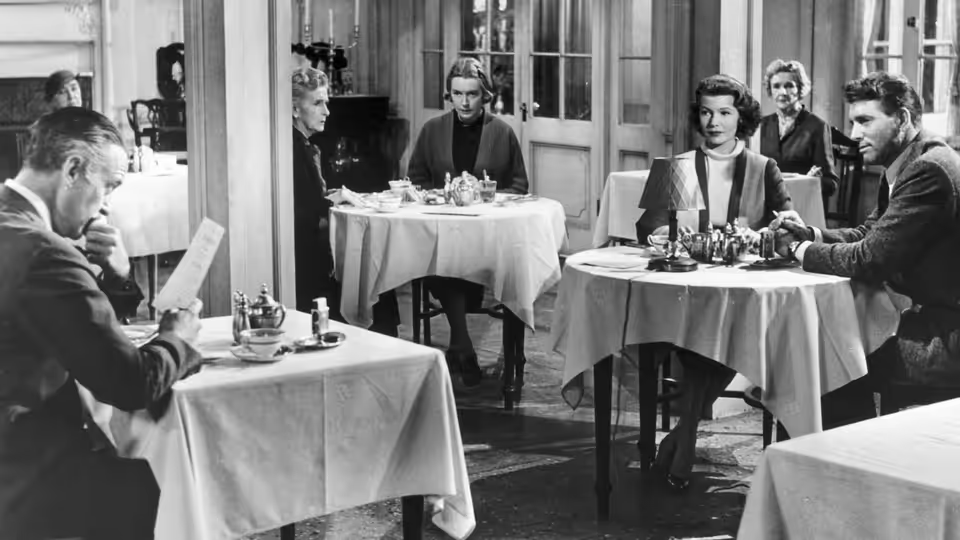
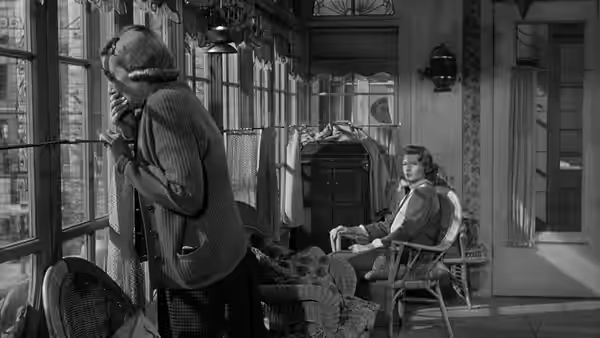
The building is the point. Harry Horner’s Beauregard is a hotel nobody chose: a lounge of chintz and standard lamps, a dining room where each resident eats alone at a table that is theirs by right of years, a hall where the post is inspected before it is claimed. Charles Lang photographs it in black and white, wet windows and a low grey sea beyond, and keeps the camera mostly at seated height, so we are always one of the diners. Edith Head puts Kerr in cardigans that have given up and Hayworth in gowns that plainly came from somewhere else, and that one difference does more work than several pages of dialogue.
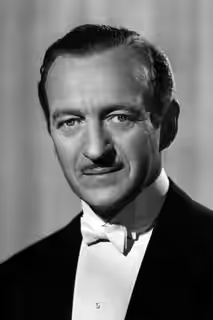
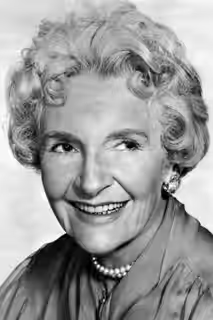
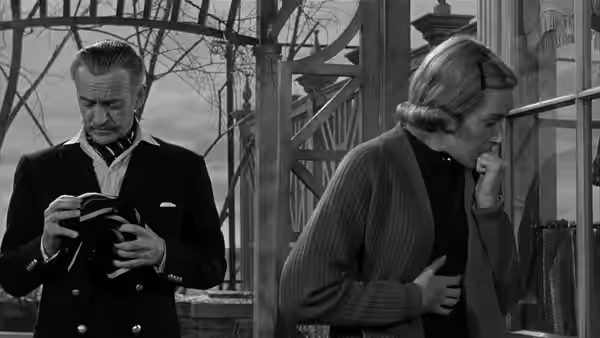
Niven’s Major Pollock is the reason to watch. He is a man built out of anecdotes, Sandhurst and the desert and what the colonel said, and Niven lets us see the effort in every one: the small glance to check the story has landed, the laugh that arrives too soon. When the film puts him in trouble, and it does, he does not go to pieces; he gets smaller, which is far worse. Kerr’s Sibyl watches him with her hands. She twists a handkerchief, her cuffs, her own fingers, and when Gladys Cooper’s Mrs. Railton-Bell says her daughter’s name we felt our own shoulders go up. We disliked that woman with a heat that surprised us, and Cooper earns it. She is never loud, only certain, and certain is what a bully sounds like in a good hotel.
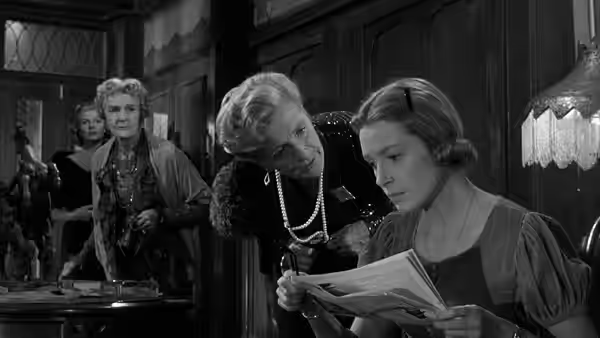
Wendy Hiller’s Pat Cooper runs the place and holds the two halves together, a practical woman who has decided exactly how much she can afford to feel. Cathleen Nesbitt and May Hallatt, as the widow with her wireless and the woman with her racing form, are the chorus, and they make ten minutes of gossip over the crossword worth more than most of the plot. Felix Aylmer’s Mr. Fowler, still waiting for a pupil who does not come, has one telephone call that is close to unbearable.
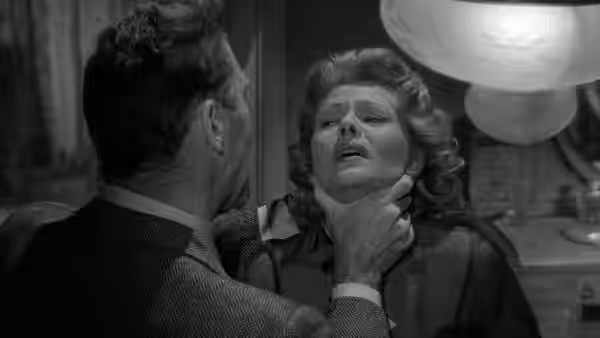
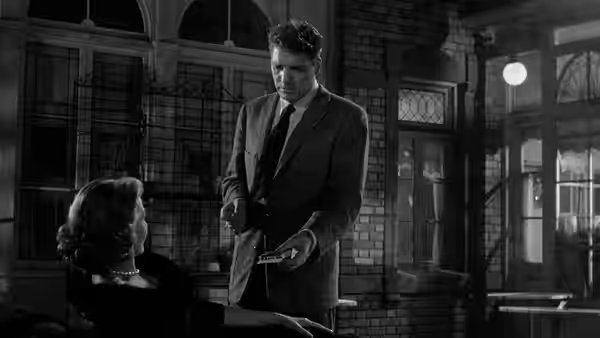
Then there is the table by the window. Lancaster, who also produced, plays John Malcolm as a large angry man with a drink problem and a past, and Hayworth’s Ann arrives to reopen it. Both are good actors and both are working hard, and the scenes still feel imported. Rattigan’s people say less than they mean; these two say everything, twice, at a volume the dining room was not built for. Hayworth has her moments, mostly when she is silent and Lang holds on her face longer than the script needs, but the writing hands her a woman to explain rather than a woman to be.
Mann directs it the way you would direct the play: put good actors on one set and let that set be the whole world. Reviewers at the time called it stagey, and it is. Three editors are credited, and the film mostly cuts on the ends of speeches, as a stage manager would. David Raksin’s score is best when it stays out; the big string cue under the lovers’ quarrel tells us what Lancaster’s face had already said. The second half turns on something the morning paper brings into the lounge, and we will not say what, except that what follows is the film’s best quarter of an hour and belongs almost entirely to the English tables.
It runs 98 minutes and asks for nothing more than attention. See it for Niven, for Kerr, for Hiller and Cooper. When Lancaster and Hayworth are on, you may find yourself doing what the residents do, and watching the far side of the dining room.