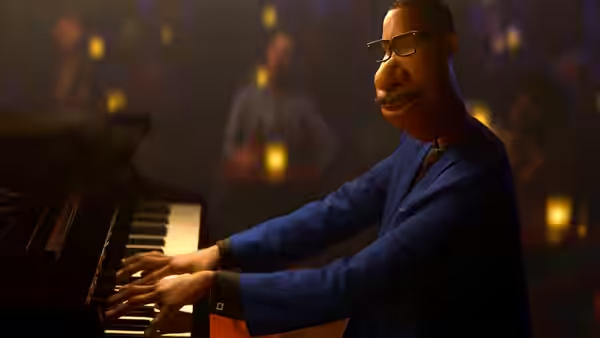
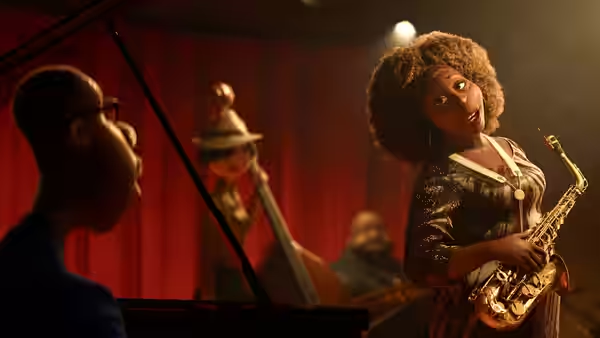
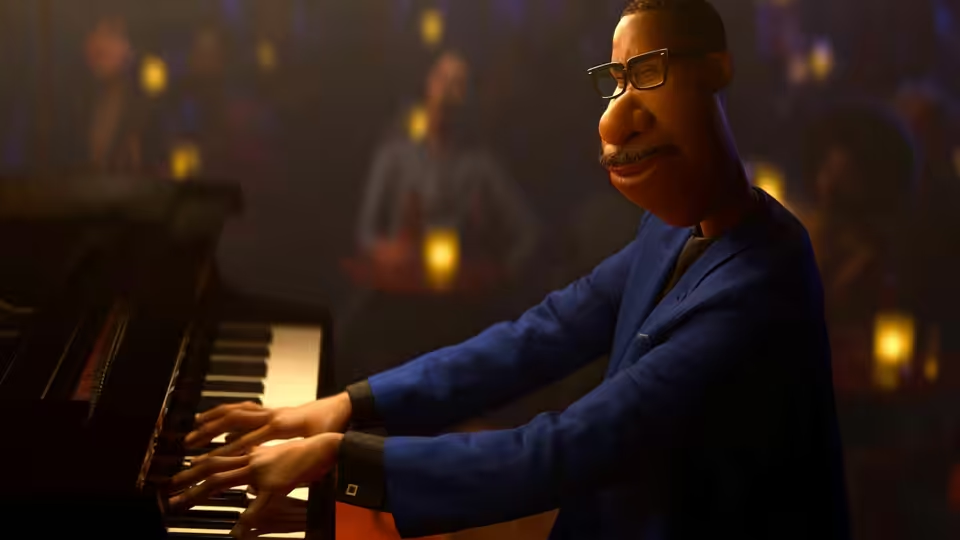
Joe Gardner (Jamie Foxx) playing piano in a dimly lit jazz club
Film review

Soul

2020 · Directed by Pete Docter · 1h 41m · ClassInd L

In a sentenceThe jazz is a fine reason to be alive, even if the afterlife comes with too many instructions

Joe Gardner (Jamie Foxx) puts jazz at the centre of his life in New York. His mother, Libba Gardner (Phylicia Rashad), belongs to the everyday world surrounding that ambition. Beyond it lies the Great Before, a realm of souls where finding a purpose becomes a practical concern. Here Joe encounters 22 (Tina Fey), who struggles to feel the enthusiasm he finds in music. Joe wants his life to count, but 22 has trouble finding anything worth wanting. Their uneasy friendship brings his devotion to jazz up against her reluctance to embrace life, with the city and its music offering a contrast to the unfamiliar soul world.

Plays from YouTube when you press play; nothing loads from them until then.

Fi1m review

Pete Docter makes a funny, moving animation about the pressure to find a purpose. The rules of its soul world need pruning, but Jamie Foxx and the jazz give Soul enough life to earn a warm recommendation.

Soul is good company for anyone who has worried that they are not doing enough with their life. Joe Gardner’s devotion to jazz offers a way into that worry without beginning with a lecture, though lectures do eventually arrive. The screenplay by Pete Docter, Mike Jones and Kemp Powers asks a worthwhile question: how much of living gets missed while we wait for life to become what we planned? We recommend it warmly, with some patience required for the rules governing its world of souls.

Jamie Foxx gives Joe enough warmth to keep his absorption in music from becoming simply self-important. We can hear why it matters to him, and why anything outside it might struggle to hold his attention. Tina Fey makes 22’s resistance to enthusiasm funny without making the character seem incapable of feeling anything. The friendship is familiar family-animation territory, and the script occasionally settles for the expected exchanges between an eager character and a reluctant one. Both performances make those exchanges pleasant, but they cannot always make them surprising.

The music does more than establish that Joe likes jazz. Jon Batiste’s jazz writing has the energy and responsiveness the story needs if we are to understand such devotion. With Trent Reznor and Atticus Ross also contributing music, the score gives the film a coherence its plotting sometimes lacks. We felt a rush of pleasure as the animation let colour and shape follow the jazz. Those passages make the attraction of losing all sense of time while playing understandable without another speech about passion.

The New York passages benefit from Ian Megibben and Matt Aspbury’s cinematography, which gives the city warmth through the lighting rather than simply turning up the colour. The barbershop and the workplace of Joe’s mother feel like places people use each day. Steve Pilcher’s production design makes those places seem worth spending time in, even with the Great Before available to explore. We can believe that Joe has overlooked plenty of interest close to home.

Where it falters is in the amount of explaining it thinks these invented places need. The rules accumulate, and the effort of following them begins to interfere with the questions that brought us here. Kevin Nolting’s editing keeps the comedy moving, but the middle section still feels crowded with complications. The film runs for 101 minutes, and some of that time would be better spent letting its characters talk.

There is another cost to the time spent away from New York. Joe is a Black lead whose surroundings have been imagined with care, yet the fantasy keeps taking him away from those people and places. The city scenes suggest relationships and routines worth exploring at greater length. We wanted more of that life, particularly when the alternative was another complication in the soul world. Jamie Foxx’s performance makes that lost time particularly frustrating.

As a family animation, Soul takes an unusual interest in the anxieties of adults who think they ought to have achieved more. Some younger viewers may find the music and visual play easier to follow than the explanations, and the film is better when it allows that response. Watch it on an evening when doing nothing feels like a failure.

Critical consensus AI synthesised

76
Positive
23
Mixed
6
Negative
1

Most critics respond warmly to Soul’s ambition, humour and attention to everyday pleasures, with praise clustering around its animation and music. The detailed New York scenes, abstract soul world and expressive lighting draw repeated approval. The reviews also admire how jazz works with colour and movement to convey musical absorption. Many find the questions about purpose moving, though enthusiasm for the craft is more consistent than emotional involvement.

Reservations centre on crowded plotting, familiar comedy and metaphysical rules that some find muddled. The spread is wide: enthusiastic endorsements sit alongside qualified approval and one sharply negative assessment. Race is a particular point of disagreement. IndieWire praises Joe’s Black identity as central to his humanity, while The New Yorker argues that the handling of race and Black culture undermines the message, despite finding authenticity in the barbershop and workplace scenes.

Evening Standard
16 October 2020 · ★★★★★ · Charlotte O'Sullivan
100

O’Sullivan finds the film unusually bold and nourishing, placing it in a league above Pixar’s other 2020 release. She especially praises its daring integration of jazz and the experience of musical immersion.

Read the full review →
Total Film
12 October 2020 · ★★★★★ · Kevin Harley
100

Harley praises the film as deeply witty and emotionally affecting, calling it peak Pixar. He singles out its layered world-building, jazz score, and delicate emotional finale.

Read the full review →
IndieWire
11 October 2020 · A- · Kaleem Aftab
90

Aftab calls the film one of Pixar’s very best, despite finding its ending more predictable than its early inventiveness suggests. He praises how its surreal humor and socially conscious story treat Joe’s Black identity as central to his humanity.

Read the full review →
The Hollywood Reporter
11 October 2020 · festival review · Leslie Felperin
90*

Felperin calls the film peak Pixar and places it among the studio’s finest, while noting some possible shortcomings in its theology and treatment of jazz as a stand-in for Black experience. She especially praises the animation’s integration of music with color and shape, along with the jazz soundtrack and lighting.

Read the full review →
Sight and Sound
24 December 2020
85*

The critic finds the film a sparkling, emotionally moving success despite its familiar body-swap device. They single out the story’s exploration of 22’s struggle to feel passion as especially profound.

Read the full review →
Variety
2 December 2020 · Critics Pick · Peter Debruge
85*

Debruge praises the film as a dazzling, big-hearted meditation on life and purpose. He especially singles out its jazz music, which beautifully blends with Pixar’s animation and metaphysical world.

Read the full review →

Straight answers AI written, from our review

Is Soul worth watching?
Soul is worth watching for its jazz, warm performances and thoughtful look at the pressure to find a purpose; we score it 80 out of 100. We recommend it especially to adults worried about not achieving enough, though the soul world’s elaborate rules slow the middle section and may lose younger viewers.
How long is Soul, and what is it rated?
Soul runs 1h 41m and is rated L by the ClassInd in Brazil. It is an animation and family film.
Where can I watch Soul in Brazil?
Soul is streaming on Disney+ in Brazil. Availability is checked daily; the links above go straight to each service.
How does Soul compare to A Matter of Life and Death?
Soul shares an elaborate afterlife with A Matter of Life and Death, but centres on music and purpose rather than romance. We find A Matter of Life and Death easier to recommend broadly, despite its occasionally laboured speeches; Soul particularly suits anyone troubled by the pressure to achieve, though its celestial explanations get in the way more often.
What should I watch after Soul?
After Soul, try A Matter of Life and Death (1946, Fi1m 92): Another elaborate afterlife, with earthly affection giving the celestial machinery something worth discussing. Then The Red Turtle (2016, Fi1m 84): Wordless animation finds ample feeling in the physical business of being alive; and Inside Out (2015, Fi1m 87): Another animated attempt to give invisible feelings rules, places and comic personalities.

Cast

Awards

Academy Awards, 2021

Won
Best Animated Feature

Kids' Choice Award for Favorite Animated Movie, 2021

Won
Kids' Choice Award for Favorite Animated Movie

Annie Award for Best Animated Feature, 2020

Won
Annie Award for Best Animated Feature

Critics' Choice Awards, 2020

Won
Best Animated Feature

If you liked this, try…

  1. A Matter of Life and Death (1946, Fi1m 92)Another elaborate afterlife, with earthly affection giving the celestial machinery something worth discussing.

  2. After Life (1998) · not on Fi1m yetQuiet conversations about ordinary memories make its vision of eternity unexpectedly moving.

  3. The Red Turtle (2016, Fi1m 84)Wordless animation finds ample feeling in the physical business of being alive.

  4. Inside Out (2015, Fi1m 87)Another animated attempt to give invisible feelings rules, places and comic personalities.

  5. The Band's Visit (2007) · not on Fi1m yetMusic draws strangers together, with room for disappointment, awkwardness and small pleasures.