Mascha Schilinski’s fractured family drama makes a century of women’s suffering painfully immediate through restless images and insistent sound. We recommend it, though its sustained grimness sometimes makes the individual lives harder to distinguish.
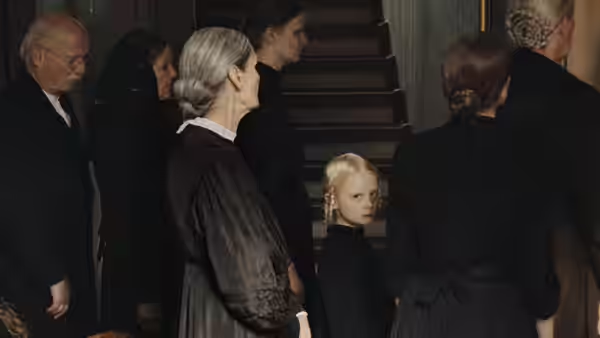
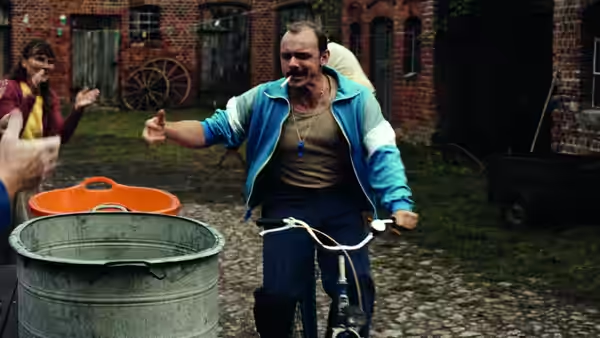
Sound of Falling asks us to follow four generations of women without the reassurance of a family history told in order. Mascha Schilinski moves across a century on a German farm, making us notice how much suffering persists when the people experiencing it change. We recommend it for the force of its filmmaking, though its unbroken severity sometimes makes distinct lives feel too similar. The early task is to stop trying to put everything in date order and attend to the women.
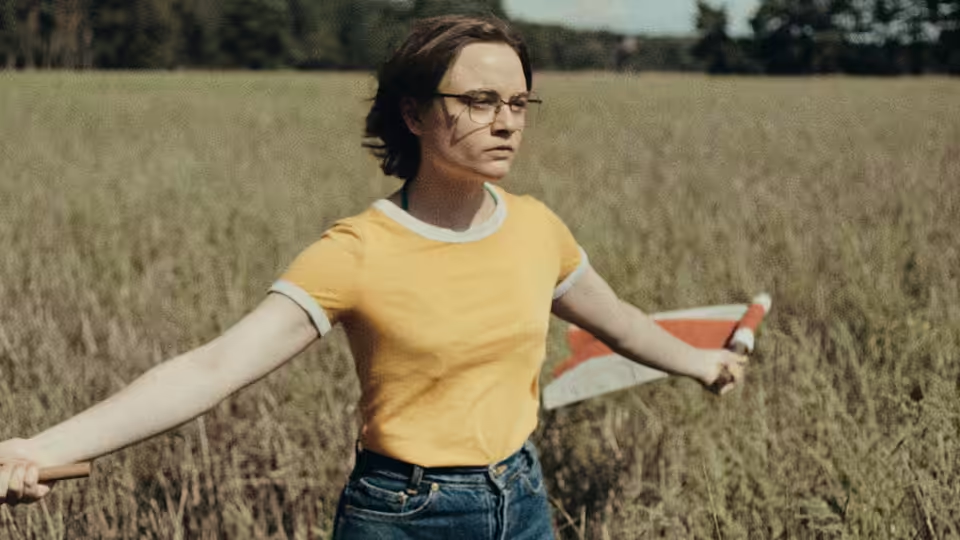
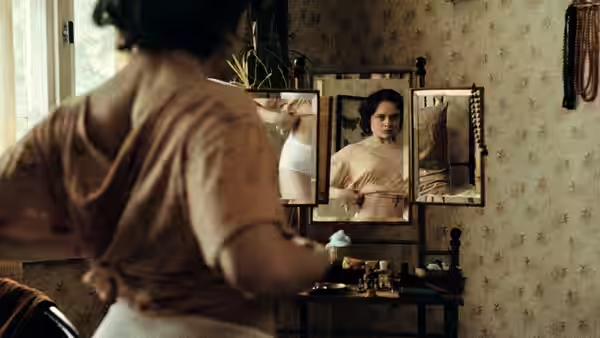
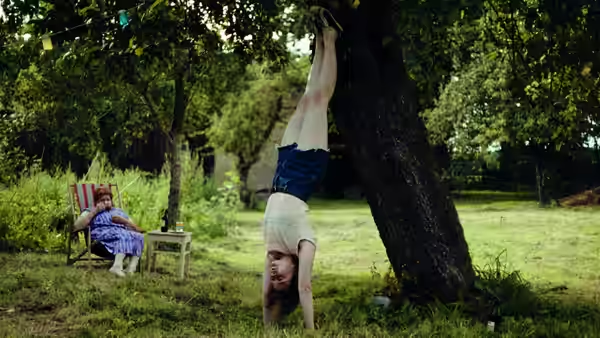
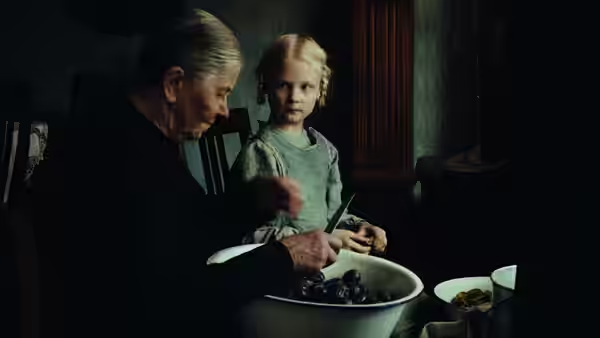
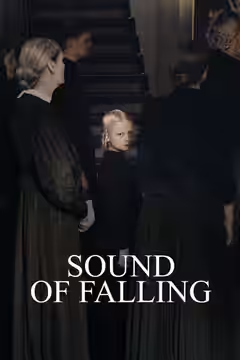
That is where Lena Urzendowsky’s Angelika matters most. Her performance has enough complexity to resist being reduced to another example of inherited pain, giving us someone to consider beyond her place in the family pattern. Director Mascha Schilinski and co-writer Louise Peter are attentive to girlhood, repressed sexuality and the power men exercise over women’s lives. Urzendowsky helps keep their intricate drama from becoming an exercise in spotting connections, because Angelika remains interesting even when we cannot immediately place her experiences alongside everyone else’s.
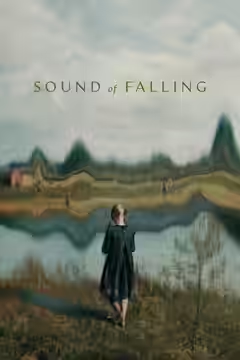
Fabian Gamper’s drifting camera makes the farmhouse feel difficult to trust, without continually needing to introduce a new threat. The movement keeps us watchful, uncertain about what deserves our attention. The farmhouse, with production design by Sandra Fleischer and Cosima Vellenzer, works because it still feels inhabited, however uncomfortable the film makes being there. Its rooms remain convincing places for ordinary domestic life, which gives the suffering associated with them more weight than an elaborately sinister setting would.
Evelyn Rack’s editing moves between generations without turning each transition into an explanation. Match-cuts and recurring images ask us to recognise similarities before we have fully sorted out the chronology. This gives the film a persuasive sense of experiences returning, sometimes with more force than a plainly stated connection would have. The joins can be disorienting, but recognising a visual echo for ourselves is satisfying, and the cutting allows those discoveries without stopping to congratulate us for keeping up.
The sound is harder to escape than the chronology. Music by Eike Hosenfeld and Michael Fiedler contributes to a throbbing soundtrack that carries unease across the changes of period. We felt trapped, particularly by the combination of the drifting camera and that persistent pulse; movement offered little release. It is a strong response to provoke in a story about women with restricted lives, though keeping us at that pitch for so long has a cost.
At 148 minutes, the director gives repetition enough time to become oppressive in ways she may not always intend. Once we have understood that the harm will recur, another visual or sonic echo can reinforce something already clear. The quieter distinctions between these women risk being crowded out by the determination to connect them. Even so, the structure makes us work at understanding their experiences, and we would be reluctant to exchange its difficult transitions for a more easily followed account with everything explained on arrival.
Treat this as a coming-of-age drama that requires us to keep several young lives in mind at once. There is no need to have every relationship sorted out before its discomfort begins to make sense. Give it an uninterrupted evening if a demanding, disquieting family film is what you want; leave it for another night if you need relief.