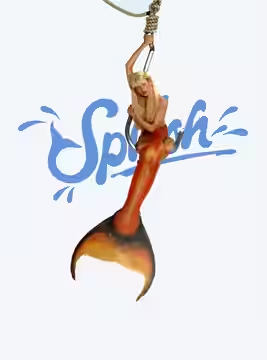
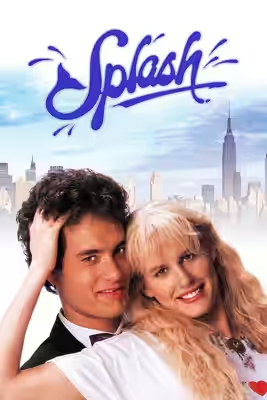
Ron Howard’s mermaid romance works because Tom Hanks and Daryl Hannah make the attraction worth believing in. John Candy supplies welcome mischief; an uneven screenplay is the price of an otherwise warm, funny evening.
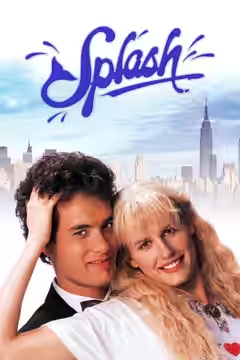
Splash is a warm, funny romance that survives some untidy writing because its lovers are worth spending time with. Ron Howard takes the attraction between a man and a mermaid seriously enough for the comedy to have something at stake. There is plenty of room for foolishness, but little appetite for making affection itself look foolish. The central relationship is persuasive enough to carry a plot that does not always withstand much scrutiny.
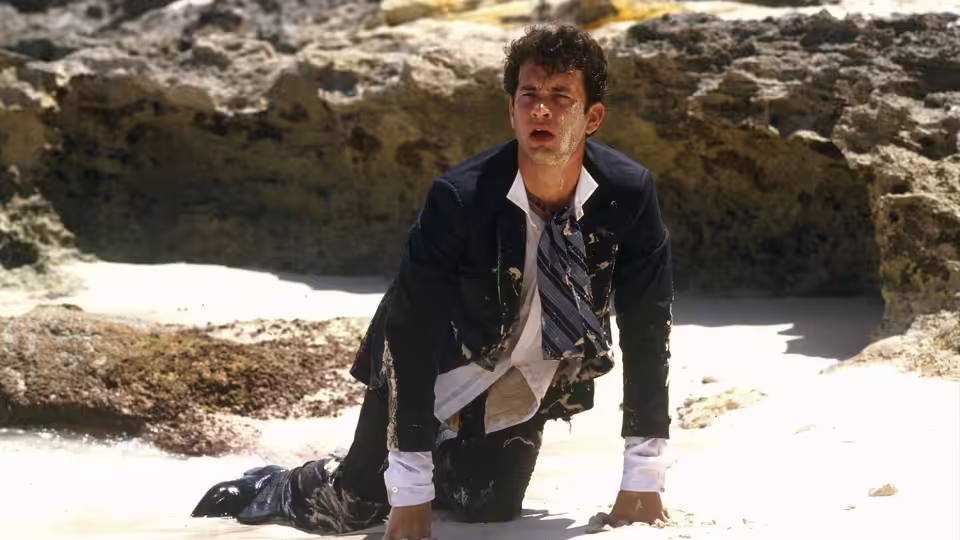
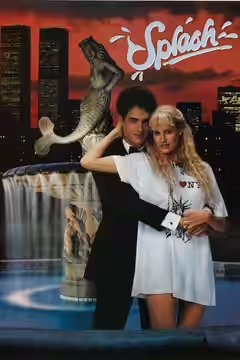
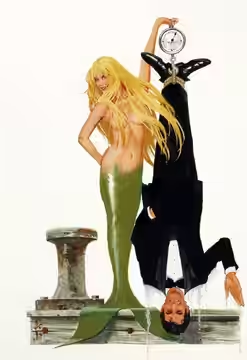
Tom Hanks gives Allen Bauer the right mixture of eagerness and uncertainty. An ordinary man in a fantastic romance can become a dull spectator, forever waiting for the more interesting person to do something peculiar. Here his reactions are part of the pleasure: the attraction makes him vulnerable without making him tiresome. We believe he wants to be with Madison, and that simple conviction does more useful work than another explanation of how a mermaid romance is supposed to function.
Daryl Hannah is just as important, since Madison could easily have been reduced to a collection of attractive peculiarities. She gives the comedy an openness that makes the desire feel mutual, rather than something Allen has invented for himself. We were more moved than we expected by how readily the two performers let affection show through their comic exchanges. The film earns that response through their ease together, without requiring us to stop noticing the absurdity of the situation.
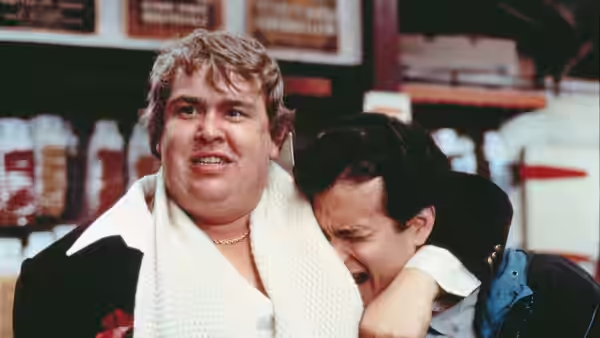
John Candy, as Freddie Bauer, supplies a welcome change of emphasis. He gets a generous share of the laughs, and his comic confidence keeps the romance from becoming too pleased with its own sweetness. There is a slight imbalance here: the supporting comedy can be more immediately satisfying than the business of sustaining the central story. The film benefits from giving him room.
Donald Peterman’s cinematography keeps the attention on the performers, which is where it belongs. Jack T. Collis’s production design is useful in the same unobtrusive way; the surroundings never become the chief attraction. Lee Holdridge’s music helps the romantic warmth, though the actors need little assistance in making us care. Editors Daniel P. Hanley and Mike Hill preserve the liveliness of the comic exchanges, even when the storytelling grows less assured. The craft is most effective when it gives a joke or a look between the leads time to register.
The weaker passages belong to the screenplay by Babaloo Mandel, Bruce Jay Friedman and Lowell Ganz. Its unevenness is noticeable because the best comic exchanges feel so relaxed, while the less persuasive plotting asks for rather more goodwill. Some developments need firmer explanations than the script provides, and affection for the characters cannot excuse every gap. At 110 minutes, there is room for that unevenness to become a mild irritation.
Among romantic fantasies, this one understands the value of allowing desire to be funny without treating the people feeling it as a joke. That is why the central pairing remains appealing even when the script needs tidying. Watch it for Tom Hanks, Daryl Hannah and John Candy, and leave the questions about interspecies domestic arrangements until afterwards.