Tom McCarthy has made a patient film about an Oklahoma labourer learning to be a father in a Marseille flat, and bolted it to a murder plot that keeps breaking in. The middle hour is worth having; the last half hour undoes much of it.
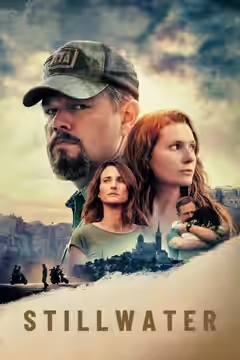
Bill Baker (Matt Damon) clears storm wreckage in Stillwater, Oklahoma, and has a daughter in a prison in Marseille. Tom McCarthy’s film follows him across the Atlantic with a letter in his pocket and lets him stay, and for a long stretch it is a careful, decent picture about a man who failed at being a father getting a second attempt with somebody else’s child. It is also a murder mystery, because that is what brought him there, and the two halves never agree on which is in charge. At 139 minutes there is room for both, and that is part of the trouble.
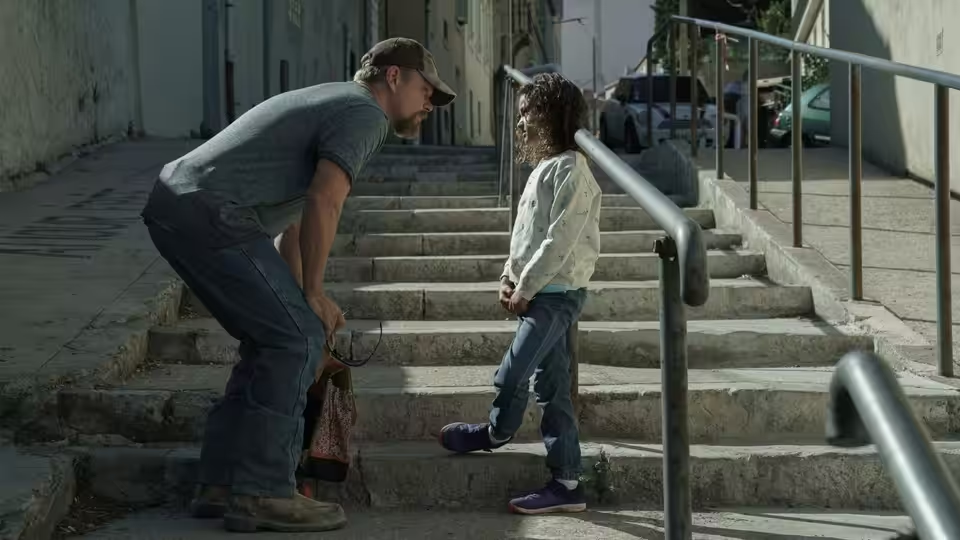
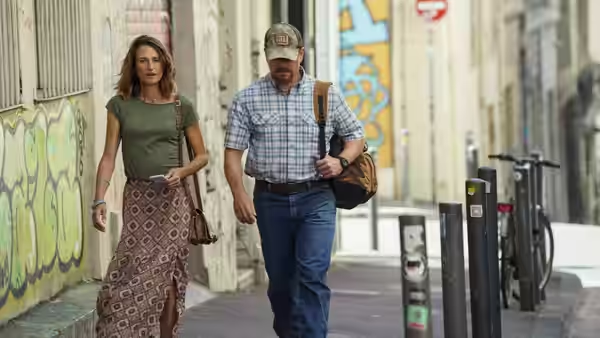
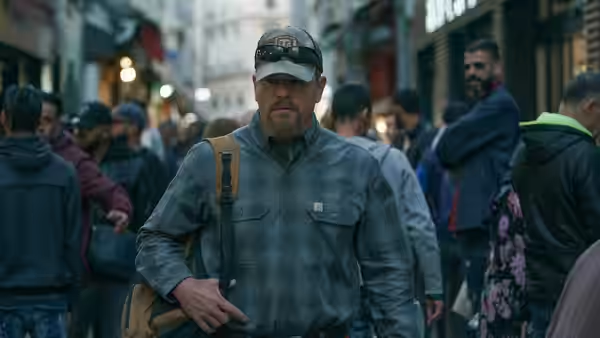
Damon plays Bill as a closed box. Karen Muller Serreau puts him in a work shirt, jeans and a cap he rarely takes off, and he wears them through lawyers’ offices, prison visiting rooms and a child’s bedroom without once looking as if he has considered changing. He says grace over fast food. He answers questions with “yes, ma’am”. When Virginie’s friends ask over dinner whether he voted for Trump, he says he could not, having a record, and the film lets the silence afterwards do the work. It is an unshowy piece of acting, and the film is at its best when it stands back and lets him be tired.
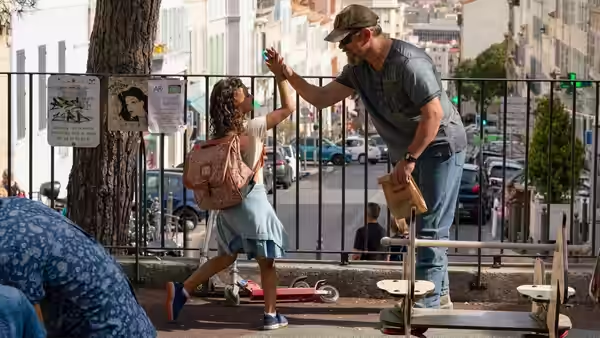
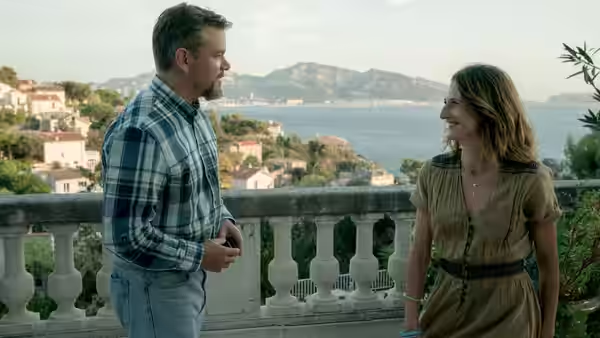
The middle hour is the reason to watch. Virginie (Camille Cottin), an actress with a small daughter, Maya (Lilou Siauvaud), first translates for Bill and then, somewhat to her own surprise, takes him in. Philip Messina gives them a cramped flat with a balcony over the street, and Masanobu Takayanagi shoots the city in hard white daylight, the port, the hills, the tower blocks, so that it looks like a place people live rather than a postcard. We were moved more than we expected by the smallest things in these scenes: Maya correcting his French across a table, Bill carrying her on his shoulders through a football crowd, Cottin watching the pair of them with a face that has not yet decided what it thinks. Nothing much happens in this hour, and it is the best writing in the film.
The thriller is less sure of itself. Allison (Abigail Breslin), five years into a sentence for killing her girlfriend Lina, gives her father the name of a young man, Akim (Idir Azougli), and Bill goes looking for him through the estates on the north side of the city with the help of a former detective, Dirosa (Moussa Maaskri). McCarthy stages these errands flatly, a man asking questions in a language he does not speak and being told to go away. That is honest, and it is also dull, and Tom McArdle’s cutting does not hurry it. Breslin is good in the visiting-room scenes, furious and ashamed in equal measure, but the film keeps her behind glass for most of its length.
Then the last act arrives and the murder plot, which had been dozing, wakes up and takes over. We will not describe the turns. We can say that we came out feeling we had been had, and that the reason is not the turns themselves but the man taking them: the Bill the film spent an hour and a half building would not, we think, do several of the things he does in the last thirty minutes, and the script (four writers are credited: McCarthy, Thomas Bidegain, Noé Debré and Marcus Hinchey) does not make the case that he would. Mychael Danna’s score, sparing until then, starts to lean on the scenes, which is usually a sign a film knows it is asking too much.
McCarthy has done this kind of thing before and done it better. The Visitor (2007) was also about a shut-down American man opened up by strangers, and it trusted that to be enough. Spotlight (2015) showed he could run a procedural without a wasted scene. Stillwater is what happens when the two instincts share a film and neither will give way.
Most critics have landed in the middle on this one, and so do we. See it for Damon, Cottin and Siauvaud at a kitchen table, and for a Marseille that looks like itself. The 15 certificate is for a handful of hard scenes; the long gentle stretch between them is weeknight viewing, and the last half hour is the sort you argue about afterwards, which may be the most useful thing we can tell you about it.