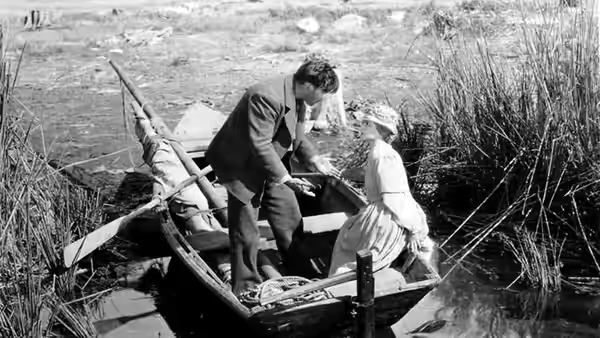
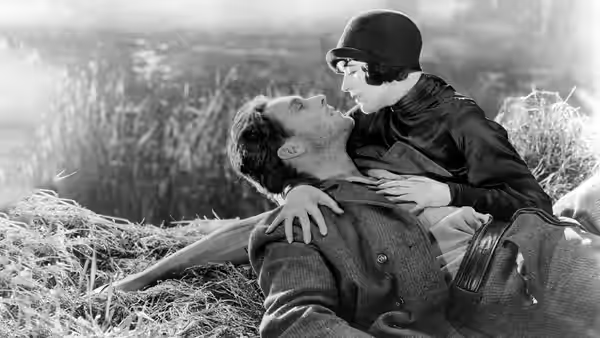
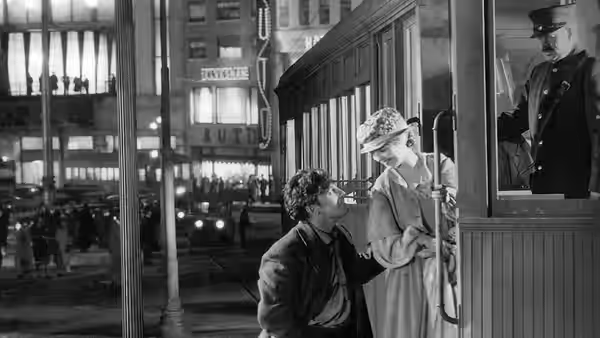
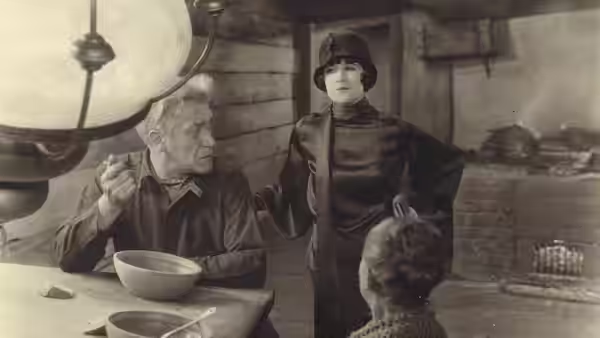
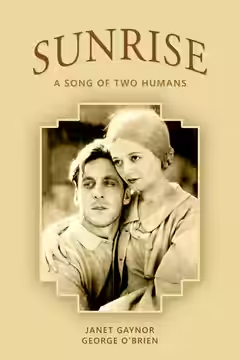
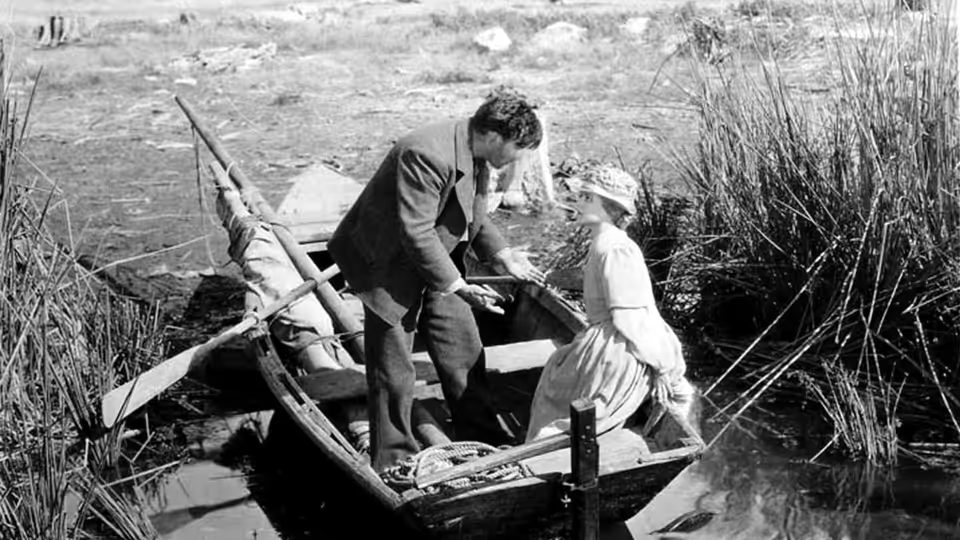
The Man (George O'Brien) and the Wife (Janet Gaynor) balance in a small boat among reeds
Film review

Sunrise: A Song of Two Humans

1927 · Directed by F. W. Murnau · 1h 34m

In a sentenceThe husband gets a crisis; the wife has to live with him

In a rural community, The Man (Anses), played by George O’Brien, and The Wife (Indre), played by Janet Gaynor, face a crisis in their marriage. The Woman from the City, played by Margaret Livingston, brings urban temptation into their lives. The husband is pulled away from home, while his wife faces the prospect of losing the life they share. His desires put the marriage at risk, and the contrast between country and city shapes the choices before him. Their conflict unfolds through looks, gestures and movement in a silent drama.

Fi1m review

F. W. Murnau’s silent marriage drama makes a simple story painfully intimate through mobile camerawork and delicate acting. The women deserve more room beyond the husband’s troubles, but the performances make this a warm recommendation.

Sunrise: A Song of Two Humans is a marriage drama in which a simple story receives an extraordinary amount of care. F. W. Murnau asks us to take desire, shame and attachment seriously, even when the characters have labels as broad as The Man and The Wife. We recommend it warmly, without requiring any interest in silent-film history. Its appeal is immediate, though Carl Mayer’s screenplay sometimes makes the women too convenient to the husband’s struggle.

George O’Brien gives the husband’s divided feelings an uncomfortable physical weight. He can seem burdened by his own body, which keeps the performance from becoming merely an illustration of temptation. Janet Gaynor makes the wife’s vulnerability harder to dismiss than the story’s broad outline might suggest. We were moved by the hurt in her face, because she plays it quietly while the husband makes such heavy work of his feelings. Margaret Livingston has a more restricted task as The Woman from the City, and the restriction belongs to the writing.

Charles Rosher and Karl Struss give the photography enough movement to prevent those broad character types from stiffening into poses. The tracking shots let a feeling develop as the camera travels, without waiting for a new scene to announce it. Double exposures put separate images together without pretending that we are looking at an ordinary, solid place. We can see the trick and still respond to it. The camerawork stays close to the characters’ agitation and longing, so its mobility seldom feels like a demonstration.

The sets are just as frank about being made for the camera. The village is relatively plausible, while the city invites us to notice its manipulated space and perspective. That difference works: the town needs to look like somewhere that could occupy a restless person’s imagination. The lighting gives these conspicuously arranged surroundings depth and helps the actors belong within them. There are passages where the sheer amount of visual invention risks drawing attention away from the people, but the faces keep bringing us back.

Harold D. Schuster’s editing has the awkward job of holding together a film that permits large changes in tone. It gives the gentler passages room and does not make every shift feel like a fresh start. The musical accompaniment, with Hugo Riesenfeld among those credited, helps sustain that continuity without making the pictures seem dependent on it. For all the freedom of the camera, the rhythm remains easy to follow. This is elaborate filmmaking that does not require us to admire its workings before feeling anything.

The difficulty is the unequal attention paid to the three central figures. George O’Brien gets a moral struggle; Janet Gaynor and Margaret Livingston are asked to represent too much of what draws him in opposite directions. We would have liked more room for the women’s wants beyond what they mean to him. As romantic melodrama, it depends on broad contrasts, and the performances make those contrasts persuasive more often than the writing does.

At 94 minutes, the film asks for less patience than its reputation as silent cinema might suggest. There is no need to approach it as a lesson in how films used to be made. Give it a quiet evening and enough attention to watch the faces.

Critical consensus AI synthesised

84
Positive
13
Mixed
0
Negative
1

Most critics respond warmly to Sunrise, with praise concentrated on Murnau’s visual storytelling and the emotional force he draws from a simple marital fable. The reviews repeatedly single out fluid camera movements, double exposures, expressive lighting and the contrast between village and city settings. These techniques make the images dreamlike without distancing most critics from the couple’s troubles. Several also praise the delicate performances, while music and synchronised effects receive attention for supporting the drama.

The spread is wide, but the disagreement is concentrated in one review rather than shared reservations among the majority. The New Yorker finds the artistic ambition overbearing, the sets unremarkable and the acting unconvincing, sometimes grotesque. Where that review sees intellectual strain at the expense of entertainment, most critics find feeling and inventiveness. The story’s simplicity is widely acknowledged, but generally treated as something the filmmaking makes moving rather than a serious weakness.

Radio Times
★★★★★
100

The review calls the film pure cinema that is emotionally uplifting and sublimely refreshing. It singles out the wonder of its imagery, visual storytelling, perspective design and stunning photography.

Read the full review →
RogerEbert.com
11 April 2004 · Roger Ebert
95*

The critic praises Murnau's groundbreaking visual style and camera freedom in this silent masterpiece, highlighting its dreamlike quality and emotional depth despite a simple fable-like story. The innovative techniques and haunting imagery elevate it beyond melodrama into a profound cinematic experience.

Read the full review →
Evening Standard
10 April 2012 · Antonia Quirke
90*

The critic calls the film electric and overwhelmingly passionate and sexual, describing it as an unforgettable classic tale of rural lovers and urban loss told in a fluid, rhapsodic style with stylised expressionistic sets.

Read the full review →
Film Comment
· Robin Wood
90*

The critic presents Sunrise as a profound affirmation of the redemptive power of heterosexual marriage and human wholeness, achieved through intense personal and mythic vision despite the film's stylized Expressionist elements. He singles out the emotional intensity of the couple's reconciliation and the triumphant final sunrise image for particular praise.

Read the full review →
Los Angeles Times
11 January 1998 · Bill Desowitz
90*

The critic celebrates the film as potentially the greatest ever made, praising its innovative visual pyrotechnics, erotic sequences, and synchronized music and effects that demonstrate cinema's future potential. Its influence on later filmmakers and fresh depiction of human frailty are highlighted despite initial commercial failure.

Read the full review →
Slant Magazine
24 January 2014 · Bill Weber
90*

Murnau’s Hollywood masterpiece is presented in close-to-ideal context and the best possible digital quality. The critic singles out the film’s visual inventiveness, dreamlike images, and commitment to varied tones in its mythic story of marital crisis and reconciliation.

Read the full review →

Straight answers AI written, from our review

Is Sunrise: A Song of Two Humans worth watching?
Sunrise: A Song of Two Humans is worth watching for anyone willing to give a silent marriage drama a quiet evening, and we scored it 88. Janet Gaynor and George O'Brien make a simple story painfully intimate, and the mobile camerawork keeps the feeling moving. Our reservation is that the women serve the husband's struggle more than their own wants.
How long is Sunrise: A Song of Two Humans, and what is it rated?
Sunrise: A Song of Two Humans runs 1h 34m. It is a drama and romance film.
Where can I watch Sunrise: A Song of Two Humans in Malaysia?
Sunrise: A Song of Two Humans is not on any streaming or rental service in Malaysia at the moment. It is available in 9 other countries; change your country at the top of the page to see where. Availability is checked daily.
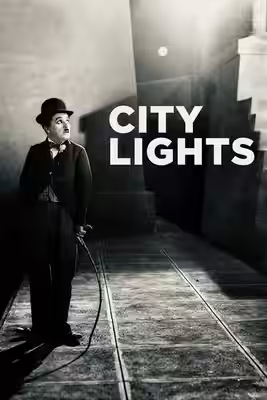
How does Sunrise: A Song of Two Humans compare to City Lights?
Sunrise: A Song of Two Humans is the more intense of the two, a marriage drama that plays desire and shame straight, while City Lights is a comedy whose gags carry its tenderness. Chaplin's film is the warmer and funnier; Murnau's is the more searching and the more elaborate to look at. Start with City Lights if you want to laugh, Sunrise if you want to be unsettled.
What should I watch after Sunrise: A Song of Two Humans?
After Sunrise: A Song of Two Humans, try City Lights (1931, Fi1m 89): For silent acting that makes embarrassment, kindness and longing immediately legible. Then L'Atalante (1934, Fi1m 90): Another young marriage, told through faces, physical proximity and strange, persuasive images; and Brief Encounter (1945, Fi1m 90): Desire meets marital duty, with less visual freedom and equally painful restraint.

Cast

Awards

Academy Awards, 1929

Won
Best Actress
Won
Best Cinematography

If you liked this, try…

  1. City Lights (1931, Fi1m 89)For silent acting that makes embarrassment, kindness and longing immediately legible.

  2. L'Atalante (1934, Fi1m 90)Another young marriage, told through faces, physical proximity and strange, persuasive images.

  3. Brief Encounter (1945, Fi1m 90)Desire meets marital duty, with less visual freedom and equally painful restraint.

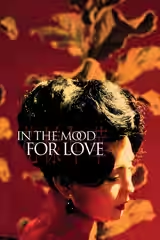
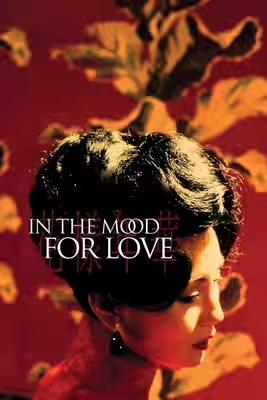
  4. In the Mood for Love (2000, Fi1m 91)Marital loneliness expressed through colour, repetition and people standing almost close enough.

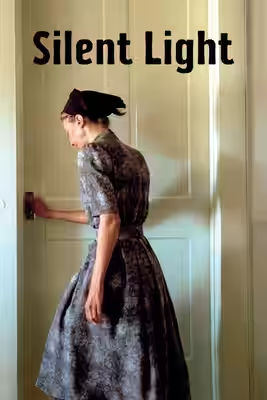
  5. Silent Light (2007) · not reviewed yetAnother rural marriage tested by desire, observed with patience and difficult sympathy.

Free account

Know what to watch tonight

Two lists that know where things are streaming, collections you can share, your own score beside ours, and Discover that remembers what you have seen.

  • Want to see, sorted by what is streaming now
  • Seen, with your score out of ten
  • No adverts, ever