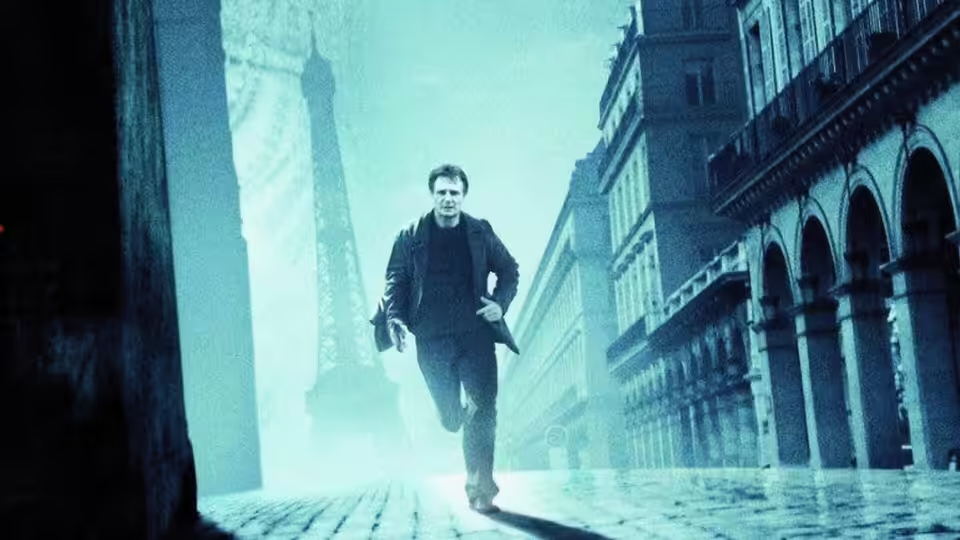
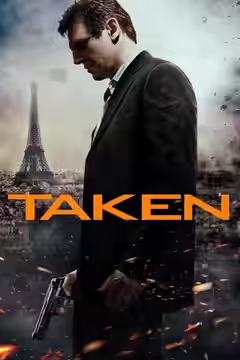
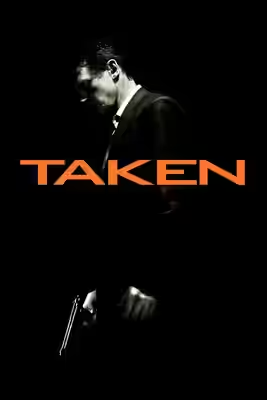
Liam Neeson gives Taken a convincing father’s fear and enough authority to carry its brisk violence. The crude villains and repetitive action matter, though: this is a serviceable thriller with a better lead than script.
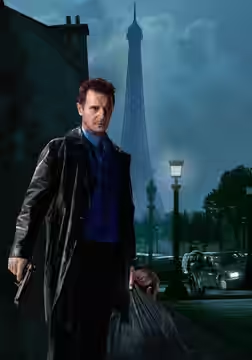
Taken is a serviceable action thriller carried by Liam Neeson, and it asks us to forgive too much in return for his commitment. Pierre Morel keeps the pursuit moving and gives the violence enough force to make each confrontation count. Bryan Mills seems like a man who has already decided what he is prepared to do, which lends even the less plausible action some conviction. That can sustain a short thriller, but the script’s crude treatment of the people standing in his way leaves a sour taste.
The script by Luc Besson and Robert Mark Kamen has a useful, simple premise: a father wants his daughter back and knows how to hurt the people stopping him. That is enough to get a thriller moving, and the writers understand how little explanation the pursuit needs. Their judgement is less sound when parental suspicion becomes evidence that the father understands the world better than everyone else. The film keeps giving him reasons to distrust strangers, without much interest in what that distrust does to anyone around him.
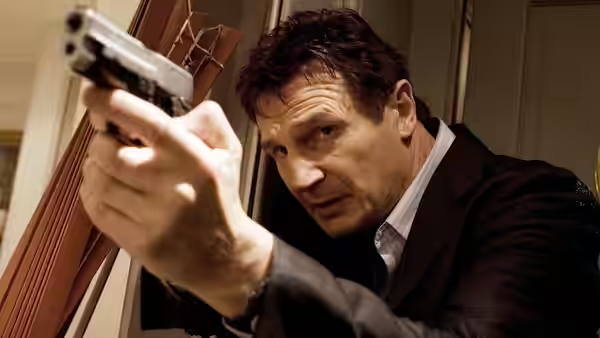
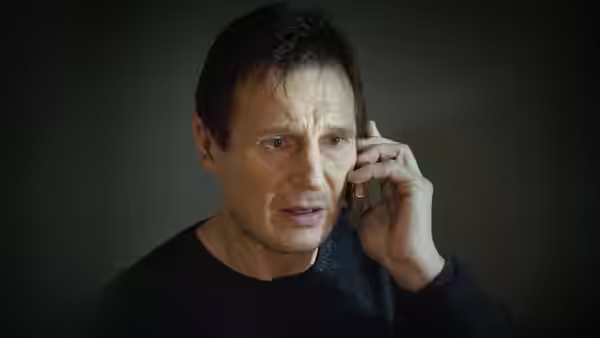
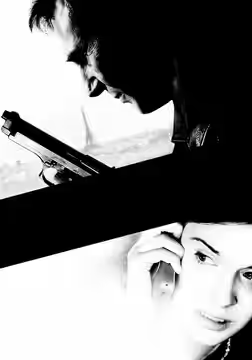
Liam Neeson makes the character’s certainty more persuasive than it deserves to be. His performance holds together the loving father and the practised killer, with a reserve that makes both seem plausible even when the writing does not. We were properly tense during the phone call, because he lets us hear the fear beneath his control. The scene gives him something more demanding than another physical opponent: he has to persuade us that a man can be frightened for his daughter and still think clearly.
Michel Abramowicz’s photography works best when it lets the leading man’s physical presence dominate a confrontation; the force of an encounter matters more here than elegance. Frédéric Thoraval’s editing gives the pursuit momentum, though it cannot make every fresh bout of violence feel different. The director is good at making an impact register. He is less successful at varying the encounters, and the fighting becomes repetitive despite the short running time.
Hugues Tissandier’s production design is functional, with little that stays with us beyond the immediate threat. The surroundings rarely feel worth noticing once the hero has somebody to confront, which suits the film’s haste but gives us little sense of a life outside the pursuit. Nathaniel Méchaly’s score is similarly intent on keeping the pressure up. It supports the urgency competently, although the phone call makes a stronger case for how much tension the leading actor can generate with his voice.
The larger problem is who gets to be a person. Maggie Grace’s Kim Mills gives the pursuit its emotional purpose, but the film’s attention remains firmly on what her father can do about her danger. Its treatment of human trafficking is troubling because the victims’ suffering chiefly provides permission for further violence, while foreign villains are reduced to threats. An action thriller need not stop for a lecture, but it ought to distinguish between an individual criminal and a convenient national stereotype.
By the standards of the rescue thriller, the film delivers the basic satisfactions efficiently: an urgent objective, a convincing lead and little time wasted once the pursuit begins. It also asks us to accept too much simply because its hero is the one doing it. At 94 minutes, it is sensible about how long this pursuit can hold our attention, even if some encounters could have been lost. Try it for Liam Neeson if blunt action is the attraction; do not expect the script to question him on your behalf.