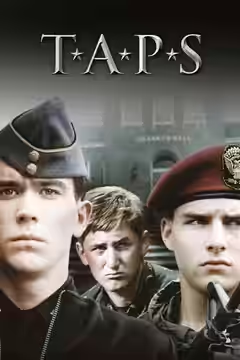
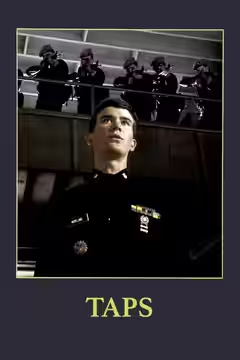
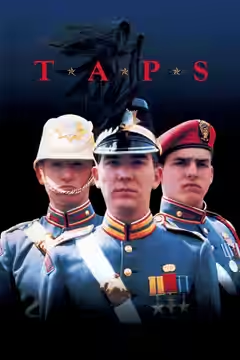
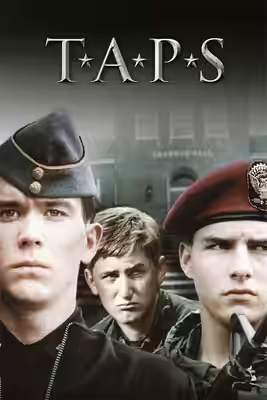
Harold Becker’s siege drama is sincere, well acted by a cast of boys who went on to become famous, and about half an hour longer than its argument. George C. Scott gives it a heart in forty minutes; the rest spends two hours looking for one.
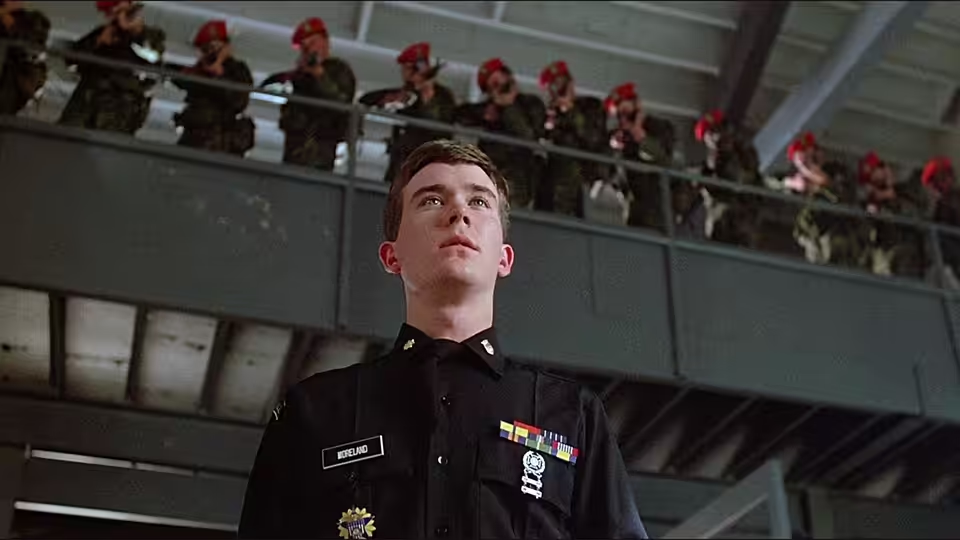
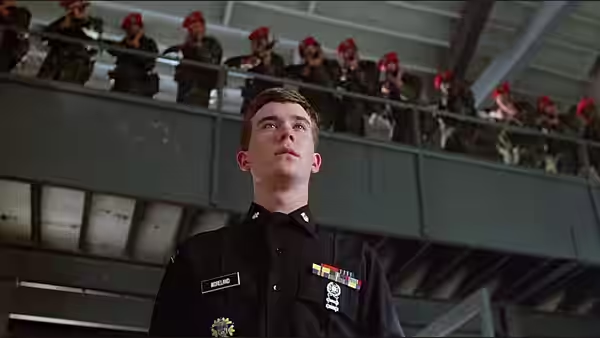
Harold Becker’s film asks a plain question: what happens when you spend years teaching boys that honour, duty and the school are one thing, and then sell the school. Bunker Hill Military Academy is to be closed and its land turned into housing, and the cadets, led by Timothy Hutton’s Brian Moreland, lock the gates and take up arms to stop it. It is a serious film about serious boys, acted with more conviction than the script quite deserves, and at 126 minutes it has a middle hour that goes round in circles. We liked it, with reservations, and the reservations grew as it went on.
George C. Scott owns the first forty minutes and then leaves, which is both the film’s best decision and its first problem. His General Bache is a courtly old man who toasts his cadets at dinner with a glass raised and a lump in his throat, and who talks about the academy the way other men talk about their country. Scott plays him quietly, with none of the bark you might expect, and the warmth is the point: the boys love him, so we understand why they do what they do. When he is gone the film has to find its weight elsewhere, and it never fully does.
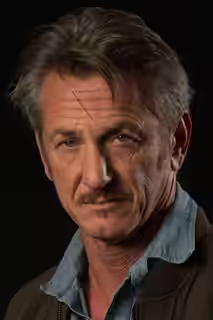
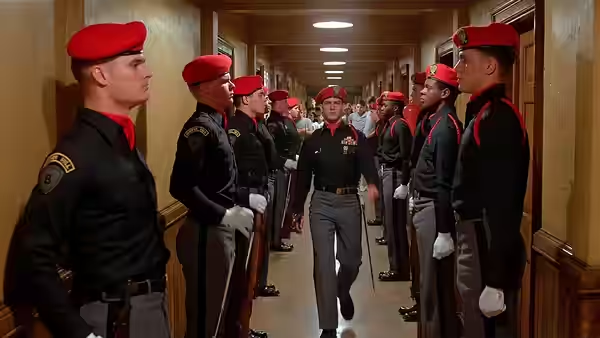
Hutton plays Moreland straight-backed and solemn, a boy who has been told he is a leader and believes it. It is a stiff performance, and some of that is the part, but the film needs us to see a mind changing behind the parade-ground face and we rarely do. The two cadets beside him are another matter. Sean Penn’s Alex Dwyer is the one who keeps asking whether any of this is a good idea, slouched and sardonic, and the film breathes whenever he is on screen. Tom Cruise’s David Shawn is the one who has stopped asking. He drills his platoon with a grin that widens as the situation worsens, and we watched him with a growing dread that had nothing to do with knowing how these things end. Cruise, in one of his earliest screen appearances, already understands that the frightening thing about a true believer is how much fun he seems to be having.
Owen Roizman shoots the academy in flat grey winter light: long views down the parade ground, the chapel, the barracks lit by lamps and torches once the power is cut. When the National Guard arrives, the searchlights and the armoured vehicles on the far side of the fence make the campus look suddenly small, which is right. Maurice Jarre writes bugle calls and slow brass, and the music salutes the boys at moments when the film ought to be asking harder questions of them. The score is on the cadets’ side; we were never sure the film was, and the gap is confusing.
Darryl Ponicsan and Robert Mark Kamen adapt Devery Freeman’s novel into a film in which nearly everyone, at some point, stands up and makes a speech. Bache makes one, Moreland makes several, and Ronny Cox’s Colonel Kerby, the decent Guard officer sent to talk the boys down, makes the best, calm and tired and exactly right about what soldiers are for. Maury Winetrobe cuts the negotiations so they play as one long scene repeatedly interrupted, and the middle of the film becomes a run of standoffs, each a little more strained than the last. The younger boys grow hungry and scared in the background, a child cadet writing a letter home, another sick with nerves on guard duty, and those small details are the truest things here.
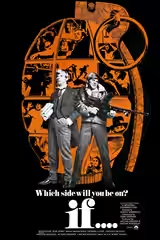
The second half takes the turns the premise has promised, and we will not describe them, except to say that the film does not look away and that the last ten minutes earn a good deal of forgiveness. Becker’s The Onion Field, from 1979, was patient and unsentimental about men undone by what they believed. This one loves its boys, and it shows, and it is also half an hour too long. Set it beside Lindsay Anderson’s If…., which covers neighbouring ground with a cold wit, and Taps looks earnest to the point of solemnity.
Most of the few reviews we have read land in the same mixed place, and we are not far off. See it for Scott’s dinner-table toast, for Cruise’s grin, and for the quiet moments among the youngest cadets. Expect to look at the clock somewhere in the middle, and do not expect to be cheered up.