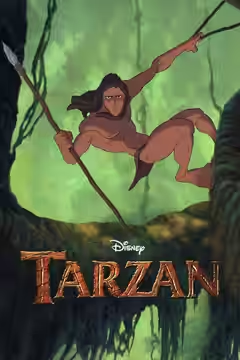
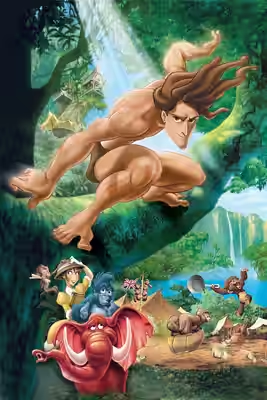
Tarzan is a lively animated adventure, worth an evening for its movement through the trees and expressive apes. The comedy is patchier, and the rush to keep moving leaves some feelings too little time to settle.
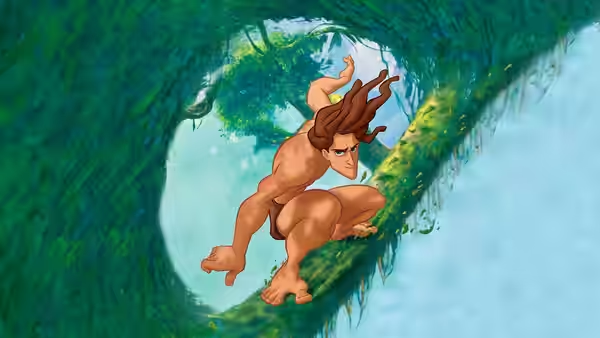
Kevin Lima and Chris Buck make Tarzan most convincing whenever they let its hero move. This is a good family adventure, worth an evening for the pleasure of watching him find his way through the jungle. The comedy is uneven, and the eagerness to hurry onwards sometimes works against the feeling in the faces. At 88 minutes, the film could afford to let a few more of its quieter exchanges last a little longer.
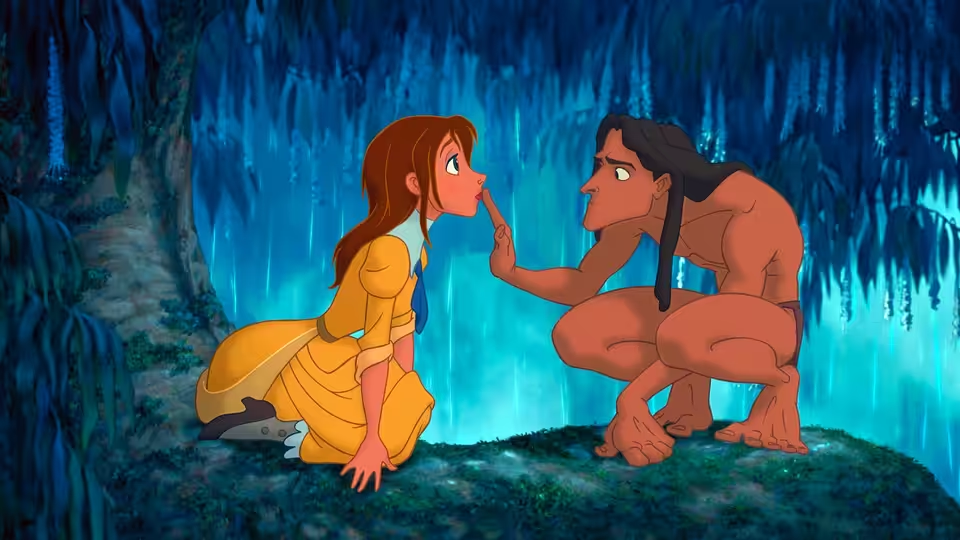
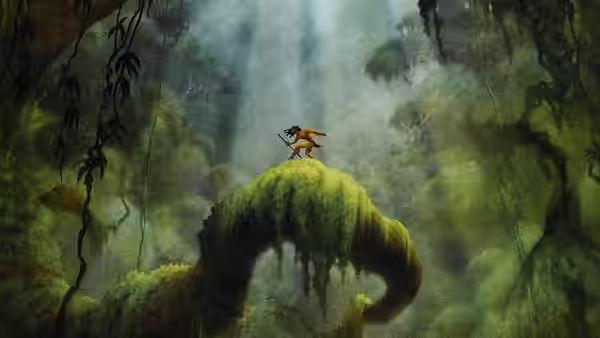
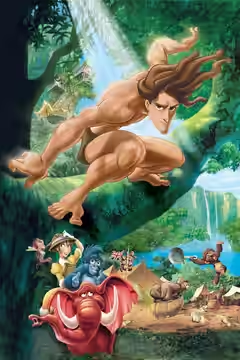
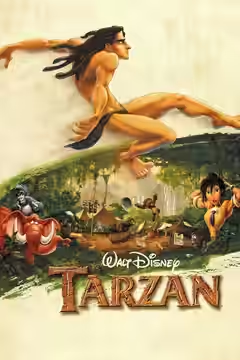
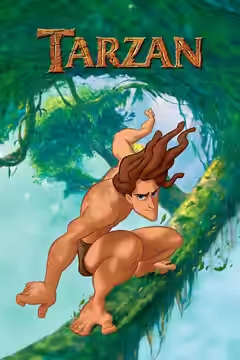
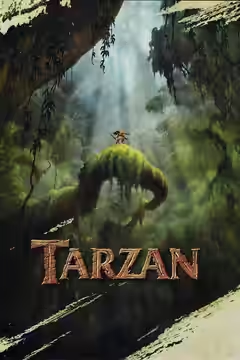
The combination of drawn animation and computer-aided depth gives the jungle a convincing sense of space. Tarzan’s movement through it has weight, even when the speed looks impossible, and the action remains clear enough for us to follow each change of direction. We were exhilarated by these passages, which make travelling through the trees interesting in itself. They also remind us how much an animated film can communicate before anybody needs to open their mouth.
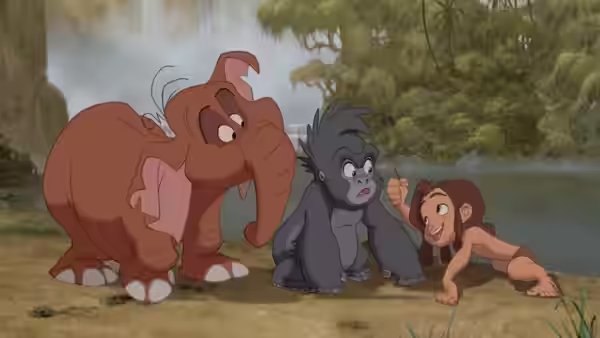
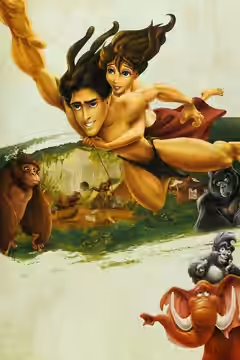
The apes are worth watching even when there is less happening. Their animation gives small changes of expression enough attention to make the quieter material register, and Glenn Close brings a welcome steadiness to Kala. Lance Henriksen gives Kerchak gravity without needing to push every line, while Tony Goldwyn’s Tarzan is appealing enough to hold the centre. The frustration is that the film keeps finding another reason to get moving when these performances have already secured our attention.
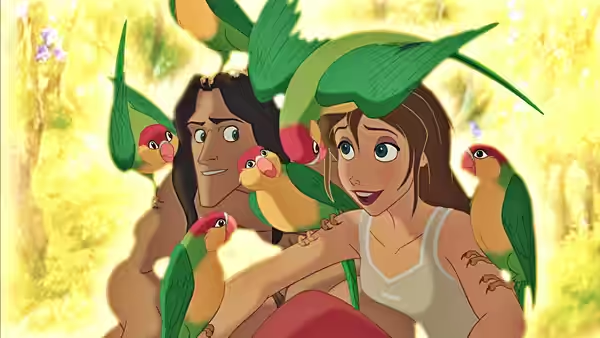
Minnie Driver gives Jane Porter an alert, lively voice, and Brian Blessed brings an enjoyable force to Clayton. The screenplay by Bob Tzudiker, Noni White and Tab Murphy is less successful with the villain, who never becomes as interesting as the action surrounding him. Its comic material is patchy too, leaving Rosie O’Donnell’s Terk and Wayne Knight’s Tantor with interruptions that do not always earn their place. Those voices have plenty of energy; what they need is better material.
Gregory Perler’s editing keeps the action legible at speed, but the rhythm of the film as a whole is more wearing. A pause would sometimes help more than another burst of activity. Mark Mancina’s music is most effective when it supports the movement, and less persuasive when it presses us towards an emotion that the animation has already made clear. The sentimentality is not a serious fault on its own, but the insistence can make a tender moment feel overworked.
Animated family adventures often seem nervous about asking children to sit with a feeling, and we wish the directors had trusted their audience a little more. The attention paid to the apes suggests that they know how to hold a scene without constantly adding to it. There is enough warmth here for a gentler pace, even in a film so good at going fast. Choose it when the family wants an adventure, rather than something to settle everyone down.