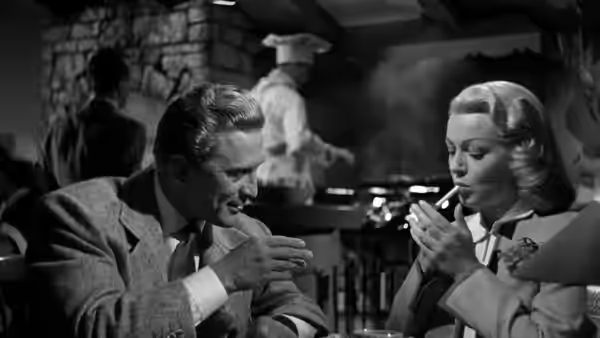
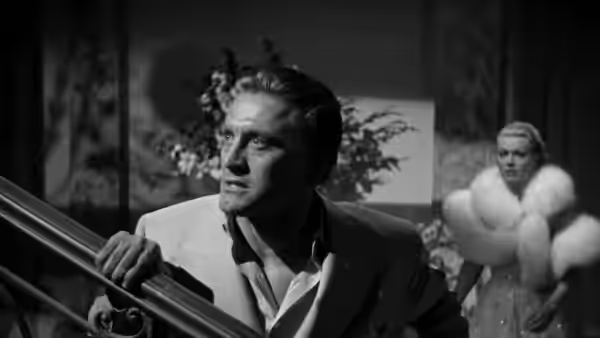
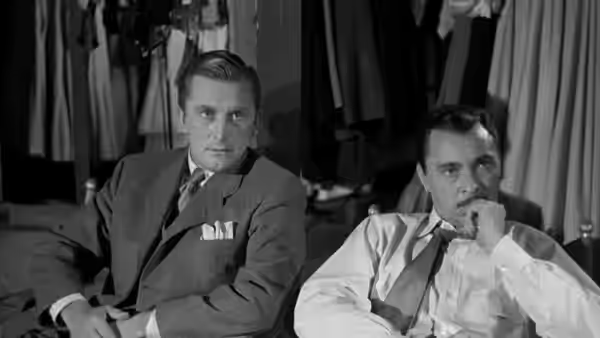
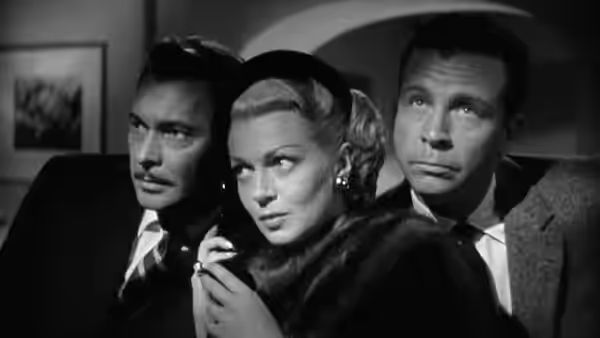
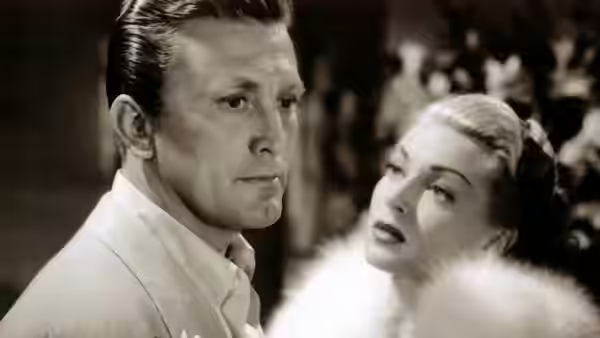
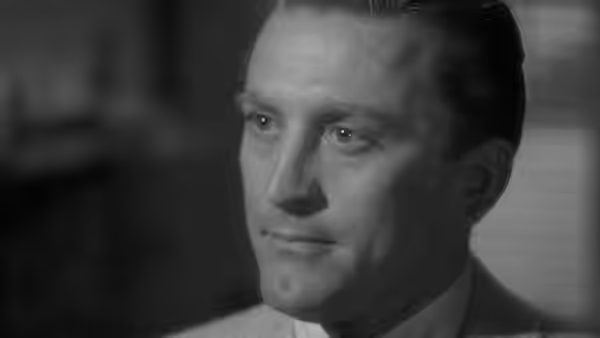
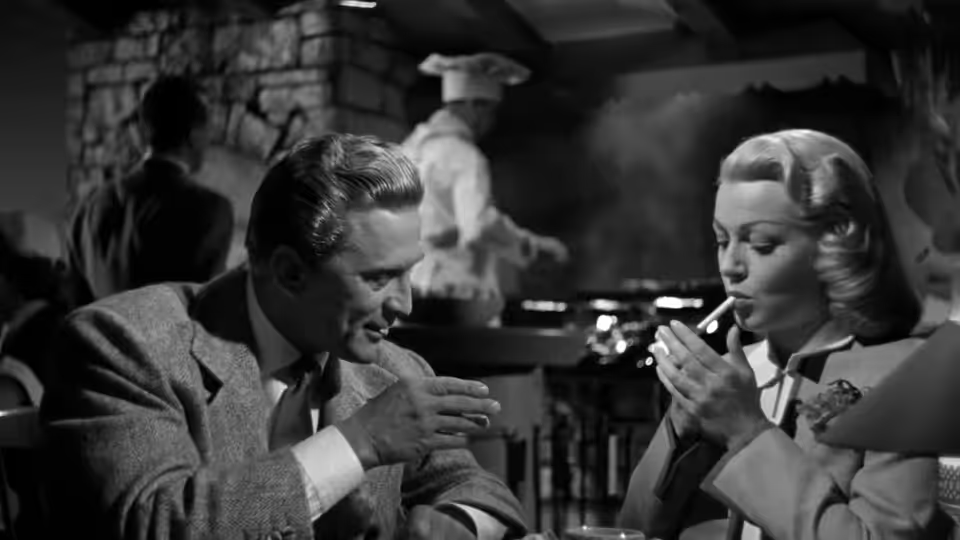
A suited man and a woman smoke together at a table in a restaurant
Film review

The Bad and the Beautiful

1952 · Directed by Vincente Minnelli · 1h 58m

In a sentenceA ruthless producer, excellent shoulder pads, and several reasons to get any promises in writing

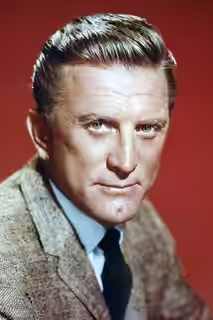
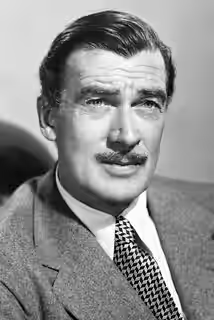
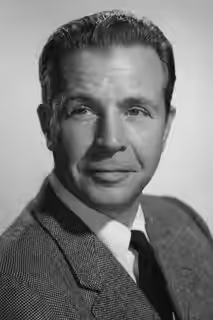
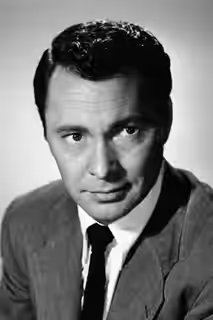
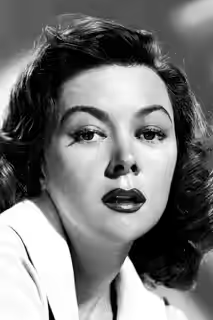
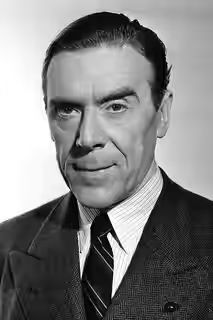
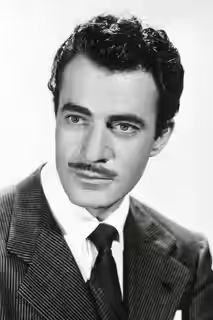
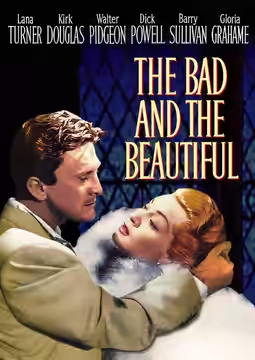
Jonathan Shields (Kirk Douglas) is a ruthless producer working in Hollywood. Around him, the story follows Georgia Lorrison (Lana Turner), Fred Amiel (Barry Sullivan) and James Lee Bartlow (Dick Powell), alongside Harry Pebbel (Walter Pidgeon) and Rosemary Bartlow (Gloria Grahame). Film work, ambition and romance share the same space, with Shields’s confidence setting the tone for his dealings with other people. He wants his own way in a business that depends on others, and consideration for their feelings is not his priority.

Plays from YouTube when you press play; nothing loads from them until then.

Fi1m review

Vincente Minnelli makes Hollywood’s ruthlessness dangerously enjoyable, with Kirk Douglas supplying the confidence and the threat. We recommend it warmly, though the film is sometimes too ready to forgive the producer at its centre.

The Bad and the Beautiful is a sharp, pleasurable Hollywood drama with a forgiving streak we do not entirely share. Vincente Minnelli takes the ruthless producer seriously enough to understand his appeal, and that is why the film works. Nobody would tolerate such a man if he offered nothing. The uncomfortable pleasure comes from watching confidence make behaviour attractive that would be intolerable in an ordinary workplace, where there might at least be someone to complain to.

Kirk Douglas makes Jonathan Shields hard to dismiss, even when dismissal seems the sensible response. We enjoyed his bullying more than we wanted to. The physical assurance of the performance makes his demands seem reasonable for just long enough to catch us agreeing with him. Helen Rose’s costumes contribute to that effect: the shoulder pads give his confidence a suitably broad outline. He looks accustomed to having the space around him cleared, and the performance makes that expectation thoroughly persuasive.

Charles Schnee’s screenplay gives that forceful central performance dialogue with enough bite to sustain our interest beyond the sheer pleasure of watching it. The language has been polished, sometimes conspicuously, but the actors make it sound worth saying. Conrad A. Nervig’s editing helps the changes of tone feel brisk, allowing amusement and unpleasantness to follow closely without making the film seem undecided about its subject. There is considerable skill in keeping this much melodrama lively without making every exchange equally emphatic.

The supporting performances matter because a film dominated by this producer could easily become exhausting. Lana Turner gives Georgia Lorrison enough presence to prevent our attention from settling permanently on Shields. Dick Powell, as James Lee Bartlow, and Gloria Grahame, as Rosemary Bartlow, add to the pleasure of a cast whose smaller contributions are worth attending to. We would happily have the film linger with its supporting players; its interest in them feels less strained than its fascination with the central bully.

Robert L. Surtees’s cinematography makes the polished appearance of this Hollywood persuasive, and that attractiveness is important to our response. It would be easier to condemn the business if the film made it look uniformly unpleasant. Instead, the handsome images encourage us to understand why people might find the place difficult to resist. The director’s taste for melodrama can make the presentation feel over-insistent, but the visual assurance usually keeps the emotional extravagance from becoming merely tiring.

David Raksin’s score supplies warmth that we do not always feel towards the characters, and its generosity is part of the film’s appeal. It is also where our reservation becomes clearest. The music’s emotional persuasiveness belongs to a film that can seem too indulgent towards the powerful man it finds so interesting. Understanding his attraction is necessary; occasionally we wanted a little more resistance to the assumption that being difficult and being gifted excuse much the same behaviour.

Among dramas about filmmaking, this earns its length through the pleasure it takes in actors and dialogue. At 118 minutes, it gives those pleasures room without making seriousness feel like a compulsory extra. Its affection for the business remains palpable even when its judgement ought to be harsher. Afterwards, argue about Shields rather than agreeing that this is simply how the business works.

Critical consensus AI synthesised

84
Positive
6
Mixed
0
Negative
0

The six reviews are uniformly positive, with praise clustering around the performances, writing and confident studio craftsmanship. Most critics admire the film’s portrait of Hollywood, finding intelligence and vitality in its account of ruthless ambition. Kirk Douglas receives particular attention, while the supporting cast, the dialogue and David Raksin’s score also earn praise; the reviews stress how much pleasure the storytelling provides alongside its scrutiny of the business.

The differences concern degree of enthusiasm and how forgiving that scrutiny seems. The Independent sees an affectionate willingness to forgive Hollywood’s faults, whereas Empire describes an unsentimental portrait, with Minnelli’s melodramatic tendencies providing a qualification rather than a decisive objection. The spread runs from warm approval to emphatic admiration, without a negative dissent; these reviews differ more over the film’s attitude towards Hollywood than over the quality of its execution.

Time Out
17 April 2012 · ★★★★★ · Cath Clarke
100

The review is strongly positive, calling the film close to film history at its best. It praises the movie’s bold golden-era confidence, echoed in Kirk Douglas’s shoulder pads.

Read the full review →
The AV Club
29 March 2002 · Noel Murray
90*

Murray praises the film as lively, inventive, and sophisticated studio-system storytelling. He singles out its dynamic shifts in tone, alongside its performances and richly crafted dialogue, cinematography, and score.

Read the full review →
The Guardian
21 April 2012 · Philip French
85*

Philip French regards the film as one of Hollywood’s great fables, praising its intelligence and polished performances. He singles out its warts-and-all portrait of Hollywood at its zenith, and says David Raksin’s score deserved an Oscar.

Read the full review →
The Independent
19 April 2012 · Anthony Quinn
78*

Quinn regards the film as a minor classic and a forgiving look at Hollywood. He especially praises the standout minor performances and David Raksin’s beautiful score.

Read the full review →
Empire
1 January 2011 · David Parkinson
75*

Parkinson praises the film as an unsentimental portrait of Hollywood, even amid Minnelli’s melodramatic tendencies. He singles out Douglas’s performance and Minnelli’s visual style and use of sound for particular praise.

Read the full review →
Variety
1 January 1952 · Variety Staff
75*

Variety gives the film a clearly positive verdict, calling its screenplay exceptionally well-written. It singles out Kirk Douglas’s performance as the ruthless producer, alongside the strong supporting cast.

Read the full review →

Straight answers AI written, from our review

Is The Bad and the Beautiful worth watching?
The Bad and the Beautiful is well worth watching for its sharp dialogue, strong supporting cast and Kirk Douglas’s persuasive ruthlessness; we score it 84 out of 100. We recommend it warmly to anyone drawn to Hollywood melodrama, though its readiness to forgive the producer’s bullying leaves us wanting firmer resistance.
How long is The Bad and the Beautiful, and what is it rated?
The Bad and the Beautiful runs 1h 58m. It is a drama and romance film.
Where can I watch The Bad and the Beautiful in Azerbaijan?
The Bad and the Beautiful is not on any streaming or rental service in Azerbaijan at the moment. It is available in 15 other countries; change your country at the top of the page to see where. Availability is checked daily.
How does The Bad and the Beautiful compare to Sunset Boulevard?
The Bad and the Beautiful makes Hollywood’s ruthlessness dangerously enjoyable, while Sunset Boulevard is the sharper satire, with less patience for the industry’s comforting stories. We favour Sunset Boulevard for a harsher, viciously funny reckoning; The Bad and the Beautiful suits an appetite for warmer melodrama, polished dialogue and a bully whose appeal is uncomfortably persuasive.
What should I watch after The Bad and the Beautiful?
After The Bad and the Beautiful, try Sunset Boulevard (1950, Fi1m 91): Another Hollywood reckoning, with less patience for the industry’s comforting stories. Then The Player (1992, Fi1m 85): Studio politeness conceals vicious self-interest in a sharper, colder Hollywood satire; and Pain and Glory (2019, Fi1m 84): A gentler account of filmmaking, memory and the cost of getting older.

Cast

Awards

Academy Awards, 1953

Nominated
Best Actor
Won
Best Art Direction, Black and White
Won
Best Cinematography, Black-and-White
Won
Best Costume Design, Black-and-White
Won
Best Supporting Actress
Won
Best Writing, Adapted Screenplay

If you liked this, try…

  1. Sunset Boulevard (1950, Fi1m 91)Another Hollywood reckoning, with less patience for the industry’s comforting stories.

  2. Contempt (1963) · not on Fi1m yetFilm production and a failing marriage make painfully uncomfortable working partners.

  3. Day for Night (1973) · not on Fi1m yetFor more affection towards filmmaking, without pretending the work stays tidy.

  4. The Player (1992, Fi1m 85)Studio politeness conceals vicious self-interest in a sharper, colder Hollywood satire.

  5. Pain and Glory (2019, Fi1m 84)A gentler account of filmmaking, memory and the cost of getting older.