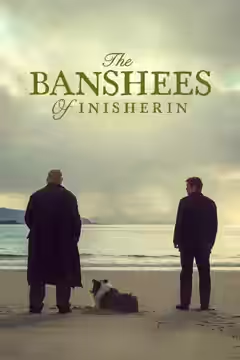
Martin McDonagh puts Colin Farrell and Brendan Gleeson on a small Irish island and has one of them stop liking the other. It is his funniest and saddest film, and it says its Civil War parallel out loud once too often.
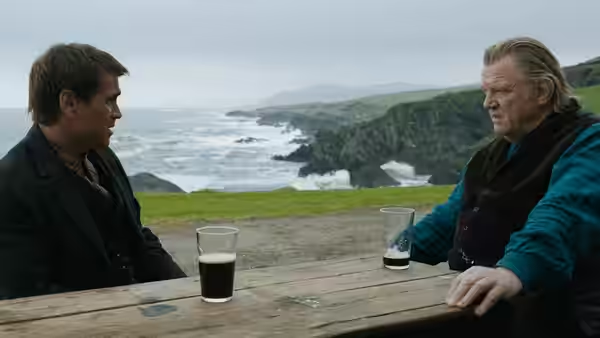
Inisherin is a small island off the west coast of Ireland, and in 1923 gunfire drifts across the water from a Civil War that nobody here quite follows. Pádraic Súilleabháin (Colin Farrell) calls for his friend Colm Doherty (Brendan Gleeson) at two o’clock, as he does every day, so they can walk to the pub. Colm sits inside, smoking, and does not answer the door. When Pádraic corners him, Colm tells him the truth. He does not like him any more. Pádraic is dull, and Colm has not enough time left to spend any of it being dull with him.
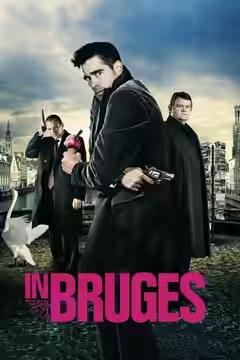
That is the whole plot, and Martin McDonagh, who wrote and directed, gets more out of it than most directors get out of a war. It is his best film since In Bruges, the 2008 comedy that first put Farrell and Gleeson in a room together, and it is sadder than that one. We recommend it, with one warning: it is a comedy for about an hour and then it stops being one.
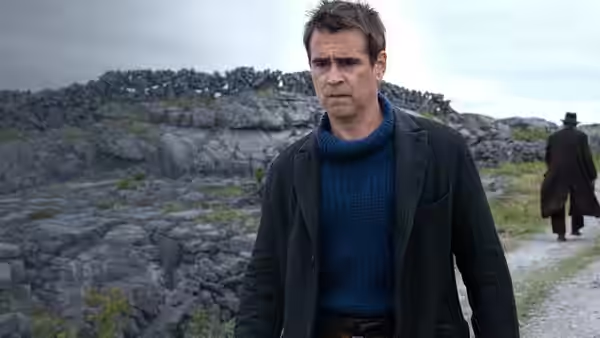
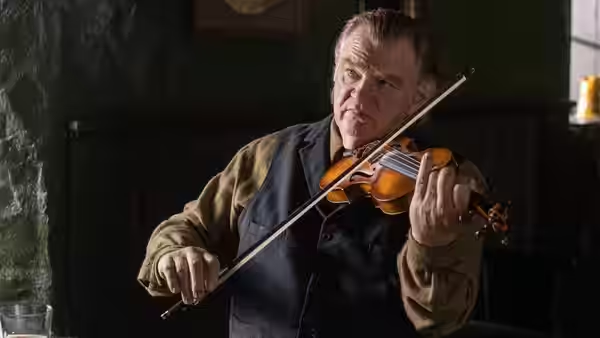
Pádraic has never had a complicated thought and is now being asked to have one, and Farrell plays him with his eyebrows up and his mouth slightly open. The scene that got us comes in the pub, when Pádraic, drunk, stands up and makes a speech about being nice, and everyone else looks at their pints. We had been laughing at him a minute before. We were not laughing then, and it was the way his voice kept trying to stay reasonable while his face gave up that did it. Gleeson, by contrast, barely moves. Colm has a fiddle, a cottage full of masks and a tune he wants to finish, and Gleeson plays him as a man who has made a decision and is now watching, with some interest, what it costs.
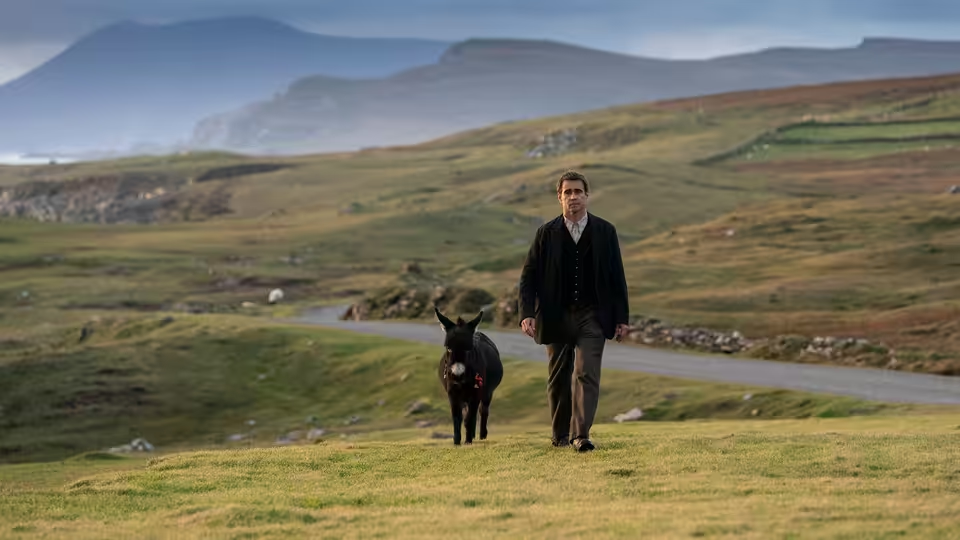
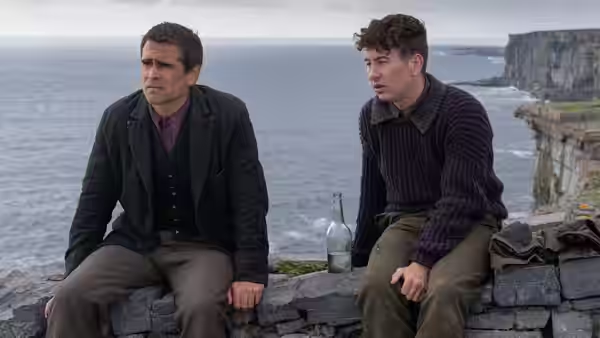
Ben Davis shoots the island in the grey-green light it actually has, wide and flat, so the two men are always small against it. Indoors he lets the lamps and the fire do the work, and Colm’s cottage, which Mark Tildesley has filled with instruments and a wall of grotesque masks, says everything about him. Eimer Ní Mhaoldomhnaigh puts everyone in wool that looks as if it has been wet for a decade. Carter Burwell’s score is spare and chiming, like a music box, and it plays the whole thing as a fairy tale, cruelty and all. Mikkel E.G. Nielsen cuts to the rhythm of the day, the walk, the pub, the walk home, until the repetition becomes the joke and then the sorrow.
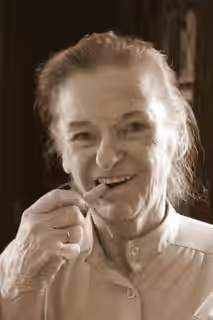
Kerry Condon plays Siobhán, Pádraic’s sister, the only person on Inisherin who reads, and she is dry, tired and kind; she gets the two or three lines that stopped us cold. Barry Keoghan is Dominic, the policeman’s son, who says whatever comes into his head and is beaten for it by his father Peadar (Gary Lydon). We laughed at Dominic a good deal and then felt slightly ashamed, because Keoghan never lets you forget that the boy is frightened. Pat Shortt keeps the pub as Jonjo Devine, and Sheila Flitton is Mrs. McCormick, an old woman in black who stands in the road and predicts deaths.
Mrs. McCormick is where McDonagh’s stage habits show. She is a banshee with a walking stick, and the film would lose little without her. The larger flaw is the war. McDonagh wants the quarrel on the island to stand for the quarrel on the mainland, former friends now shooting each other over something neither side can quite state, and the parallel is a good one. Then he has a character say it out loud, and then another, and the point is made once more than it needed to be. The second half takes a turn we will not describe, except to say that McDonagh’s taste for the grim shock has not left him.
He has always written the best lines going and has sometimes let that be enough. This is the film where he lets the lines run out and stays on the faces. It is a 15, mostly for the language and for some blood, and it runs 114 minutes. Do not watch it in the week after falling out with a friend, unless you want to be told it will not be fine.