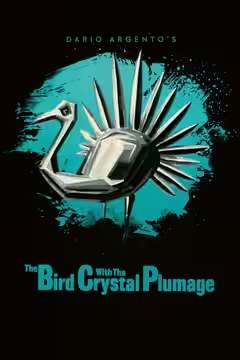
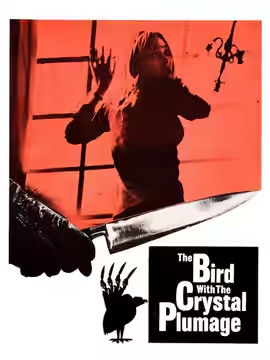
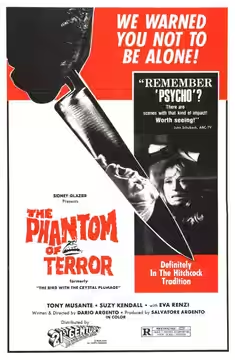
Dario Argento’s thriller is tense, precise and unusually good at making us examine the screen. Its characters can feel thin, but the controlled photography and editing make it well worth the discomfort.
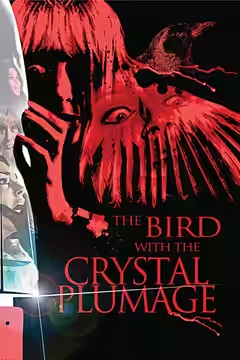
Dario Argento’s The Bird with the Crystal Plumage is a gripping thriller with a limited interest in making its people feel lived-in. That reservation matters, but it need not spoil the evening. Writing and directing, Dario Argento puts considerable faith in the audience’s willingness to study an image, and the film rewards that attention with suspense. At 96 minutes, it also has the good sense not to make the exercise exhausting.
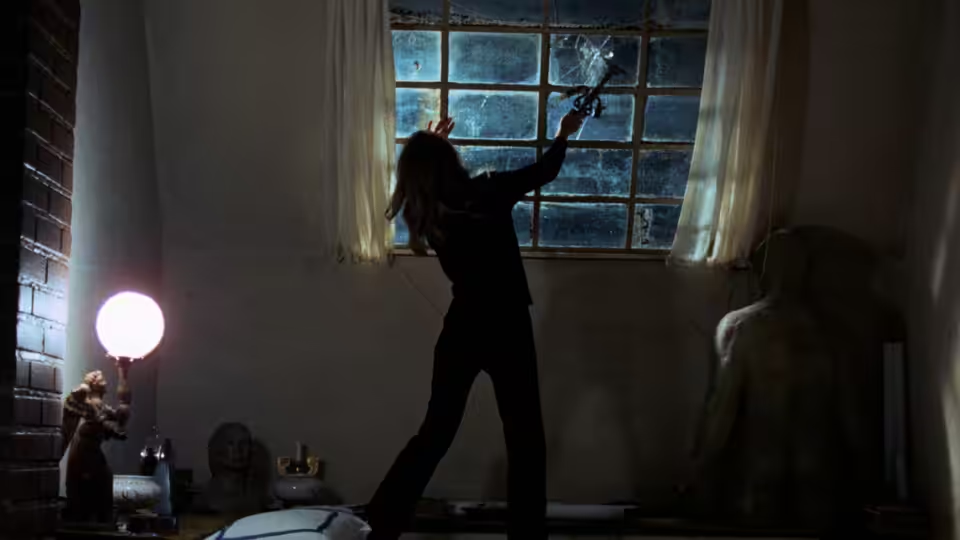
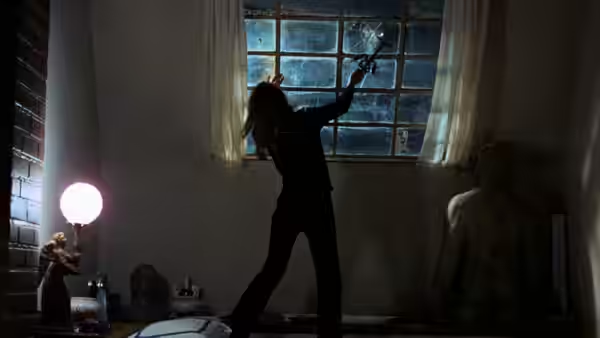
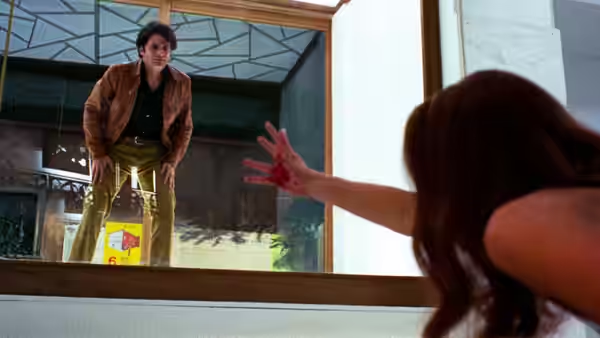
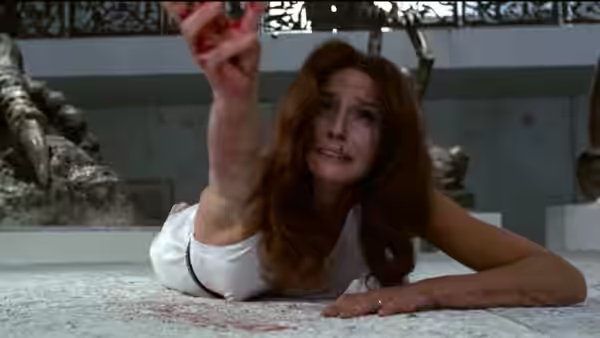
Vittorio Storaro’s cinematography gives that approach its force. The wide-screen compositions keep us looking across the image rather than simply accepting whatever occupies its centre, while the vivid colours and sharp contrasts make looking pleasurable in itself. We were unsettled by the precision of those frames: they made us keep checking what we thought we had seen. The photography encourages that vigilance without making the image difficult to read, which is a considerable part of the film’s appeal.
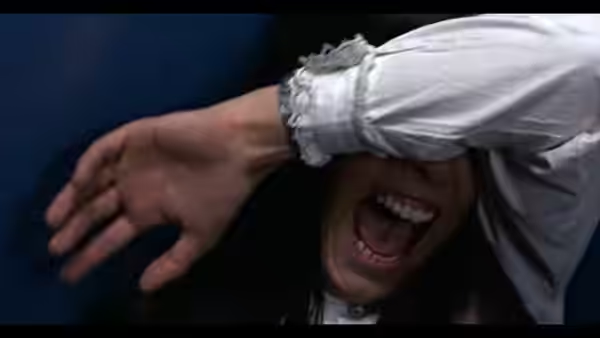
Franco Fraticelli’s editing is just as important, sharpening the suspense while allowing disorientation to persist. The cutting keeps those carefully composed images from becoming an exhibition we can inspect at our leisure. We can appreciate a frame and still feel uncertain about it, which is a useful condition for a mystery to produce. There is pleasure in being kept alert this way, and the editing sustains it without making the cinematography seem merely decorative or interrupting our interest in what we are watching.
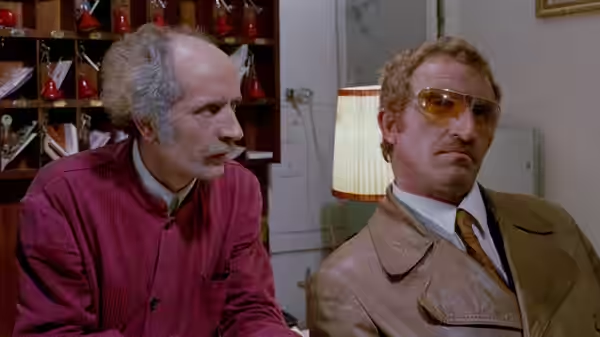
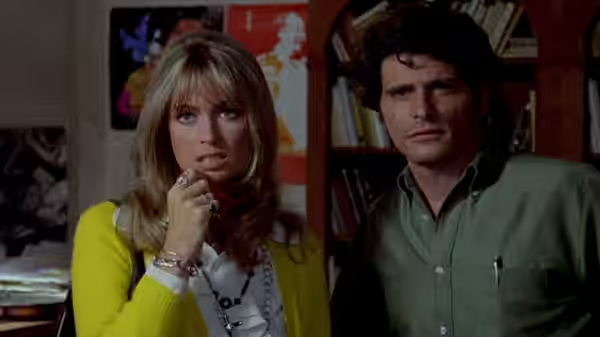
Tony Musante plays Sam Dalmas, with Suzy Kendall as Julia and Enrico Maria Salerno as Inspector Morosini. They are watchable company, though none displaces the photography as the film’s main attraction. The writing gives us little reason to care deeply about them, and the actors cannot quite put that right. This is the chief weakness: viewers who need a thriller to provide substantial characterisation may find themselves impatient with how much attention has gone into arranging the image around the people.
Dario Micheli’s production design and costumes deserve some of the credit for that visual consistency. The film’s coherent appearance helps the compositions work, and it would be misleading to attribute everything we see to the person behind the camera. Ennio Morricone’s music contributes to the unease, although it is not the element we most want to talk about afterwards. The photography and editing make the strongest impression, with the other departments supporting an unusually concentrated approach to suspense.
We would approach this chiefly as a thriller, rather than expecting horror to provide a succession of shocks. Its particular pleasure is the attention it asks us to give the screen, and how consistently that attention is rewarded. There is no need to admire its formal precision dutifully: the suspense gives all that careful work a practical purpose, and the film remains good entertainment despite its thin characterisation. Choose it when following a film closely sounds like a pleasure; it is not one for a distracted evening.