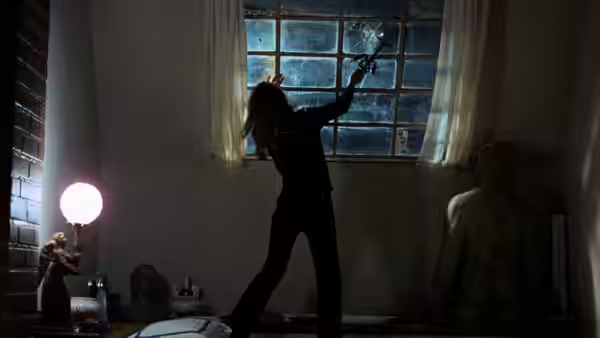
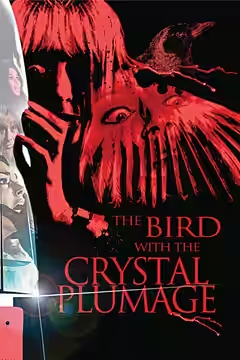
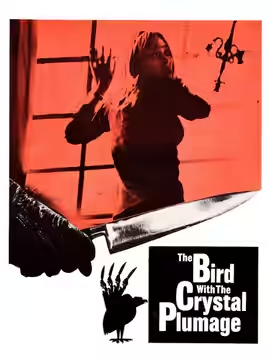
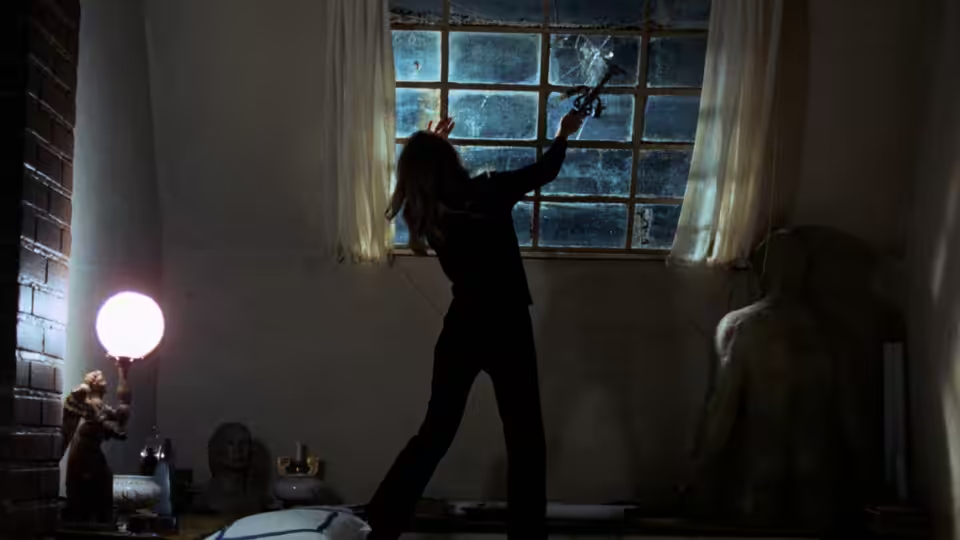
A silhouetted woman raises an arm beside a window as another figure sits nearby
Film review

The Bird with the Crystal Plumage

1970 · Directed by Dario Argento · 1h 36m

In a sentenceNobody arranges a frame this carefully just to let us relax

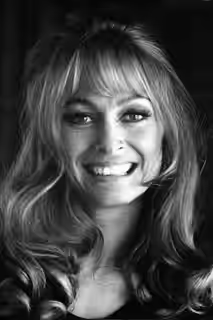
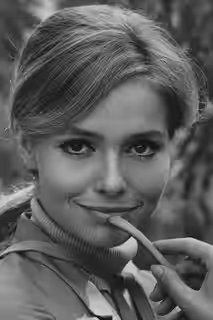
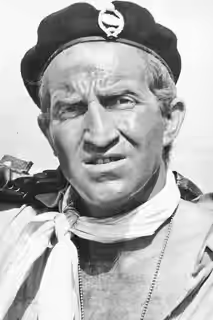
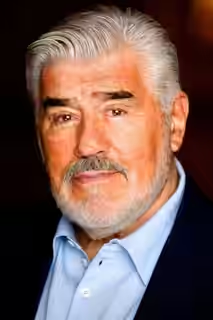
Sam Dalmas (Tony Musante), Julia (Suzy Kendall) and Inspector Morosini (Enrico Maria Salerno) appear in this 1970 mystery-thriller from writer-director Dario Argento. Eva Renzi plays Monica Ranieri and Umberto Raho plays Alberto Ranieri, with Renato Romano as Professor Carlo Dover. Running for 96 minutes, the film also draws on horror, with cinematography by Vittorio Storaro and music by Ennio Morricone. Its supporting cast includes Mario Adorf as Berto Consalvi, Pino Patti as Faiena and Gildo Di Marco as Garullo.

Plays from YouTube when you press play; nothing loads from them until then.

Fi1m review

Dario Argento’s thriller is tense, precise and unusually good at making us examine the screen. Its characters can feel thin, but the controlled photography and editing make it well worth the discomfort.

Dario Argento’s The Bird with the Crystal Plumage is a gripping thriller with a limited interest in making its people feel lived-in. That reservation matters, but it need not spoil the evening. Writing and directing, Dario Argento puts considerable faith in the audience’s willingness to study an image, and the film rewards that attention with suspense. At 96 minutes, it also has the good sense not to make the exercise exhausting.

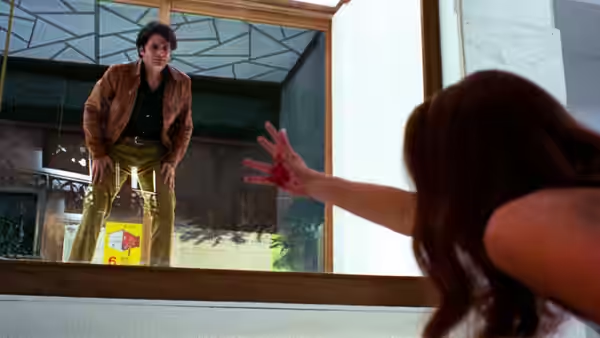
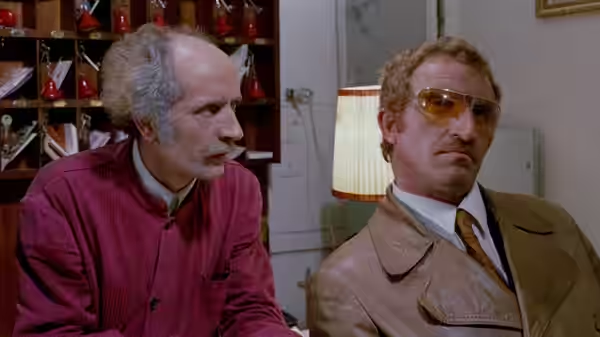
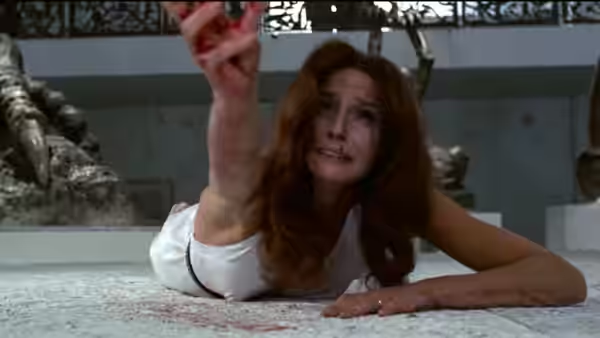
Vittorio Storaro’s cinematography gives that approach its force. The wide-screen compositions keep us looking across the image rather than simply accepting whatever occupies its centre, while the vivid colours and sharp contrasts make looking pleasurable in itself. We were unsettled by the precision of those frames: they made us keep checking what we thought we had seen. The photography encourages that vigilance without making the image difficult to read, which is a considerable part of the film’s appeal.

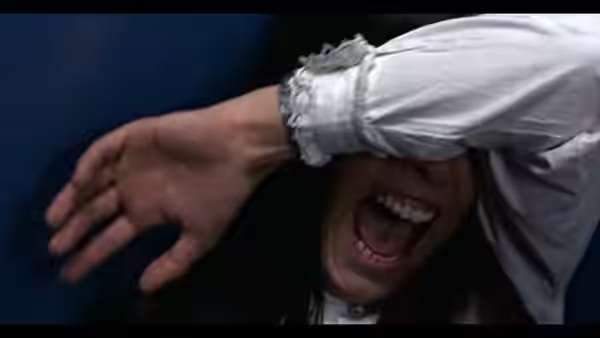
Franco Fraticelli’s editing is just as important, sharpening the suspense while allowing disorientation to persist. The cutting keeps those carefully composed images from becoming an exhibition we can inspect at our leisure. We can appreciate a frame and still feel uncertain about it, which is a useful condition for a mystery to produce. There is pleasure in being kept alert this way, and the editing sustains it without making the cinematography seem merely decorative or interrupting our interest in what we are watching.

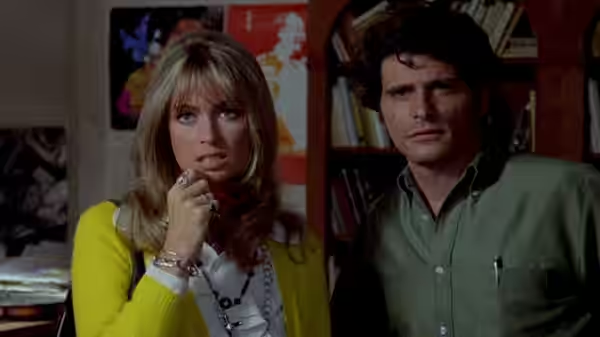
Tony Musante plays Sam Dalmas, with Suzy Kendall as Julia and Enrico Maria Salerno as Inspector Morosini. They are watchable company, though none displaces the photography as the film’s main attraction. The writing gives us little reason to care deeply about them, and the actors cannot quite put that right. This is the chief weakness: viewers who need a thriller to provide substantial characterisation may find themselves impatient with how much attention has gone into arranging the image around the people.

Dario Micheli’s production design and costumes deserve some of the credit for that visual consistency. The film’s coherent appearance helps the compositions work, and it would be misleading to attribute everything we see to the person behind the camera. Ennio Morricone’s music contributes to the unease, although it is not the element we most want to talk about afterwards. The photography and editing make the strongest impression, with the other departments supporting an unusually concentrated approach to suspense.

We would approach this chiefly as a thriller, rather than expecting horror to provide a succession of shocks. Its particular pleasure is the attention it asks us to give the screen, and how consistently that attention is rewarded. There is no need to admire its formal precision dutifully: the suspense gives all that careful work a practical purpose, and the film remains good entertainment despite its thin characterisation. Choose it when following a film closely sounds like a pleasure; it is not one for a distracted evening.
Critical consensus AI synthesised

82
Positive
4
Mixed
0
Negative
0
Slant Magazine
21 July 2021 · ★★★★½ · Chuck Bowen
90

Bowen praises the UHD release as possibly Arrow’s best 4K presentation to date. He singles out the vivid colors and sharply rendered contrasts of the restoration.

Read the full review →
The AV Club
26 October 2005 · Noel Murray
85*

Murray presents the film as a landmark that artfully bridges arthouse and exploitation cinema. He especially praises Argento’s cinematic inventiveness and the film’s vivid, carefully composed style.

Read the full review →
Time Out
26 March 2012
70*

The blurb presents Argento’s first film as more thriller than horror. It praises his talent for wide-screen compositions, already evident here.

Read the full review →
Eye for Film
18 June 2011 · James Gracey
85*

Gracey praises the film as an accessible, compelling, genre-defining classic. He especially singles out its stylish cinematography and editing, which heighten the suspense and disorientation.

Read the full review →

Straight answers AI written, from our review

Is The Bird with the Crystal Plumage worth watching?
The Bird with the Crystal Plumage is well worth watching for its precise visual suspense, and we score it 81 out of 100. The photography and editing reward close attention throughout its 96 minutes, though we find the characters thin; choose it for an absorbing mystery rather than people to care deeply about.
How long is The Bird with the Crystal Plumage, and what is it rated?
The Bird with the Crystal Plumage runs 1h 36m. It is a horror and mystery film.
Where can I watch The Bird with the Crystal Plumage in Iceland?
The Bird with the Crystal Plumage is not on any streaming or rental service in Iceland at the moment. It is available in 11 other countries; change your country at the top of the page to see where. Availability is checked daily.
How violent or frightening is The Bird with the Crystal Plumage, and is it suitable for children?
The Bird with the Crystal Plumage has a US PG certificate, but we would not treat that alone as a recommendation for children. We find its carefully arranged images unsettling, and its emphasis is on sustained suspense rather than a succession of shocks. Without more specific violence details or a UK certificate, we cannot give firmer guidance for younger or squeamish viewers.
How does The Bird with the Crystal Plumage compare to Blow-Up?
The Bird with the Crystal Plumage is our choice over Blow-Up for sustained thriller suspense, though both reward viewers who enjoy studying an image for trouble. Argento keeps the photography and editing working towards an absorbing mystery; Blow-Up offers a particularly tense sequence of photographic scrutiny within a broader, sourer portrait of the London it depicts.
Is The Bird with the Crystal Plumage based on a true story or a book?
The Bird with the Crystal Plumage is based on a novel by Fredric Brown, rather than a true story. We cannot establish how faithfully it follows that book from the information supplied, but our recommendation rests on the film’s photography, editing and suspense, not on familiarity with its source.

Cast

Awards

Grolla d'oro for Best New Director, 1970

Won
Grolla d'oro for Best New Director

If you liked this, try…

  1. Peeping Tom (1960) · not on Fi1m yetAnother unsettling thriller that makes the act of watching feel suspect.

  2. Blow-Up (1966, Fi1m 74)A patient mystery for anyone who enjoys studying an image for trouble.

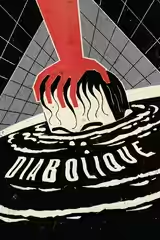
  3. Diabolique (1955) · not on Fi1m yetPrecise suspense and uncomfortable company, with little interest in reassuring anyone.

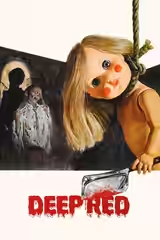
  4. Deep Red (1975) · not on Fi1m yetMore elaborate visual unease, if careful compositions are what brought you here.

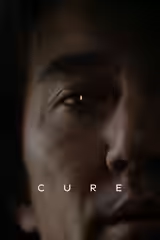
  5. Cure (1997) · not on Fi1m yetA colder, quieter investigation that makes uncertainty difficult to shake off.