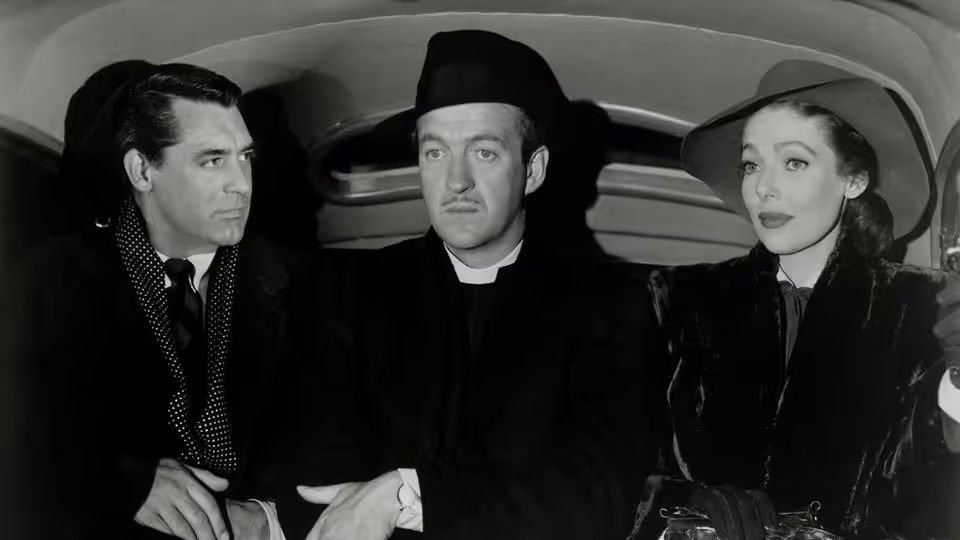
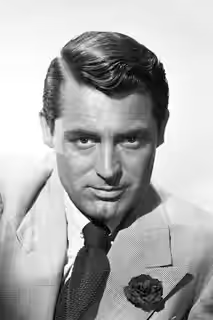
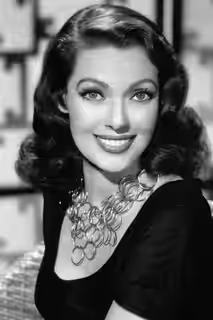
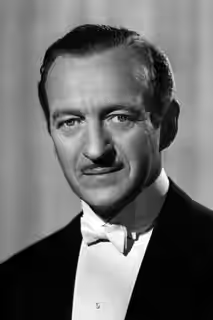
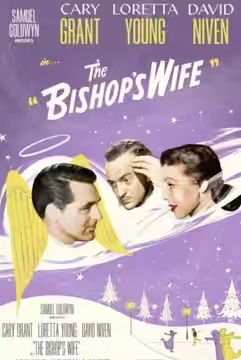
Cary Grant plays an angel far more interested in the bishop’s wife than in the bishop, and Henry Koster’s Christmas comedy is at its best when it admits as much. Sweet, well acted and a little thin, with David Niven doing the hardest work.
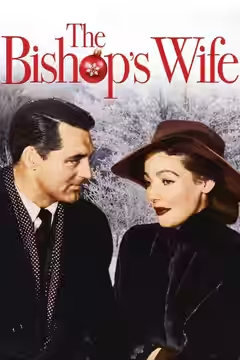
Henry Koster’s The Bishop’s Wife, from a Robert Nathan novel adapted by Robert E. Sherwood and Leonardo Bercovici, belongs to that run of 1940s films in which heaven takes a personal interest in one American household. A bishop who has lost sight of his marriage asks for help, and help arrives in the shape of Cary Grant, who does everything the bishop has forgotten to do, including paying attention to his wife. It is a charming film, easy on the eye and easy on the conscience, and it would be a better one if it were braver about the joke at its own centre.
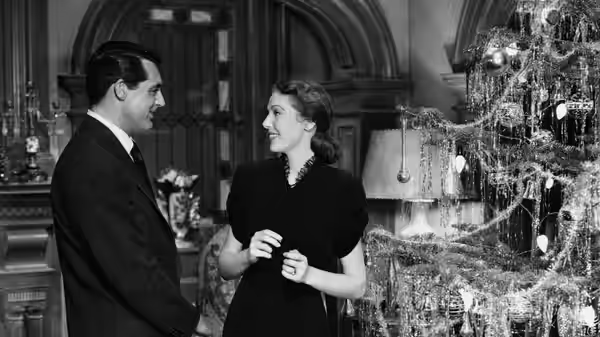
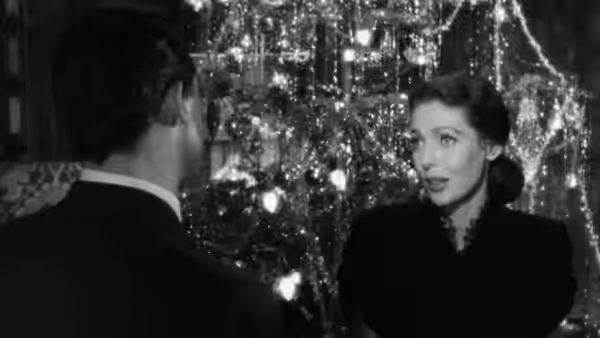
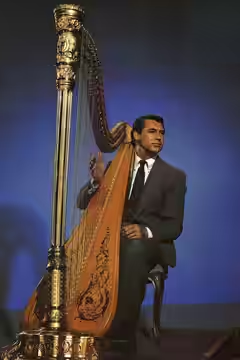
Grant is the reason to watch, and he knows it. He plays Dudley without wings, halo or any visible effect: a man in a good overcoat who is already there when you turn round, remembers everyone’s name and finds every chair comfortable. The small miracles are done with a glance. A sherry bottle in Monty Woolley’s study never runs dry. A Christmas tree decorates itself while a little girl watches. Grant does none of it with a flourish, and Koster is wise enough to let the camera find the trick a beat after he has done it.
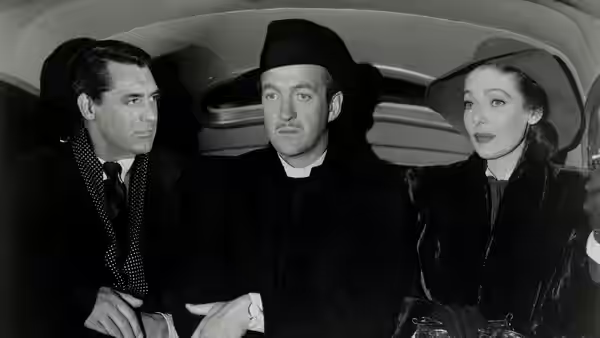
Niven has the harder part and gives the better performance. Henry Brougham is a decent man who has become a bore, and Niven plays him as someone who half knows it: fretful about the cathedral, stiff at dinner, sharp with his wife and instantly sorry. His scenes with Dudley are the film’s best writing, because he is the only person in the house who knows what Dudley is and cannot stand him. When Dudley pins him to a chair so that he misses an appointment and Julia goes out without him, we laughed, and then we found we minded on Henry’s behalf rather more than the film seemed to. The bishop is being taught a lesson; he is also being made a fool of, and Koster does not quite look that in the eye.
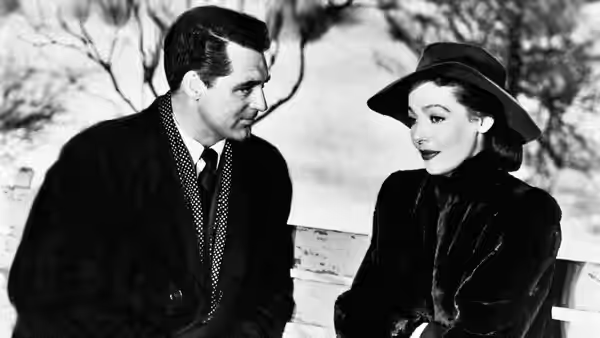
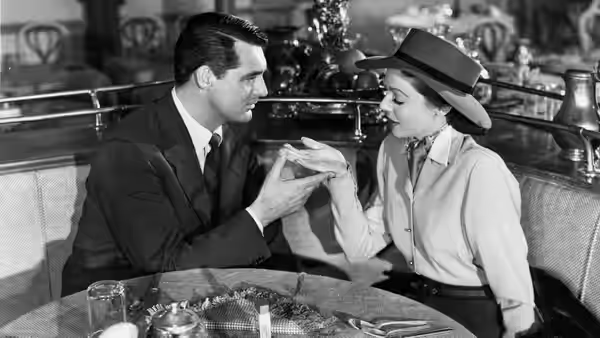
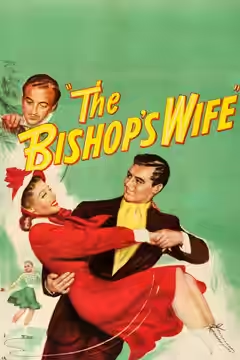
Loretta Young has less to do than the title suggests. Julia is a good woman who is sad, and the script gives her patience and a new hat rather than a will of her own. What Young does with that is make the afternoons out with Dudley look like the first time in years anyone has asked her what she wanted. The skating sequence is the one everybody remembers. Sylvester the cab driver (James Gleason) is talked onto the ice, Dudley takes Julia by the hand, and for a few minutes the film stops being about a cathedral.
Gregg Toland shoots it in black and white with a softness that will surprise anyone who knows him from Citizen Kane. The Brougham house is lamplight and dark wood; the snow outside is bright enough to make the windows glow; Mrs. Hamilton’s mansion is lit high and hard, so the widow (Gladys Cooper, formidable) sits in a room that looks like a bank. Adrian and Irene Sharaff put Young in soft wool and Cooper in black with jet at the throat. Hugo Friedhofer’s score leans on carols and a choir and lays the sugar on at every doorway. Monica Collingwood cuts at a steady walking pace, and 109 minutes is a shade long for the story.
The second half takes a turn we will not describe. The film has a point to make about money and makes it in speeches; Cooper does more for it with a raised eyebrow than the script manages in a page. As for what an angel is doing spending his afternoons with a married woman, the film grows nervous whenever it comes close to saying.
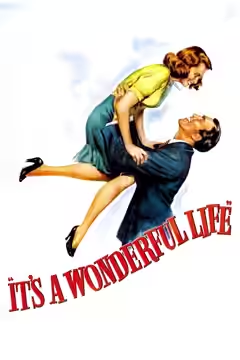
Against It’s a Wonderful Life, from the year before, this is the lighter film in every sense, and Koster wants it so. As a Christmas comedy it is better acted than most and gentler than nearly all. See it for Grant leaning in a doorway, for Niven’s misery, and for Gleason on skates. It carries a U certificate and can be watched with anyone in the house, which is more than can be said for its lead’s intentions.