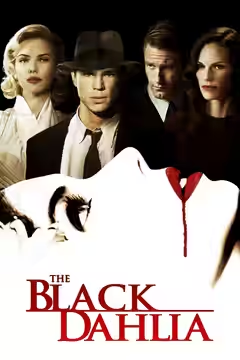
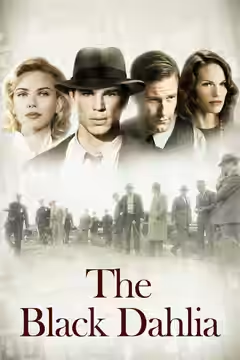
Brian De Palma shoots 1947 Los Angeles as well as anyone has, and gives Mia Kirshner two minutes of screen-test footage that haunt the rest of the film. Around them, Josh Hartnett sleepwalks through a plot nobody has finished untangling.
Brian De Palma has spent most of his career circling a picture like this, and James Ellroy’s novel ought to have been the one that let him make it. Los Angeles, 1947. A young woman’s body in two halves in a vacant lot. Two policemen who used to be boxers, a woman between them, and a rich family in the hills with a daughter who looks like the corpse. Josh Friedman’s screenplay keeps all of it and finds nothing to hold it together, so that by the final half hour we could not have told you which strand we were meant to be following. It is a handsome film with one great scene in it, and the rest is a muddle. The reviews so far mostly say as much, and on this occasion so do we.
The great scene belongs to Mia Kirshner. Elizabeth Short is seen almost entirely in black-and-white screen-test footage, sitting on a stool while a director off camera asks her about herself. She lies, flirts, tries an accent, quotes something she has learned, and once, for about a second, stops performing and looks lost. We found this upsetting in a way nothing else here manages, because the film is making us watch a real murdered woman audition for our attention and it knows exactly what it is doing. The rest of the picture puts her in a lot and treats her as a clue.
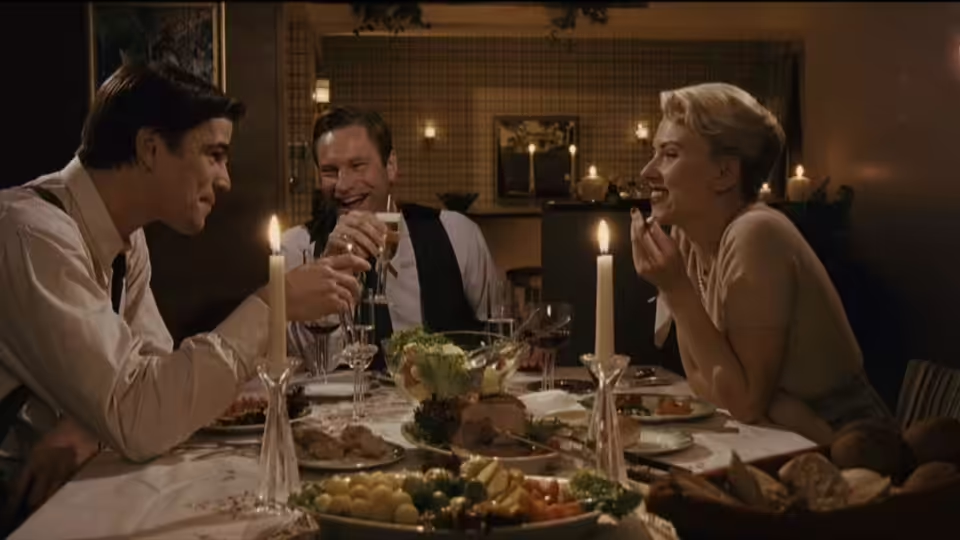
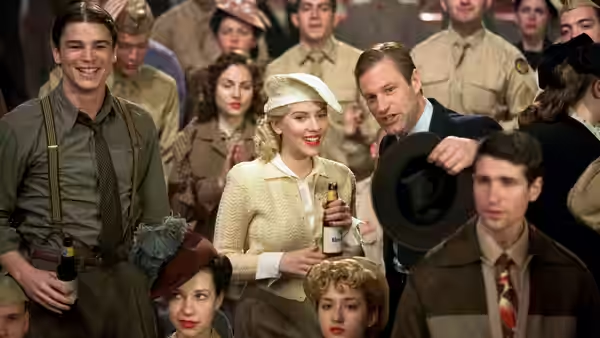
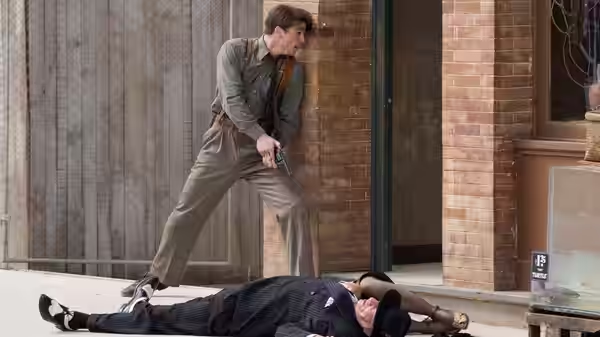
Vilmos Zsigmond shoots everything else in browns and tobacco yellows, as if the print had been kept in a smoker’s drawer, and the one shot people will remember is his. The camera lifts from a shootout on one street, over a rooftop, and comes down on the other side to find the body before any of the police do. Dante Ferretti’s Los Angeles is all stucco and hollow signage, a city built to be photographed from the front, and Jenny Beavan dresses Hilary Swank in black and Scarlett Johansson in cream so that we always know which woman is meant to be trouble. Mark Isham’s score does a competent impression of the period without adding anything to it.
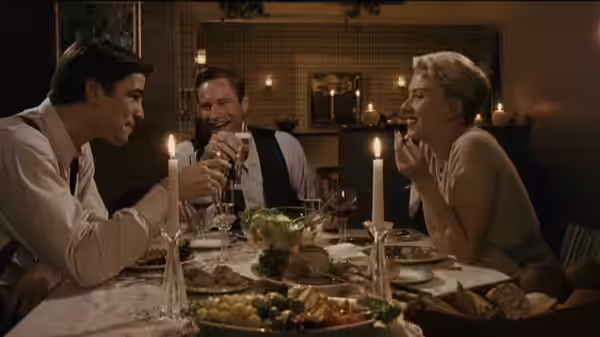
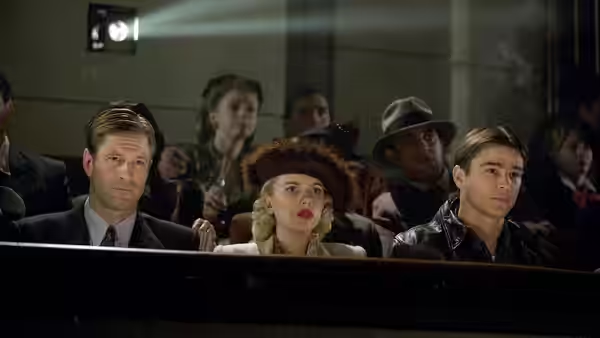
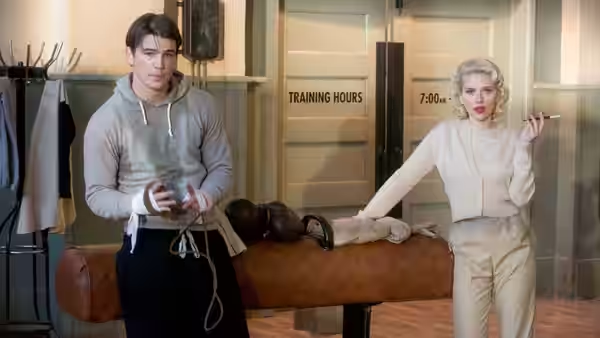
The trouble is in the middle of the frame. Hartnett narrates the film, and he reads Bucky’s voice-over as though it were a shopping list; when he is on screen he watches events with the mild interest of a man waiting for a bus. Ellroy’s Bucky is a coward and a liar who knows it. Hartnett plays him as tired. Johansson looks right, lit from behind in a doorway with a cigarette, and then she speaks, and the lines come out flat and modern, a woman at a wedding reading a poem she was handed that morning. A triangle needs three sides. This one has a corner.
Aaron Eckhart is better. Lee’s obsession with the case makes him twitchy and rude, and Eckhart lets him fray in front of us without asking to be liked. Swank plays Madeleine as if she has wandered in from a funnier film, all slow vowels and appraising looks, and the picture improves whenever she is in it. Fiona Shaw, as her mother, plays at a pitch the rest of the cast has not been told about, and we laughed, uncertain whether we were meant to. Mike Starr, as the senior detective Russ Millard, is the only person who behaves as though the murder were a job.
De Palma’s best thrillers, Dressed to Kill and Carlito’s Way among them, had one idea and followed it to the end. This has a dozen, and Bill Pankow is asked to cut between the boxing, the triangle, the Linscotts and the dead girl as though they were all the same story, which they are not. At 121 minutes it is not long, but it feels padded and rushed at once, and the late stretch piles reveal on reveal with a speed that turns a mystery into a briefing. By then we had stopped following and started counting, which is no state for a thriller to leave you in.
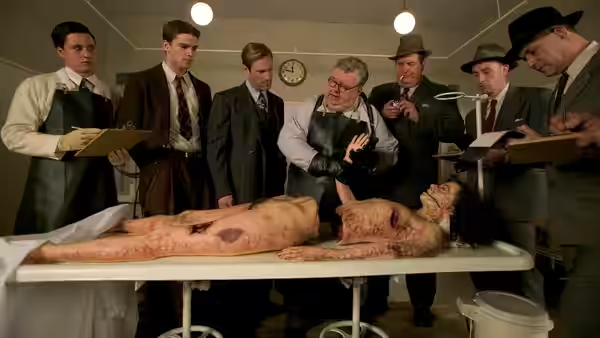
Watch it for Kirshner and for the crane shot, and do not expect to explain the plot to whoever falls asleep beside you. The 15 certificate covers a fair amount of blood, most of it in shadow. It is De Palma’s best-looking film in years and one of his least coherent, and we would rather have had the coherence.