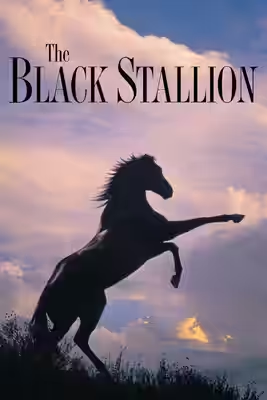
Carroll Ballard’s film of Walter Farley’s novel is two films: a boy and a wild horse alone on an island, which is as fine a stretch of wordless cinema as we know, and a racing picture with Mickey Rooney, which is good and ordinary.
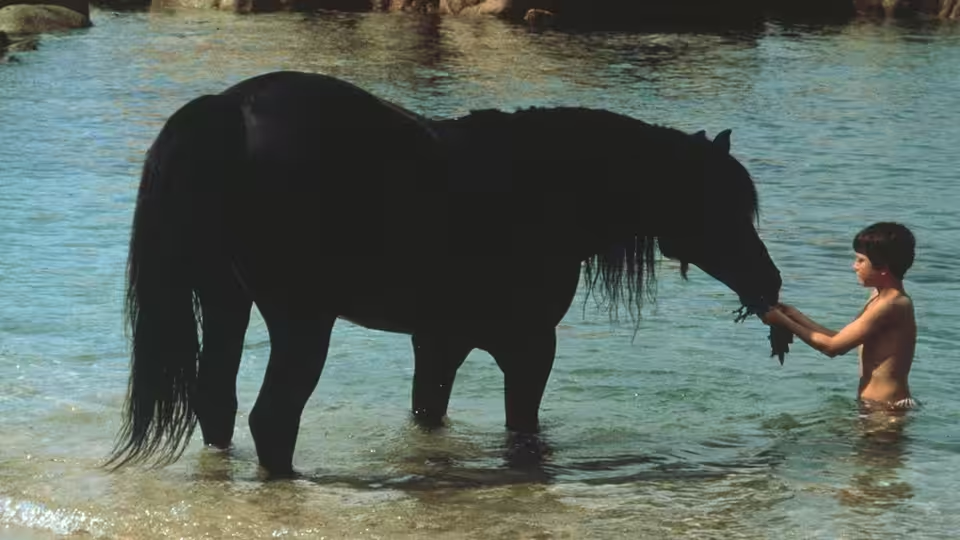
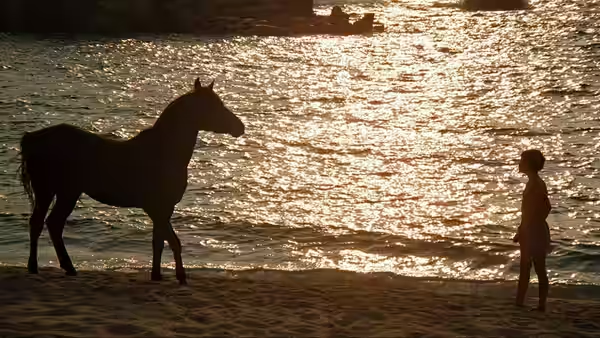
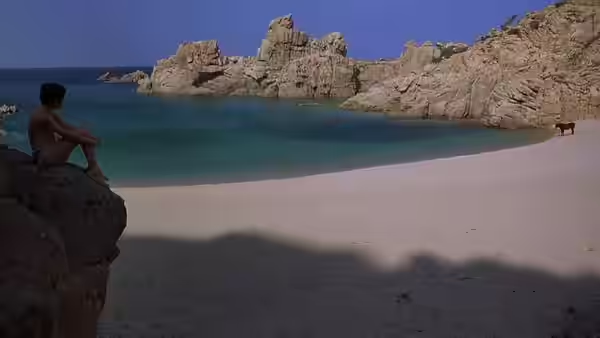
Children’s films are usually frightened of silence. The Black Stallion, which Carroll Ballard directed from Walter Farley’s novel, with a screenplay credited to Melissa Mathison, Jeanne Rosenberg, William D. Wittliff and Walter Murch, is built around a stretch of close to forty minutes in which nobody says a word, because there is nobody to say it to. A boy and a horse are washed up on an island. The film watches them. That is the whole of its first half, and it is the best thing in it.
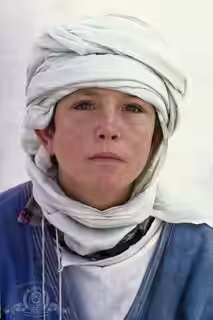
It begins on a steamer in 1946, and the shipwreck that gets Alec Ramsey (Kelly Reno) and the horse (Cass-Olé) to the island is the one place the film means to scare you. Caleb Deschanel shoots the deck tilting in the rain by firelight, the horse plunging into black water with its ropes still on, and the boy going in after it. We were frightened, and we were frightened under a U certificate, which says something about how little the film needs to show. Robert Dalva cuts the sequence fast and dark, and then, when the water closes over, stops cutting almost entirely.
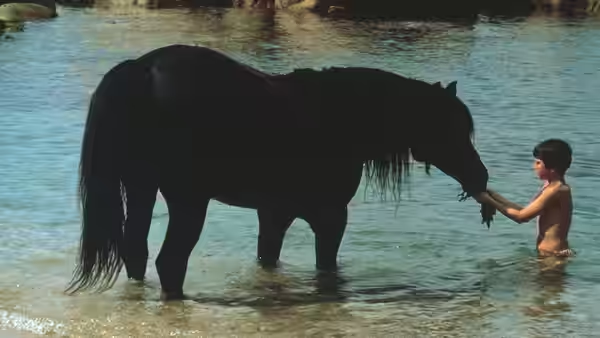
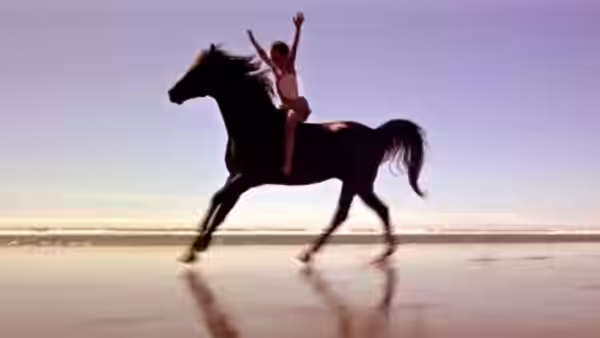
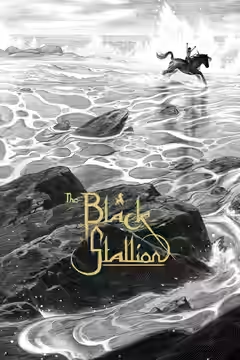
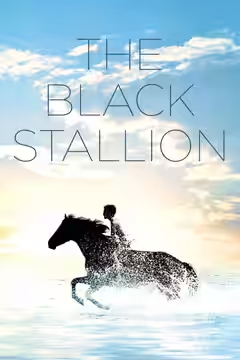
The island is where Deschanel earns his reputation. He shoots the boy and the horse from a long way off, small on the sand, and lets a take run until the horse decides to move. He puts the camera under the water and films their legs, four black and two pale, walking through the same green light. The horse gets its rope caught in the rocks and Alec cuts it free with his knife; days later he comes down the beach holding out seaweed, and the horse, after a long time, takes it. We were moved more than seemed reasonable by a horse eating seaweed from a child’s hand, and the reason is that Ballard has made us wait for it. The ride along the surf line that follows, the boy sliding off and climbing back on and the water throwing itself at both of them, is the image people remember, and they are right to.
Carmine Coppola scores the island with flute and drum and not much else, and the rest is wind, surf and the horse breathing. Kelly Reno is not acting in the usual sense. He is a boy who can ride, and Ballard films him doing things, lighting a fire, failing to catch a fish, getting kicked, rather than performing them, which is why none of it looks like a performance.
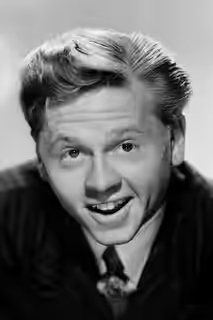
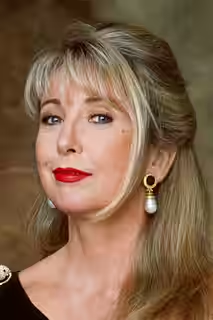
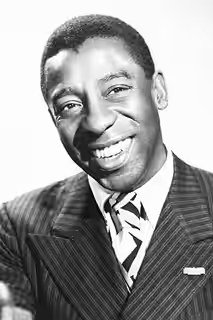
Then the boy is rescued and the film changes. He goes home to his mother (Teri Garr), the horse bolts from the back garden, and Alec tracks it to a run-down farm owned by Henry Dailey (Mickey Rooney), a retired trainer with a stopwatch and a reason to use it again. Clarence Muse plays Snoe, the old horseman who sees what the animal is before anyone else does. Rooney is quiet and good; he plays Henry as a man who has stopped expecting anything and is annoyed to find himself hoping. The training at night, the two of them on a muddy track in the dark with a lantern on a post, is the second half’s best passage.
But it is a horse-racing picture now, and a familiar one. A reporter called Neville (Michael Higgins) turns up to make the plot move, the mother more or less vanishes once she has given her permission, and Coppola’s score, so spare on the sand, swells for the race. The race itself we will not describe. It is well staged and we were on the edge of the sofa, but we had been somewhere stranger an hour earlier and could feel the film settling for less. Most critics do not mind this. We mind it a little.
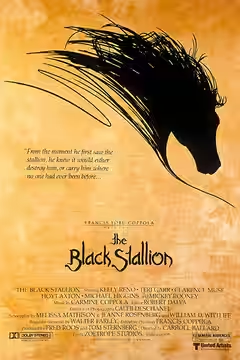
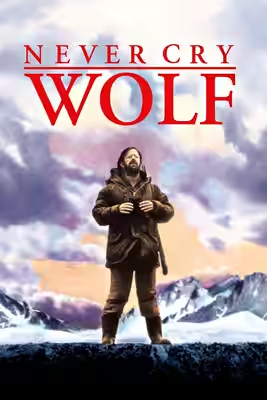
Ballard went on to make Never Cry Wolf (1983) and Fly Away Home (1996), and all three films have the same shape: a person and an animal, a long stretch of looking, then a plot. This is the purest of them, because the looking goes on longest. Fred Roos and Tom Sternberg produced it, it runs 118 minutes, and it reached British cinemas on 17 October 1979.
Watch the first hour with the lights off and the sound up. If there is a child next to you, the storm may call for a hand. The second hour they will enjoy more than you do, and that is fine; it was always theirs.