Whitney Houston makes The Bodyguard worth considering, particularly when she sings. Mick Jackson’s romance has enough appeal to survive some clumsy writing, but the muddled thriller and uneven pace make its 129 minutes feel longer than they should.
The Bodyguard is a flawed romantic thriller worth considering for Whitney Houston. Mick Jackson understands the appeal of putting an uncommunicative protector beside a star accustomed to attention, and the pairing can be enjoyable without being plausible. Lawrence Kasdan’s screenplay, however, asks the attraction to carry a suspense story that never becomes convincing. The singing gives us a reason to stay through stretches when neither the danger nor the conversation is doing enough.
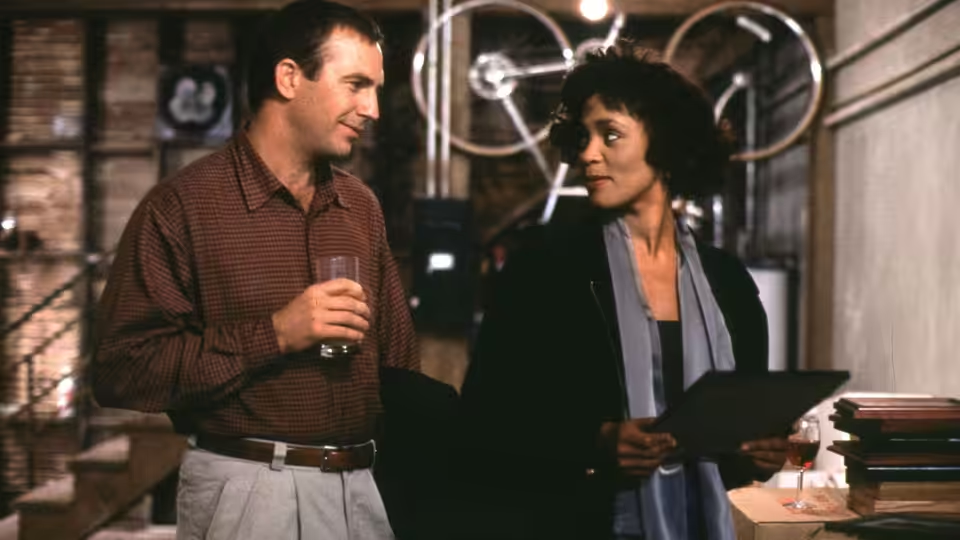
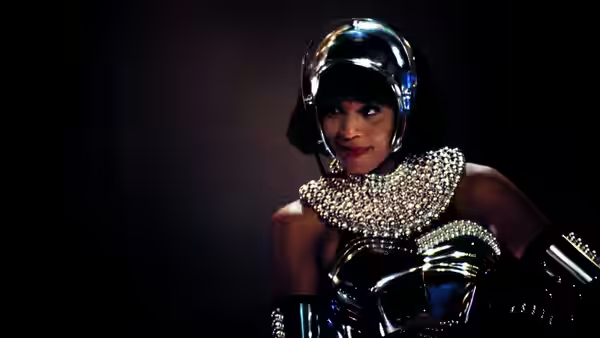
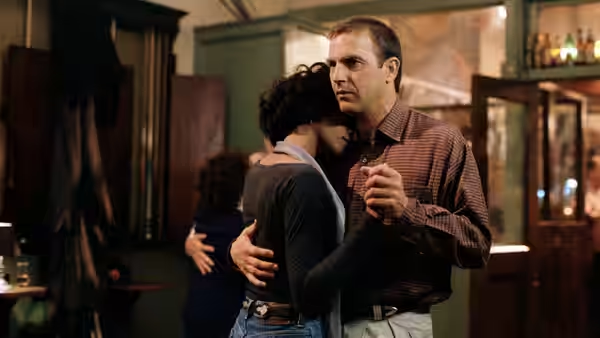
Whitney Houston makes Rachel Marron’s celebrity easy to believe: she holds our attention without seeming to ask for it. Her musical performances express feelings that the dialogue often labours over, and ‘Queen of The Night’ gives her celebrity a force the script takes for granted. We were moved by her singing of lasting love, because she makes the declaration sound like something she needs to say. That directness is welcome in a film whose spoken exchanges can seem so effortful.
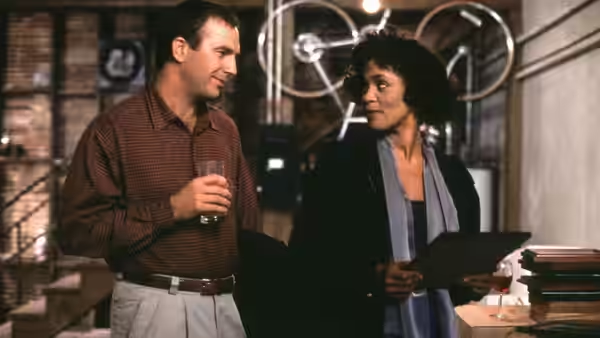
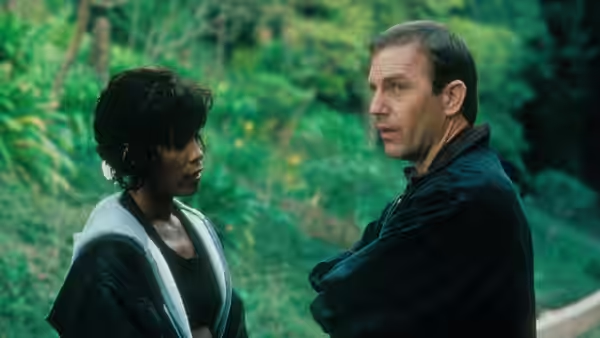
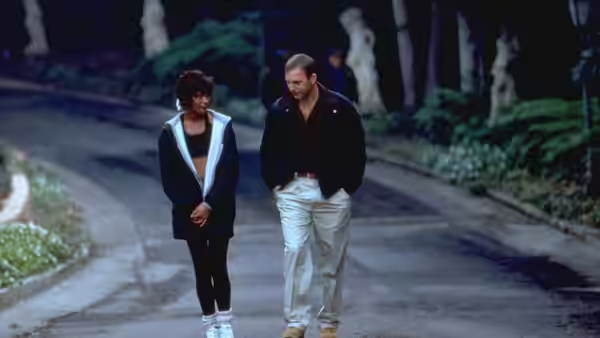
Kevin Costner’s Frank Farmer is so firmly restrained that the attraction sometimes has to be taken on trust. We can understand the appeal of a man whose attention is undivided, and Kevin Costner makes that attention feel serious. Yet the guardedness that suits the job also limits what he can offer his partner in a romantic scene. The pairing has moments of warmth, but Whitney Houston supplies much of the energy that keeps it interesting.
Andrew Dunn’s cinematography serves the star performances well, giving them a polish that suits Rachel Marron’s celebrity. Jeffrey Beecroft’s production design contributes to that impression of a life insulated by fame, though the attractive surroundings do little to make the danger convincing. The film is comfortable presenting celebrity and less assured about making it feel vulnerable. Mick Jackson gets more from allowing the performers to hold our attention than from asking us to fear for them.
Alan Silvestri’s score supplies romantic emphasis where Lawrence Kasdan’s writing has not always made the feelings convincing. It does useful work, but the musical performances make the surrounding drama sound thinner than it should. Whitney Houston can communicate longing with a directness that the screenplay struggles to find in conversation. A romance need not be realistic, but we ought to want the next exchange between its lovers as much as the next song.
Donn Cambern and Richard A. Harris face the problem of fitting musical performance, romance and danger into the same rhythm, and the editing never quite solves it. Individual passages can be enjoyable while the transitions leave the story feeling interrupted rather than developed. At 129 minutes, the film gives us ample time to notice how unevenly it moves. The thriller needs greater momentum, especially when the romantic tension is not strong enough to carry a slower stretch.
For a romantic thriller, the basic difficulty is that neither the attraction nor the threat consistently earns our attention. There is pleasure here, particularly in Whitney Houston’s confidence and the occasional warmth that breaks through Kevin Costner’s reserve. We can forgive a fair amount of implausibility for those things, though the patience required should not be underestimated. Choose it when the singing is a substantial part of the attraction, rather than a welcome extra.