Jerry Rees’s cartoon about five appliances walking to the city is cheaply drawn, oddly paced and braver about fear and loss than most children’s films before or since. The songs are uneven. The feeling in it is not.
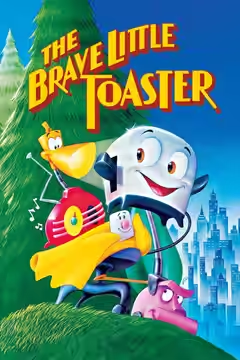
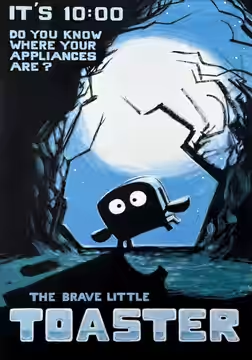
Jerry Rees’s film, written with Joe Ranft from a novel by Thomas M. Disch, takes a premise that sounds like a toy advert and plays it straight. Five appliances have been left in a summer cottage. The boy who used them has not come back. They set off to find him. That is the whole plot, it runs 90 minutes, and it carries a U certificate that feels, by the end, like a clerical error.
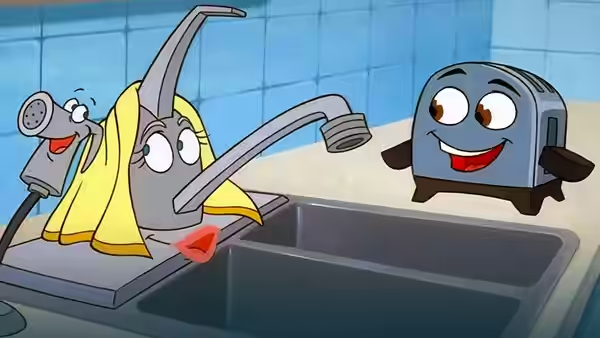
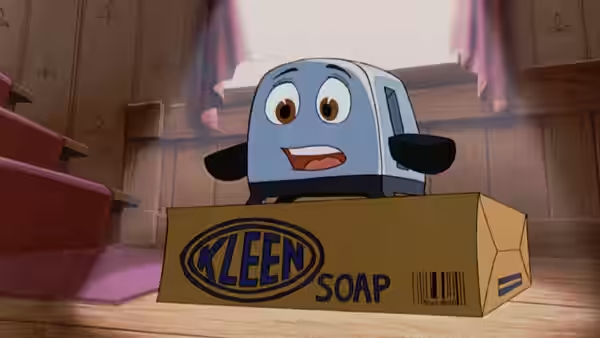
The five are well chosen and well voiced. Deanna Oliver gives the Toaster a plain, practical kindness; she is the one who makes decisions, and she pays for them. Jon Lovitz’s Radio never speaks in his own voice, only in borrowed ones, ball games and bulletins and old radio drama, and the gag holds for the length of the film. Timothy Stack’s Lampy is eager and not bright. Timothy E. Day’s Blanky is a small child who happens to be an electric blanket, and the film treats his fear as real fear. Thurl Ravenscroft’s Kirby, the vacuum cleaner, is the deep-voiced grump who does the hauling and resents it, and his voice carries more weight than the drawing of him does.
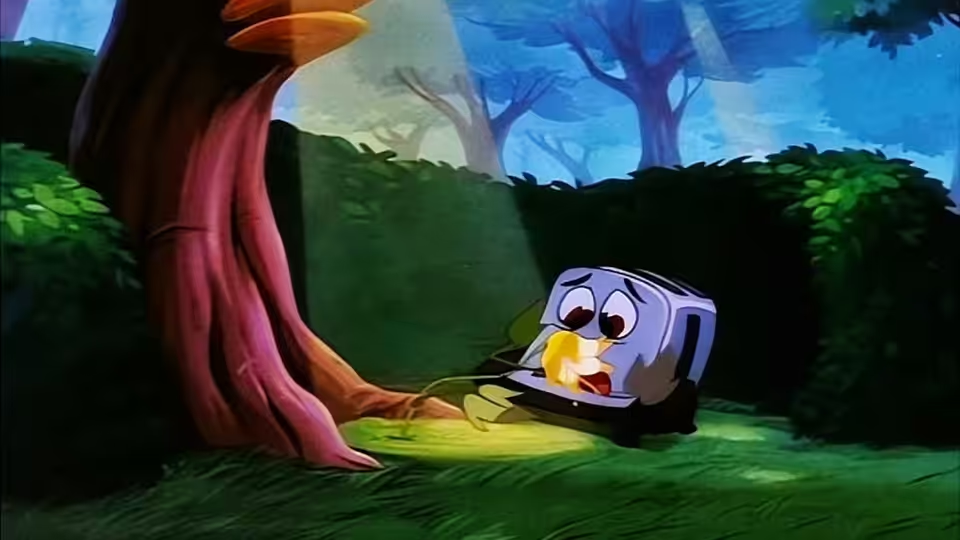
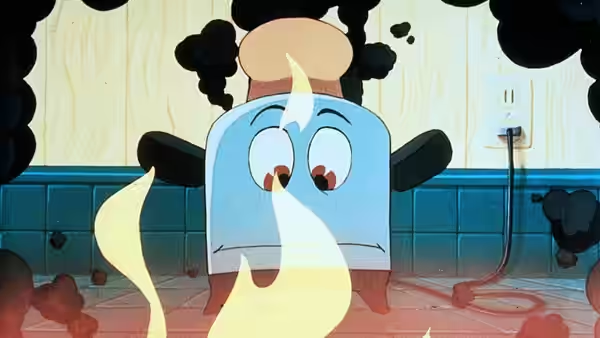
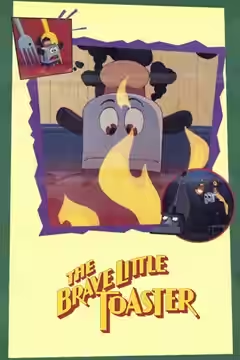
The drawing is where the money ran out. Backgrounds are flat, the forest is a few shades of green, and the movement sometimes stutters. What saves it is the faces. The Toaster has no mouth, only the shadow in her slots, and the animators get worry and resolve out of that. Lampy’s neck bends like an anxious person leaning in. The Air Conditioner, bolted into the window, has a grille for teeth, and Phil Hartman gives him Jack Nicholson’s drawl and Jack Nicholson’s contempt. His scene comes in the first ten minutes: he is mocked, he cannot follow, and he heats until he blows. We were frightened by that as children and we were unsettled by it this time, as adults who knew it was coming. The film has shown, before the journey has started, that it is willing to let things break.
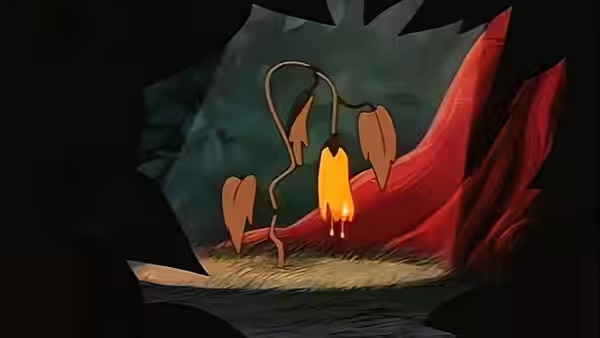
It keeps showing it. The Toaster’s nightmare in the woods, a clown in a fireman’s helmet, is the kind of image most children’s films would have cut in the first screening. A repair shop run by Elmo St. Peters, voiced by Ranft himself, is staged as a horror film and knows it; the song in it, performed by parts of appliances that have been taken to bits, is funny and horrible at once. The music is credited to Van Dyke Parks and David Newman, and it is uneven. The opening number is forgettable. The repair shop song is not. And a late song, sung by cars, which we will not place for you, moved us more than we expected a cartoon about appliances could. It is about machines remembering the people they carried, and it does not pretend that anybody is coming back for them.
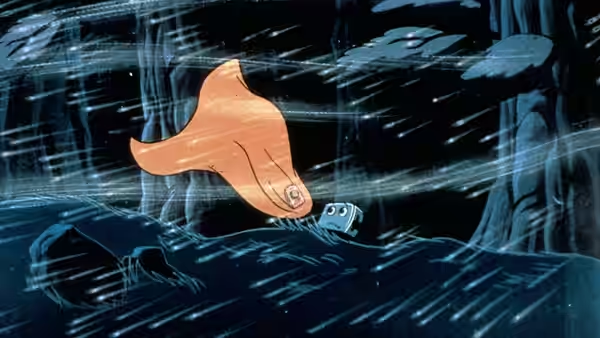
The flaws are real. Rees and the editor Donald W. Ernst let the middle sag: a stretch in the forest with a pond and a storm goes on well past the point where it has told us anything, and the film stops for flashbacks to the boy as a child that say the same thing each time. A number performed by modern appliances in the city is one joke stretched to a song. Lovitz’s Radio is used more for noise than for character once the travelling starts, and we missed him.
Against the children’s cartoons of its decade, this is the odd one. Most softened everything they touched. This one lets its characters be jealous, cruel and afraid, and it lets a few of them lose. The Toaster’s leadership gets people hurt and the film does not let her off for it. That is a harder thing to put in front of a seven-year-old than any monster, and Rees puts it there calmly.
Watch it with the children rather than leaving them to it. Not because it is unsuitable, but because somebody on the sofa will want to talk about the air conditioner afterwards, and it may not be the child.