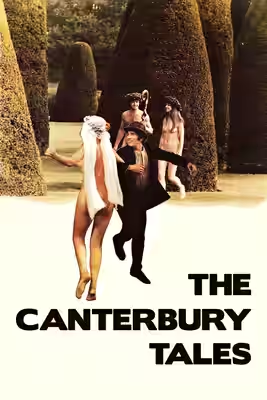
Pasolini’s second raid on the medieval bawdy tale is handsomely dressed, cheerfully filthy and, at 111 minutes, a slog. Donati’s costumes and Ferretti’s sets are worth the evening; most of the stories wrapped in them are not.
Pier Paolo Pasolini made The Decameron in 1971 and this a year later, and the tagline on the poster, promising Chaucer’s lustiest tales from the team that gave you Boccaccio, is for once an honest description of the product. He has taken eight of the Canterbury tales, kept the sex and the privies, thrown out most of the talk, and shot the result in grey English weather with a cast of amateurs and old pros. He also plays Chaucer, sitting at a desk between stories with a quill and the expression of a man who has been asked to do the accounts.
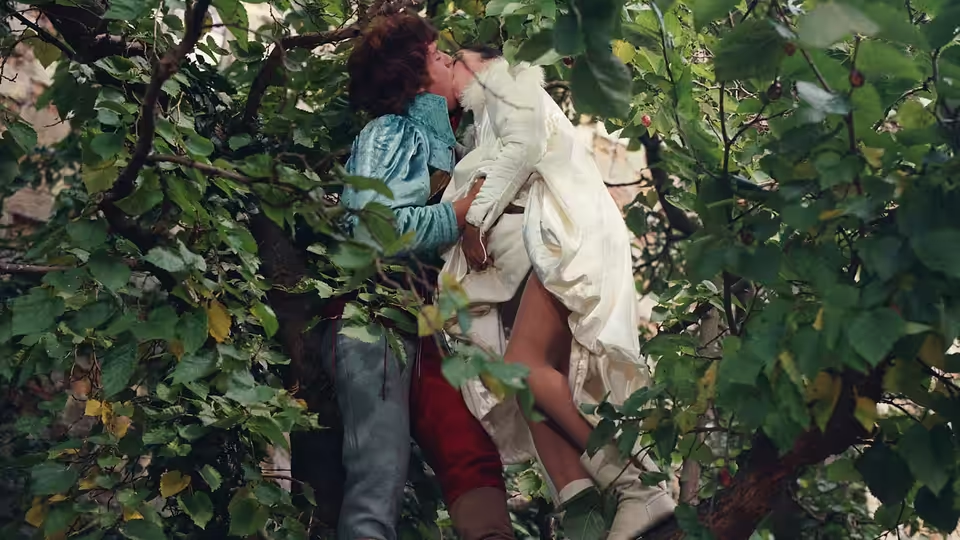
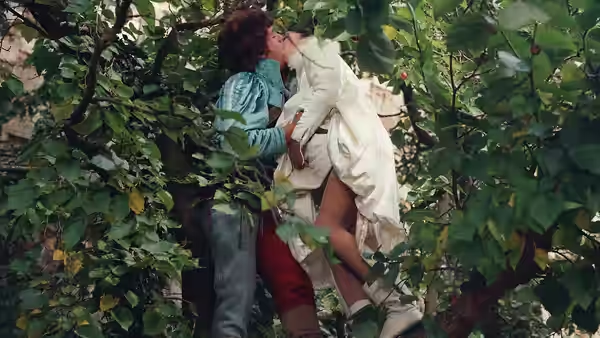
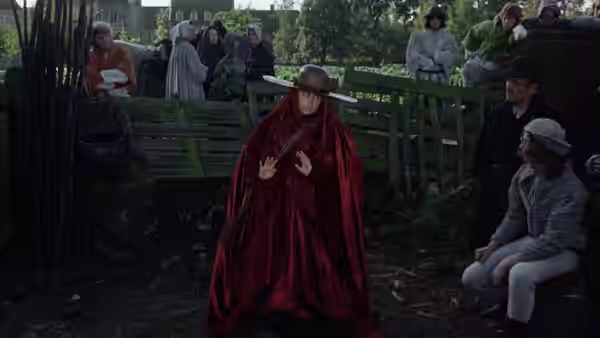
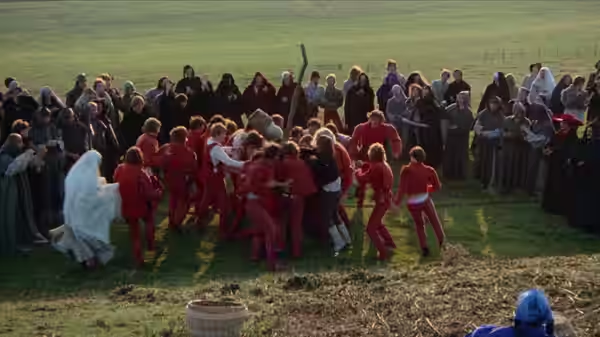
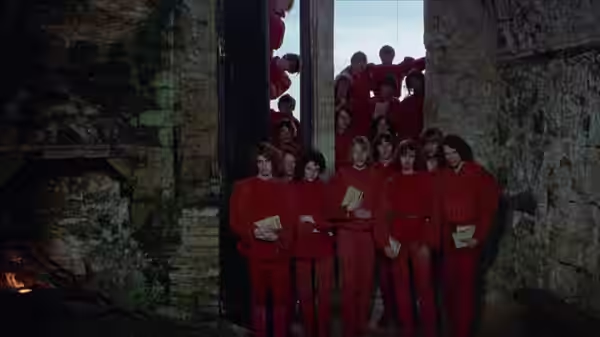
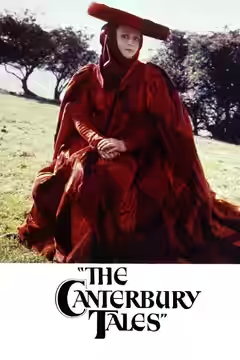
The film looks better than it plays. Danilo Donati’s costumes are the reason to see it: gowns in dirty saffron and madder, hats like upturned flowerpots, and faces to go with them, pocked, toothless, chosen for the way they fill a frame. Dante Ferretti builds inns and bedchambers out of whitewash and bare board, and Tonino Delli Colli shoots them flat, in a light that never quite warms up, so that every interior looks like a painting of poor people made by someone who had looked hard at poor people. We have rarely seen the English Middle Ages look so convincingly cold.
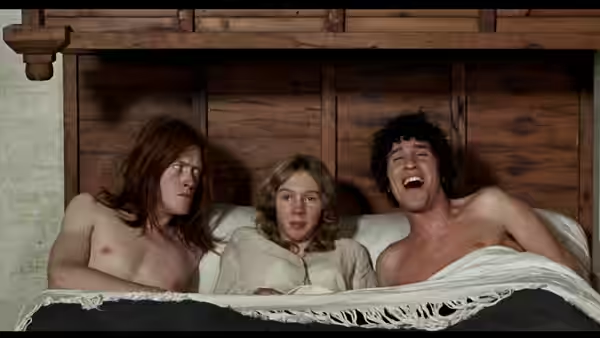
What happens inside those frames is another matter. The Merchant’s Tale opens the film, with Hugh Griffith as Sir January, an old knight who buys himself a young wife in May (Josephine Chaplin) and then cannot sleep for watching her. Griffith plays him as a great wet appetite, all eyebrows and tongue, and it is funny for about ten minutes. Then the tale does what the tale does, slowly, and Nino Baragli’s cutting lets every leer run a beat longer than it needs. That is the rhythm of the whole picture: a good joke, a long pause, the same joke.
The second tale got at us in a way we did not expect. A summoner takes bribes from sinners, and a man who cannot pay is burned alive in a market square, strapped to an iron grid over the fire while the crowd watches and a seller moves among them with hot food. Pasolini holds on it. We were horrified, and then we noticed we were meant to be, and that the film had nothing further to say about it beyond the Devil (Franco Citti) standing nearby, grinning. It is the one moment the picture stops being a romp, and it is over in a minute.
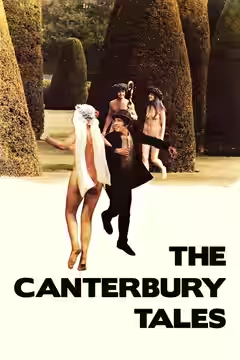
Ninetto Davoli is the other thing people remember, and rightly. His Perkin is a Chaplin impression, bowler hat, cane and all, sacked from every job and pursued by constables through a town that is mostly mud. We laughed at the walk, then felt slightly ashamed of ourselves, because the joke is simply that Davoli is doing Chaplin in a Chaucer film, and the film knows no more about why than we do. It is a nice touch that Chaplin’s daughter is in the cast; it is not a scene.
Laura Betti’s Wife from Bath gets the best material, a widow working her way through husbands with cheerful efficiency, and Betti plays her as a woman who has never once doubted she is in the right. Jenny Runacre’s Alison, in the Miller’s Tale, is mostly asked to be looked at. Alan Webb has one quiet scene as an old man who points three young men down a road, and Vernon Dobtcheff’s Franklin and Derek Deadman’s Pardoner are faces in the crowd with a line each. Ennio Morricone is credited with the music, which here means sung ballads and reedy pipes rather than anything you would recognise as a Morricone score, and it suits the mud.
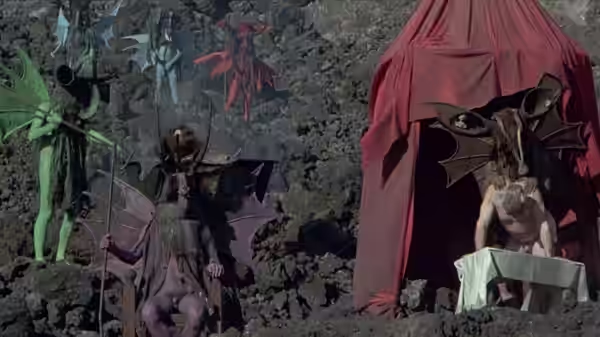
The last stretch goes somewhere we will not describe. We can say that Pasolini saves his real invention for it, that Donati and Ferretti plainly enjoyed themselves, and that by then we had been sitting through loose, dubbed, repetitive tales for the better part of two hours and were in no mood to be grateful. Set beside The Decameron, which had the same team and a warmer sun, this is the colder and the lazier film.
See it for the look of it, with a pause button to hand, and do not expect Chaucer. He is in the cast list, played by the director, and spends most of the film at his desk, which may be the most honest thing in it.