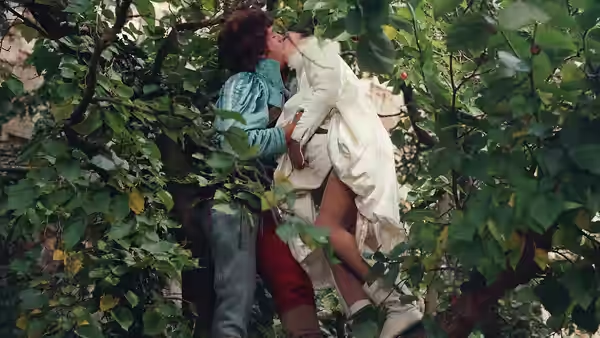
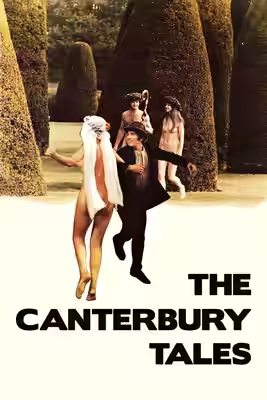
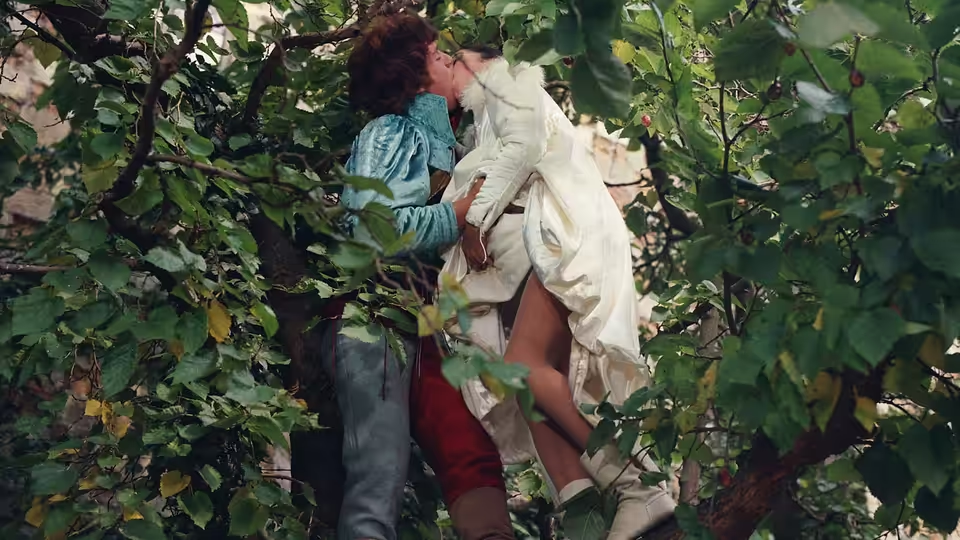
A man and woman kiss among dense garden foliage
Film review

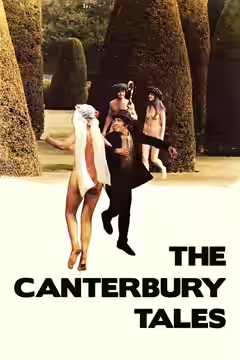
The Canterbury Tales

1972 · Directed by Pier Paolo Pasolini · 1h 51m

In a sentenceChaucer with the manners taken out and the mud left in, told by a man who looks sorry he started

England in the Middle Ages. A party of pilgrims gathers at an inn on the road to Canterbury, among them Geoffrey Chaucer himself (Pier Paolo Pasolini), a quiet man with a notebook, and the Wife from Bath (Laura Betti), who has buried several husbands and is shopping for the next. To pass the journey the pilgrims tell stories, and the film follows the stories rather than the road. Sir January (Hugh Griffith), an elderly knight, takes a young wife, May (Josephine Chaplin), and grows jealous. A summoner who shakes down the poor for bribes falls in with a stranger (Franco Citti) who turns out to be the Devil. Perkin (Ninetto Davoli), a layabout in a bowler hat, is thrown out of every job in town. Eight tales of lust, cheating and comeuppance follow.

Fi1m review

Pasolini’s second raid on the medieval bawdy tale is handsomely dressed, cheerfully filthy and, at 111 minutes, a slog. Donati’s costumes and Ferretti’s sets are worth the evening; most of the stories wrapped in them are not.

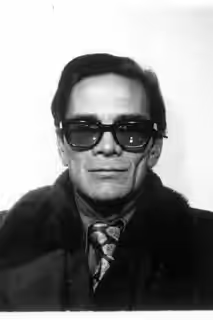
Pier Paolo Pasolini made The Decameron in 1971 and this a year later, and the tagline on the poster, promising Chaucer’s lustiest tales from the team that gave you Boccaccio, is for once an honest description of the product. He has taken eight of the Canterbury tales, kept the sex and the privies, thrown out most of the talk, and shot the result in grey English weather with a cast of amateurs and old pros. He also plays Chaucer, sitting at a desk between stories with a quill and the expression of a man who has been asked to do the accounts.

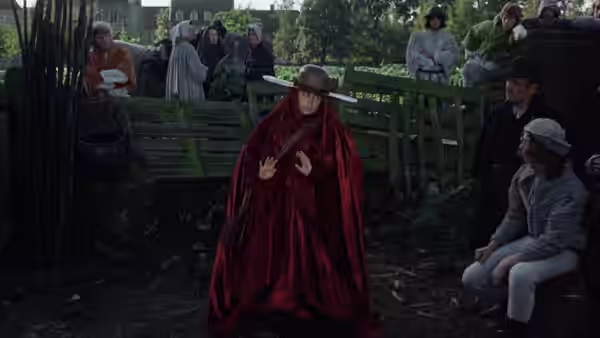
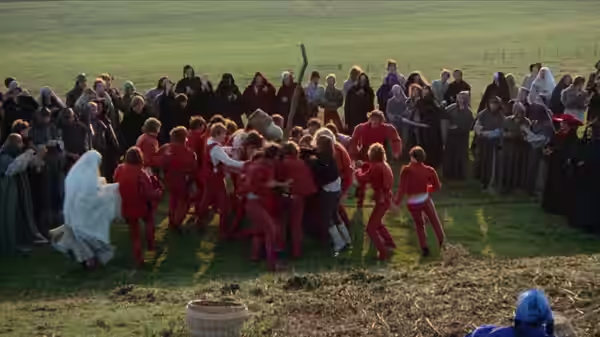
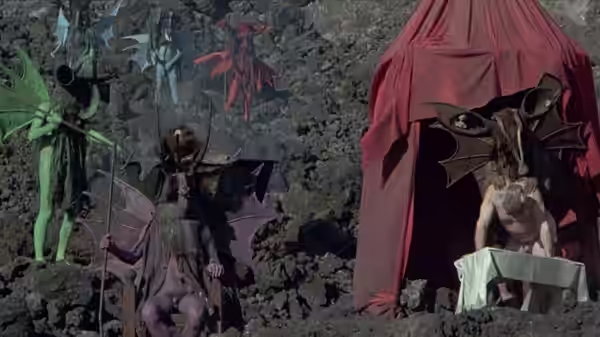
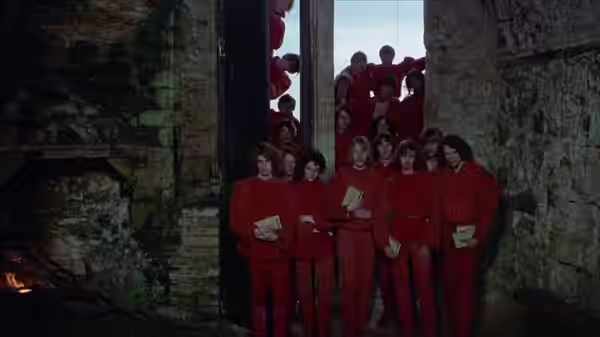
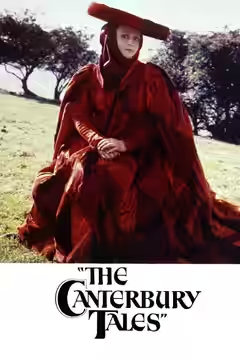
The film looks better than it plays. Danilo Donati’s costumes are the reason to see it: gowns in dirty saffron and madder, hats like upturned flowerpots, and faces to go with them, pocked, toothless, chosen for the way they fill a frame. Dante Ferretti builds inns and bedchambers out of whitewash and bare board, and Tonino Delli Colli shoots them flat, in a light that never quite warms up, so that every interior looks like a painting of poor people made by someone who had looked hard at poor people. We have rarely seen the English Middle Ages look so convincingly cold.

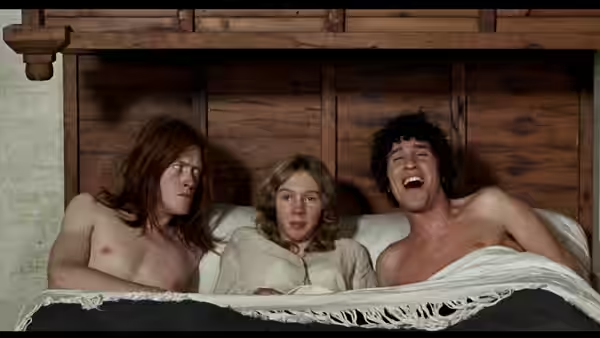
What happens inside those frames is another matter. The Merchant’s Tale opens the film, with Hugh Griffith as Sir January, an old knight who buys himself a young wife in May (Josephine Chaplin) and then cannot sleep for watching her. Griffith plays him as a great wet appetite, all eyebrows and tongue, and it is funny for about ten minutes. Then the tale does what the tale does, slowly, and Nino Baragli’s cutting lets every leer run a beat longer than it needs. That is the rhythm of the whole picture: a good joke, a long pause, the same joke.

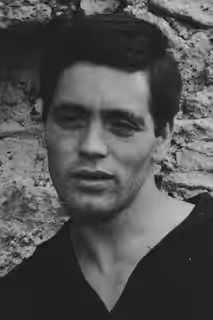
The second tale got at us in a way we did not expect. A summoner takes bribes from sinners, and a man who cannot pay is burned alive in a market square, strapped to an iron grid over the fire while the crowd watches and a seller moves among them with hot food. Pasolini holds on it. We were horrified, and then we noticed we were meant to be, and that the film had nothing further to say about it beyond the Devil (Franco Citti) standing nearby, grinning. It is the one moment the picture stops being a romp, and it is over in a minute.

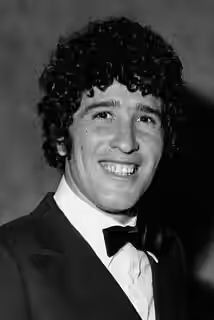
Ninetto Davoli is the other thing people remember, and rightly. His Perkin is a Chaplin impression, bowler hat, cane and all, sacked from every job and pursued by constables through a town that is mostly mud. We laughed at the walk, then felt slightly ashamed of ourselves, because the joke is simply that Davoli is doing Chaplin in a Chaucer film, and the film knows no more about why than we do. It is a nice touch that Chaplin’s daughter is in the cast; it is not a scene.

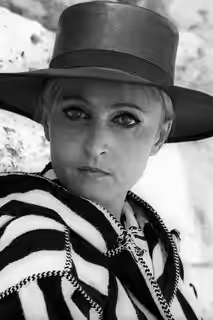
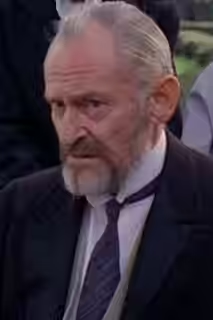
Laura Betti’s Wife from Bath gets the best material, a widow working her way through husbands with cheerful efficiency, and Betti plays her as a woman who has never once doubted she is in the right. Jenny Runacre’s Alison, in the Miller’s Tale, is mostly asked to be looked at. Alan Webb has one quiet scene as an old man who points three young men down a road, and Vernon Dobtcheff’s Franklin and Derek Deadman’s Pardoner are faces in the crowd with a line each. Ennio Morricone is credited with the music, which here means sung ballads and reedy pipes rather than anything you would recognise as a Morricone score, and it suits the mud.

The last stretch goes somewhere we will not describe. We can say that Pasolini saves his real invention for it, that Donati and Ferretti plainly enjoyed themselves, and that by then we had been sitting through loose, dubbed, repetitive tales for the better part of two hours and were in no mood to be grateful. Set beside The Decameron, which had the same team and a warmer sun, this is the colder and the lazier film.

See it for the look of it, with a pause button to hand, and do not expect Chaucer. He is in the cast list, played by the director, and spends most of the film at his desk, which may be the most honest thing in it.
Critical consensus AI synthesised

3 of 6
Positive
1
Mixed
1
Negative
1
The New York Times
30 May 1980
64*

The page appears to be a review, but its verdict cannot be determined from the available text. No specific praise or complaint is visible.

Read the full review →
Time Out
15 March 2012
10*

The critic gives a strongly negative verdict, describing the adaptation as gratuitously ugly and interminably long. The complaint singles out its limited selection of Chaucer’s tales and the film’s drawn-out feel.

Read the full review →
Eye for Film
14 June 2001 · Keith Hennessey Brown
70*

The critic finds the film an unexpected delight, though its bawdy content and liberties with Chaucer may alienate some viewers. They praise the rich costumes and visual design, which evoke Brueghel and Bosch.

Read the full review →

Straight answers AI written, from our review

Is The Canterbury Tales worth watching?
The Canterbury Tales is worth watching only for its look, and we scored it 55. Danilo Donati's costumes and Dante Ferretti's sets are reason enough for the curious, but the eight bawdy tales inside them are loose, dubbed and repetitive, and at 111 minutes it is a slog. Keep a pause button to hand and do not expect Chaucer.
How long is The Canterbury Tales, and what is it rated?
The Canterbury Tales runs 1h 51m. It is a comedy and history film.
Where can I watch The Canterbury Tales in Thailand?
The Canterbury Tales is not on any streaming or rental service in Thailand at the moment. It is available in 3 other countries; change your country at the top of the page to see where. Availability is checked daily.
How violent or frightening is The Canterbury Tales, and is it suitable for children?
The Canterbury Tales is an adult film, uncertificated in the UK and rated NC-17 in the United States, and it is not for children or teenagers. It is cheerfully filthy, with sex and privies kept in and the talk thrown out, and one burning in a market square that horrified us and would upset the squeamish. Treat it as strictly for grown-ups.
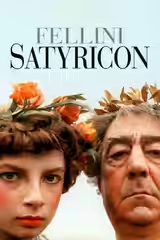
How does The Canterbury Tales compare to Satyricon?
The Canterbury Tales and Satyricon are both Italian raids on an old book, cast for strange faces and dressed to be inspected, and both ask more patience than their stories repay. Fellini's is the stranger and more elaborate; Pasolini's is colder, cruder and funnier in short bursts. Neither is a comfortable evening, but Satyricon rewards the visually curious more.
Is The Canterbury Tales based on a true story or a book?
The Canterbury Tales is based on Geoffrey Chaucer's book of the same name, not on a true story. Pasolini takes eight of the tales, keeps the sex and the comeuppance, throws out most of the talk, and plays Chaucer himself at a desk between stories. Knowing the book is not necessary, and anyone expecting it should not.
What should I watch after The Canterbury Tales?
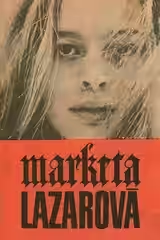
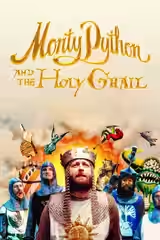
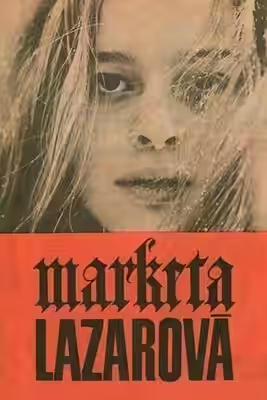
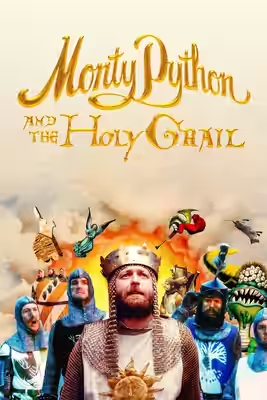
After The Canterbury Tales, try Fellini Satyricon (1969, Fi1m 65): Another Italian raid on an old book, with the faces chosen for their strangeness. Then Marketa Lazarová (1967, Fi1m 84): Czech Middle Ages in mud and snow, shot as if nobody ever invented comfort; and Monty Python and the Holy Grail (1975, Fi1m 87): The same filth and weather, with the jokes actually finished this time.

Cast

Awards

Berlin International Film Festival, 1972

Won
Golden Bear

If you liked this, try…

  1. The Decameron (1971) · not reviewed yetPasolini’s first go at the medieval bawdy tale, sunnier and lighter on its feet.

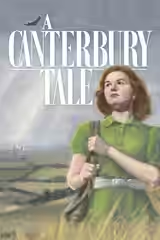
  2. A Canterbury Tale (1944) · not reviewed yetPowell and Pressburger’s wartime pilgrims; the same road, taken with far better manners.

  3. Fellini Satyricon (1969, Fi1m 65)Another Italian raid on an old book, with the faces chosen for their strangeness.

  4. Marketa Lazarová (1967, Fi1m 84)Czech Middle Ages in mud and snow, shot as if nobody ever invented comfort.

  5. Monty Python and the Holy Grail (1975, Fi1m 87)The same filth and weather, with the jokes actually finished this time.

Free account

Know what to watch tonight

Two lists that know where things are streaming, collections you can share, your own score beside ours, and Discover that remembers what you have seen.

  • Want to see, sorted by what is streaming now
  • Seen, with your score out of ten
  • No adverts, ever