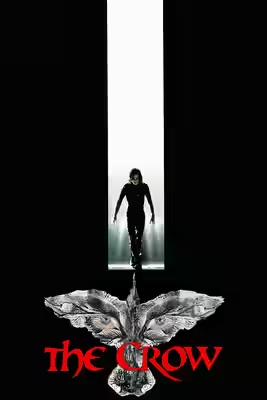
Brandon Lee’s warmth makes The Crow worth caring about, while Alex Proyas gives its revenge story a convincing gothic setting. The plot is thin and the soundtrack overbearing, but there is feeling beneath the gloom.
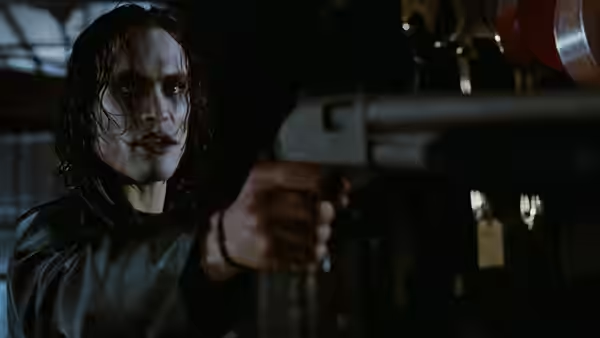
The Crow is a good revenge film because Brandon Lee makes us care about the person doing the avenging. Alex Proyas gives him a rain-soaked city and enough gothic gloom to make the violence feel at home, but the film would be exhausting if anger were all it had. Its star supplies the tenderness that keeps it watchable. The story is straightforward, sometimes to a fault, and much of the pleasure comes from seeing how much the performance can do with it.
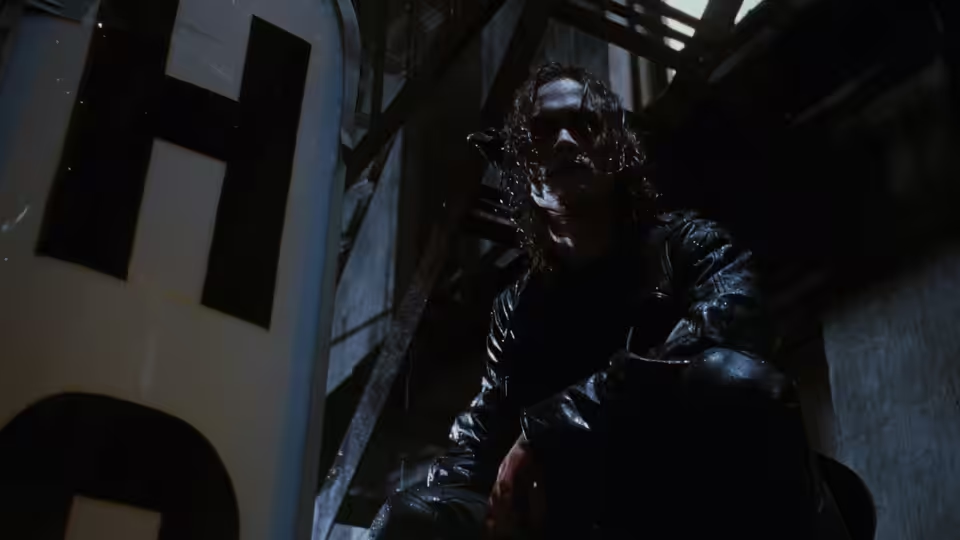
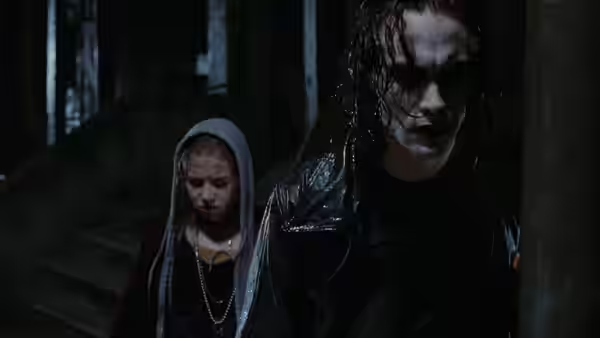
Dariusz Wolski’s cinematography and Alex McDowell’s production design deserve to be considered together. The rain-soaked city feels consistently hostile, and their work makes that hostility convincing even when the writing struggles. There is enough to look at here that a predictable stretch of story need not mean a dull stretch of film. Alex Proyas’s energetic camera keeps the action moving, while the city holds our attention even when the next step in the revenge plot seems obvious.
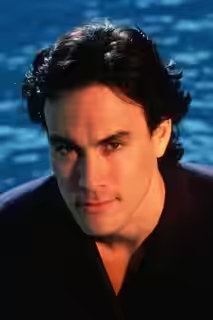
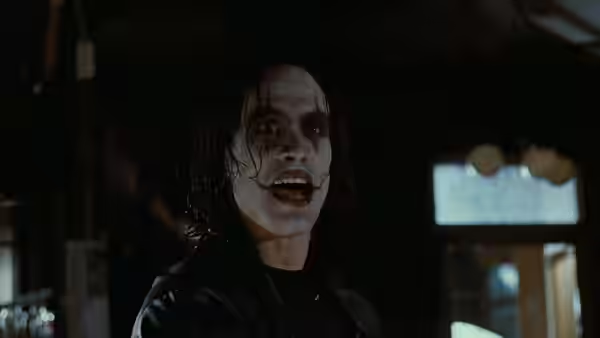
Brandon Lee gives Eric the presence to carry the action and the vulnerability to make the anger troubling. We were more moved than we expected to be. His warmth persists amid the violence, so we keep responding to Eric as someone capable of feeling hurt, even when the film is busy presenting him as an avenger. That is a considerable achievement in a story this slight. The performance makes the sombre mood bearable because there is someone within it worth caring about.
The screenplay by David J. Schow and John Shirley is the principal limitation. Its direct route through the revenge story leaves too little space for the characters to become complicated, and the weak dialogue does not make up for that. Too much depends on the audience accepting the grievance and remaining satisfied with the pursuit. Brandon Lee usually supplies enough feeling to keep us with him, but the writing makes his task harder than it needs to be.
Editors Dov Hoenig and M. Scott Smith give that pursuit a useful forward drive. The cutting serves the action, though pace cannot supply the uncertainty missing from the story, and the gloom sometimes becomes wearing through sheer persistence. Graeme Revell’s music helps sustain that mood, but the soundtrack as a whole can be overbearing. The images already establish how seriously we are meant to take this world; the music need not keep insisting, and some quiet would have given its star more room.
A revenge fantasy can manage without much narrative surprise if its central figure holds our interest. Here, Eric does, and the film’s seriousness allows his vulnerability to matter without dismissing it with a joke. We would not trade that sincerity for a tidier screenplay, though we would happily accept both. Its 102 minutes suit an evening when mournful action is the attraction. Watch it for Brandon Lee, with some patience for the music.