David Robert Mitchell’s dinosaurs-in-suburbia picture is brisk, handsome and often frightening, and Anne Hathaway carries it. The family drama it keeps setting up is never played out, and the ending steps back from the darker film it had been promising.
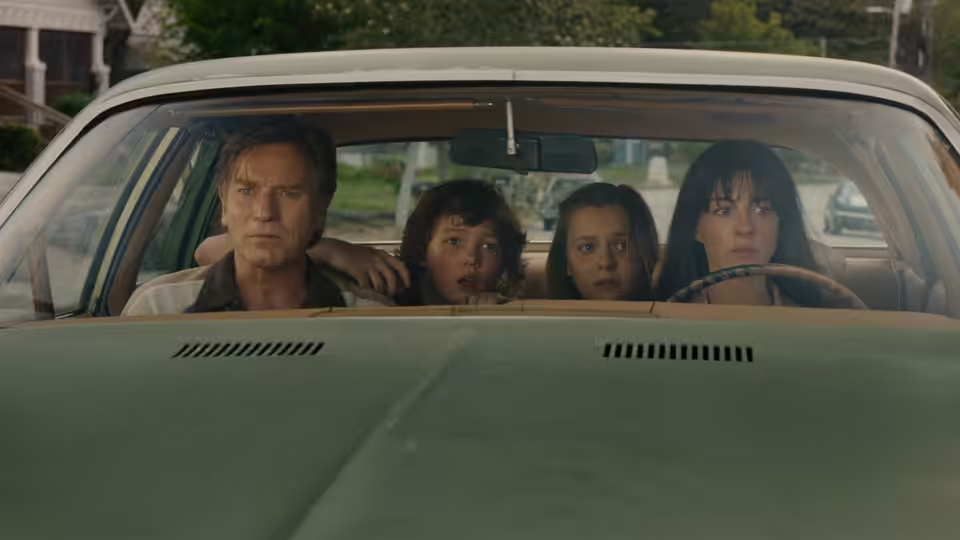
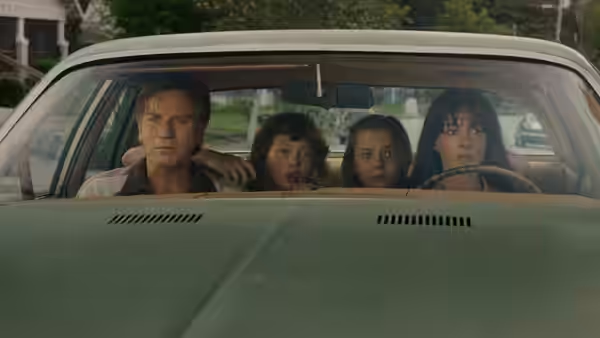
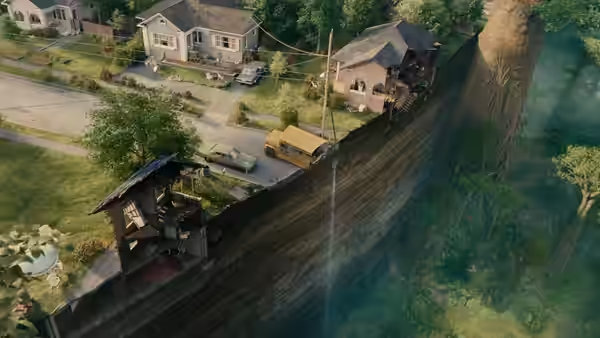
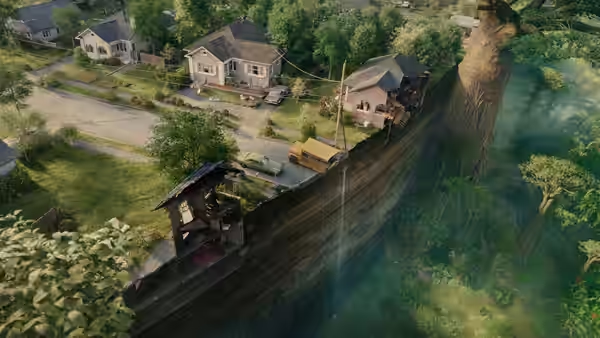
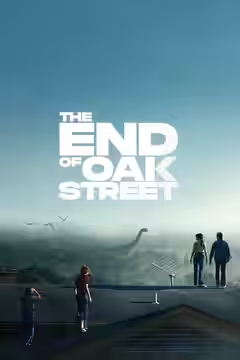
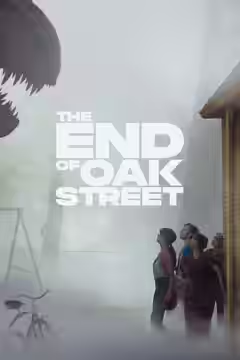
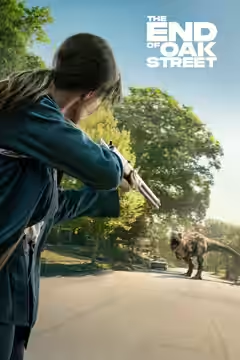
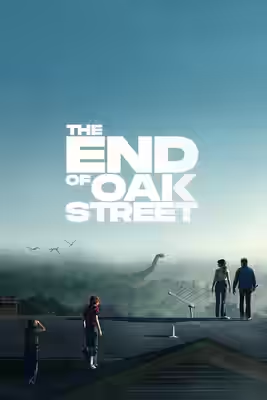
David Robert Mitchell has made a Spielberg film, and he knows it. The End of Oak Street takes a 1980s American street, the Platt family at the end of it, and drops the lot into a prehistoric world where the lawns stop at a treeline full of dinosaurs. The tagline, “Where goes the neighborhood”, is the whole pitch. It is a monster film in a housing estate, it runs a tidy 100 minutes, and for long stretches it does exactly what it says it will. Where it falls short is the family, which matters, because the family is what Mitchell asks us to care about.
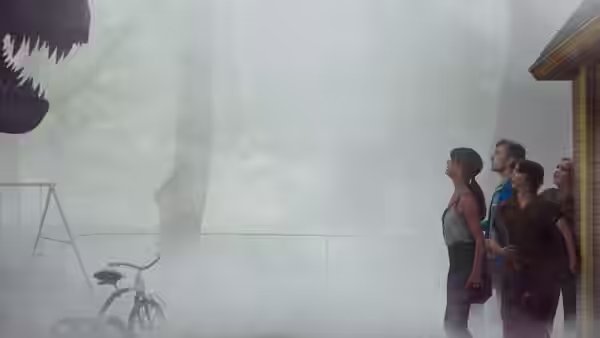
Mike Gioulakis, who shot It Follows for Mitchell, lights the street in flat, warm afternoon sun that does not change when the world does, so the houses look ordinary and the thing coming across the grass does not. Maya Shimoguchi builds a street of driveways, screen doors and cluttered garages that the film then takes apart room by room. Erin Benach’s costumes get the period right without winking at it. The creatures are good, properly heavy, and Mitchell stages the attacks with the patience he brought to his horror work, letting a shape sit at the edge of the frame for longer than is comfortable before anyone in the scene turns round.
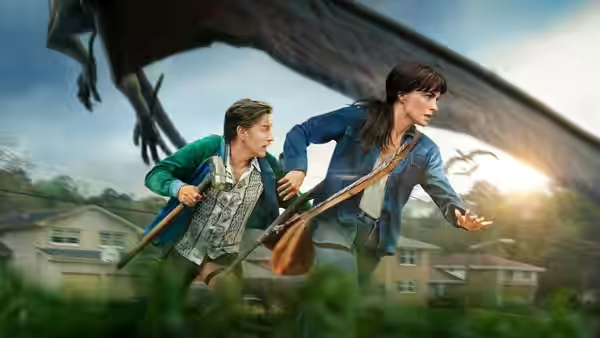
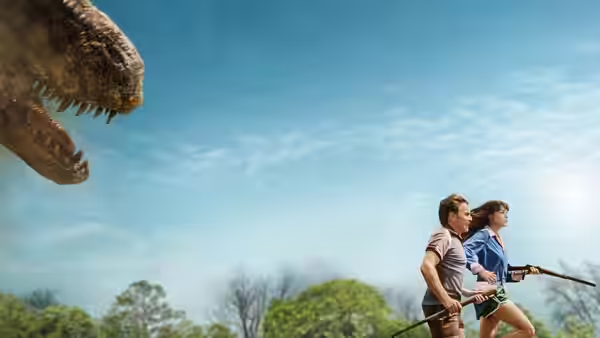
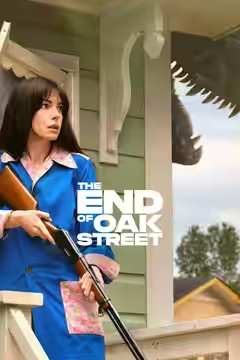
Hathaway is the reason to go. Denise Platt begins as a woman holding a household together by force of will, and once the animals arrive she becomes something fast, dirty and unglamorous, and the film is at its best when it simply follows her. Maisy Stella gives Audrey a sullen intelligence the script rewards more than it rewards anyone else. McGregor has the harder job: Greg is written as the weak point in the marriage and the film never decides whether it likes him, so neither does he. Christian Convery, as Brian, is asked mainly to be in danger, and is.
Michael Giacchino’s score is the film’s most open act of homage, brass and strings that could have been written in 1982, and it is mixed to be enjoyed rather than to drown anything, which we were grateful for. John Axelrad cuts the attacks cleanly, always telling us where the door is and how far away the animal is, which is more than most creature films bother with. He is less sure in the kitchen. The domestic scenes come in the same length and rhythm whether the subject is the mortgage or the thing in the garden, and after a while they blur.
We should say what it did to us. The first time a house on Oak Street comes apart we were properly frightened, the good kind of fright a 12A rarely allows. There is one death in the middle we will not describe that is so strange and so nasty we laughed, then felt slightly ashamed of ourselves. By the fourth or fifth encounter we had noticed the pattern: someone leaves shelter, something arrives, someone is pulled back at the last second. The fear did not survive the repetition, and the film seemed not to notice it had gone.
The larger trouble is the Platts. Mitchell sets up a marriage in real difficulty, two children who have noticed, a street of small resentments between neighbours, and then uses almost none of it. The dinosaurs do not test these people; they interrupt them. Every argument is cut short by a roar, and by the end the roars have done the work the arguing was meant to do, which saves the script the trouble. The last twenty minutes step back from the darker film Mitchell had been hinting at, and we came out irritated, not because the ending is bad but because a braver one was plainly available.
It Follows (2014) had one idea and never let go of it. Under the Silver Lake (2018) had a hundred and lost most of them. This sits between the two: a good premise, a better lead, and a script that has seen Jurassic Park and Close Encounters of the Third Kind and cannot decide which one it is remaking.
See it in a cinema, where the animals are the size they should be and the sound does the frightening. Take anyone over twelve; the dinosaurs will hold them and the marriage will not detain them. It opened in UK cinemas on 14 August 2026 and runs 100 minutes.