David Fincher’s follow-up to Seven takes a rich man’s life apart one courtesy at a time, and for two hours it is as controlled and unnerving as anything he has made. The last ten minutes ask for more faith than they have earned.
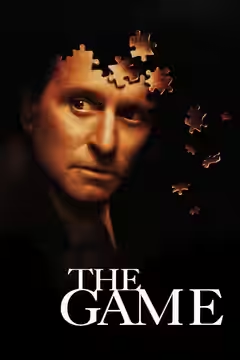
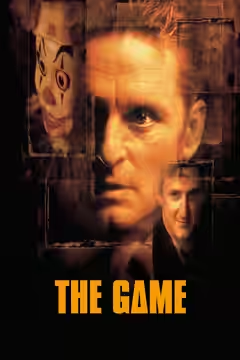
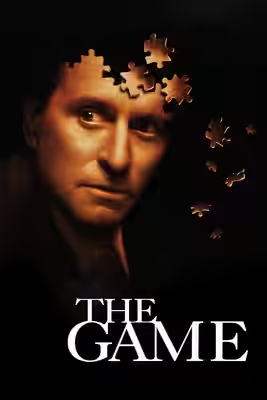
Two years after Seven, David Fincher made a thriller with no killer, almost no blood and one idea: what do you get for the man who has everything? The answer is a game, bought by his brother from a company that will not say what it sells. Nicholas Van Orton (Michael Douglas) is an investment banker who has everything, and for two hours The Game takes it from him a piece at a time. Then it has to stop, and how it stops is where every argument about the film begins. We think it survives its ending, narrowly.
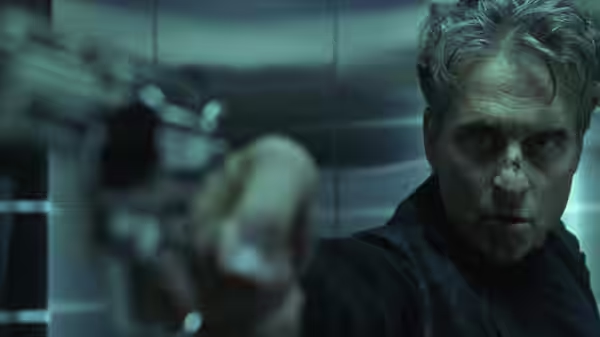
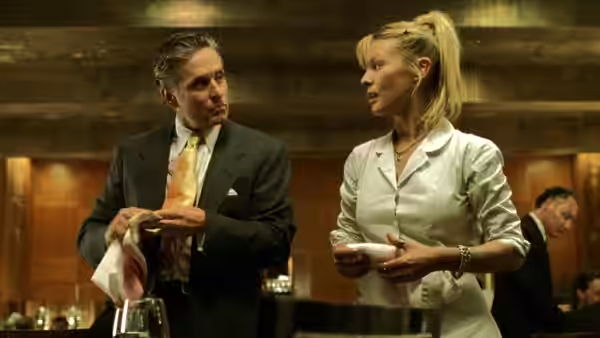
The script by John Brancato and Michael Ferris gives Douglas nothing to hide behind. Nicholas eats dinner alone at one end of a long table while his housekeeper Ilsa (Carroll Baker) keeps to the kitchen. He pushes his late father’s friend Anson Baer (Armin Mueller-Stahl) out of his own publishing firm without raising his voice. Douglas plays him with the jaw set and the eyes patient, and the performance is in how slowly that face gives way. By the second hour he is sweating through his shirt and asking strangers for help, and he never once asks us to like him for it.
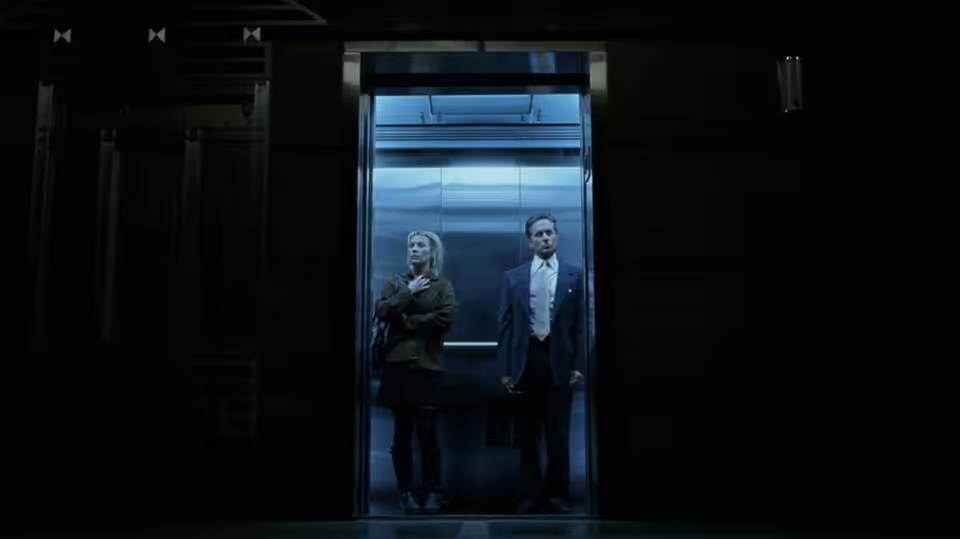
Harris Savides shoots the Van Orton house so that the dark is most of the picture and the lamps and the panelling are the rest, and Nicholas moves through it like a guest. Jeffrey Beecroft builds it as a house for a large family with one man in it, and sets against it the offices of Consumer Recreation Services, glass and fluorescent light, where Jim Feingold (James Rebhorn) sells Nicholas an experience he declines to describe. Michael Kaplan puts Douglas in grey suits so well cut that we notice every mark the film leaves on them.
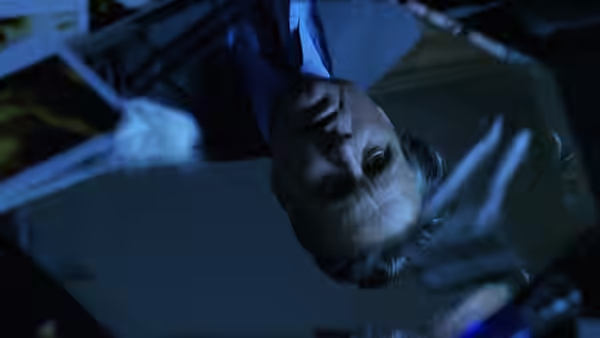
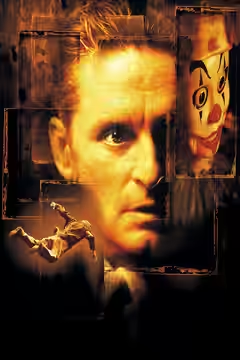
Howard Shore scores it quietly, piano and low strings under scenes rather than over them, and leaves the big moments alone. James Haygood cuts the first act at a banker’s pace and shortens the shots as Nicholas’s grip goes. The game’s first move is a clown doll left on the driveway, and we laughed at it. We stopped laughing that evening, when a newsreader on Nicholas’s own television turned from the autocue, looked straight at him and said his name. It is plainly absurd, and it is done so calmly that we felt it in the back of the neck anyway.
Sean Penn is on screen for perhaps a quarter of an hour as Conrad, the younger brother, all nerves and bad jokes, the one person Nicholas cannot sack. Deborah Kara Unger’s Christine, a waitress who spills a drink on him and keeps turning up, is played flat and unreadable, which is what the part needs. Anna Katarina has a single phone call as the ex-wife Elizabeth and tells us more about the marriage than the script manages elsewhere.
The faults are real. The middle hour is a list of indignities, and by the eighth or ninth we could see the next one coming; the film has one move, which is to make things worse. The plot also needs the game’s organisers to know things no company could know. Most of this we forgave in the dark. The ending is another matter. We will not describe it, except to say that it asks for a leap we were not sure we could make, and that we were still arguing with ourselves in the car park. Most critics split the same way, praising Douglas and the look and complaining about the last act. We come down, just, on the side of the ending, because of what Douglas does with his face in the final two minutes.
Against Fincher’s own work this is the small, clean one. Seven (1995) had something to say about the city and said it; Fight Club (1999) would have more ideas than it could carry. See it once knowing as little as possible, in a dark room with the phone off. See it a second time to watch how the trick is done; it holds up, which is more than most tricks do. It runs 129 minutes and carries a 15 certificate.