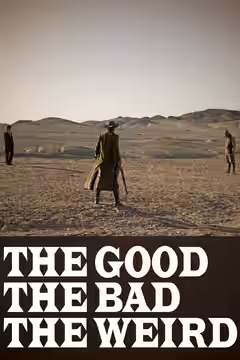
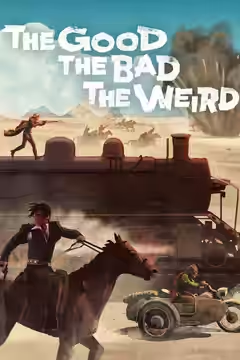
Kim Ji-woon borrows Sergio Leone’s title, moves the western to occupied Manchuria and stages three of the best action sequences the genre has seen. The film between them is thin, and at 130 minutes it goes on twenty longer than the joke does.
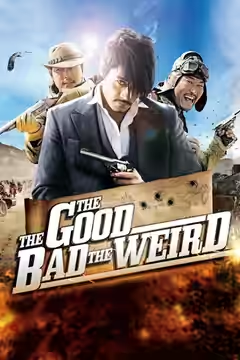
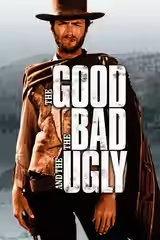
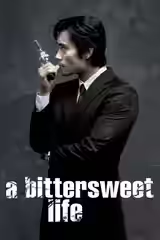
Kim Ji-woon had made a ghost story, A Tale of Two Sisters, and a gangster film, A Bittersweet Life, and here he makes a western, or rather what Korea calls a Manchurian western: cowboys in the desert north of the peninsula, the Japanese army where the cavalry would be. The title is lifted from Leone and so is the shape. Three men want one map. One of them is decent, one is cruel, and one is Song Kang-ho in goggles. The set-pieces are as good as anything the genre has produced. The film between them is thinner than it looks, and the whole thing runs a good twenty minutes past the point where we were still grinning.
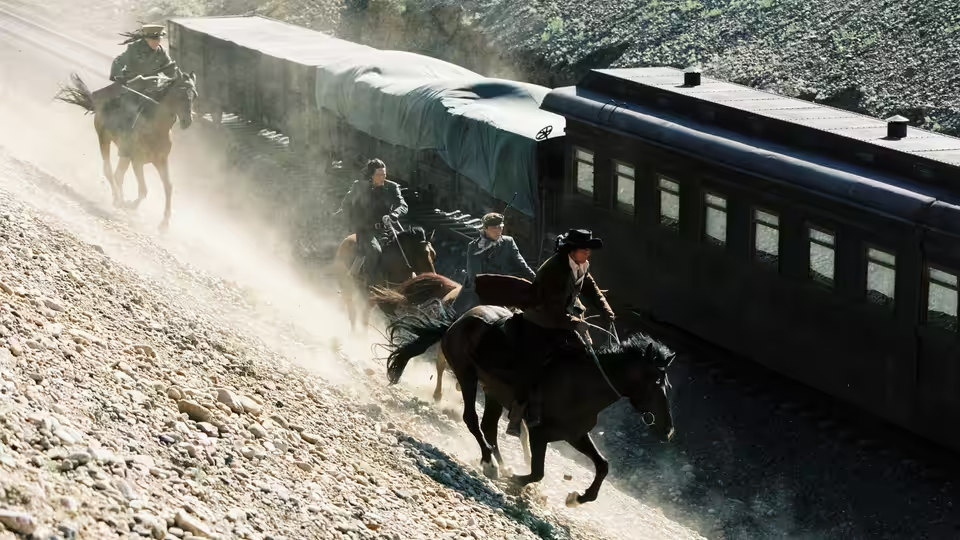
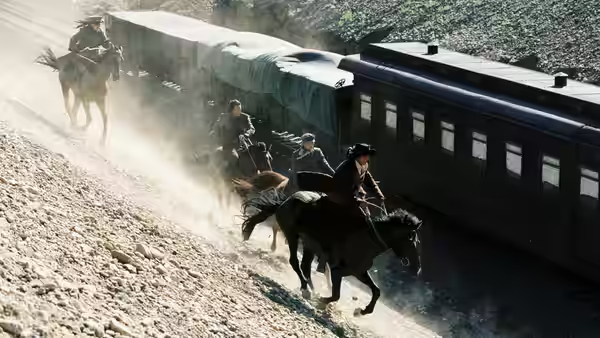
The opening train robbery tells you what kind of film you are in. Lee Mo-gae’s camera runs the length of the carriages, in through windows and out again, and Kim Mi-young and Nam Na-yeong cut it so that you always know who is holding the map, who is holding a gun, and how far apart they are. That sounds like a small thing. Most action films cannot manage it for five minutes; this one manages it for the better part of two hours. When Do-won arrives on horseback along the roof, the film has already established its rules and it never cheats on them.
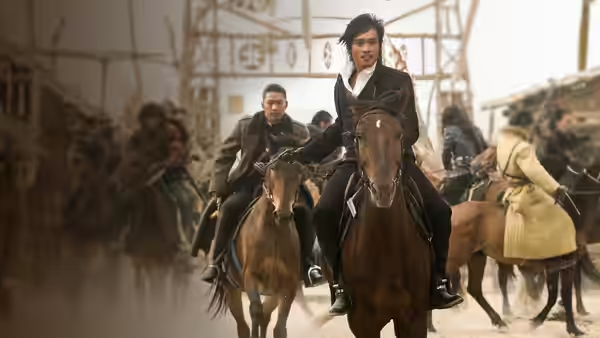
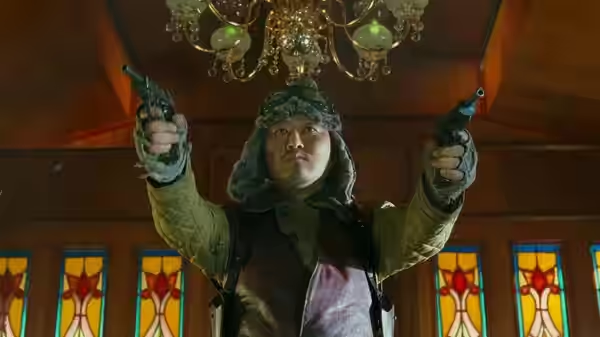
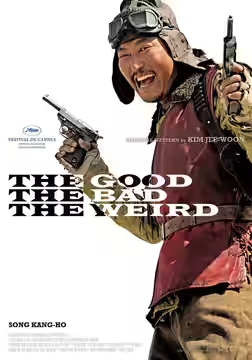
The second big sequence is a running gunfight through a shanty market, and it contains the moment we laughed hardest at all year. Tae-goo, under fire and out of ideas, puts on a deep-sea diving helmet and walks into the crossfire like a man going out in the rain. It is stupid, it is exactly what the character would do, and Song plays it with the face of someone who thinks he has been rather clever. Around him Jung Woo-sung swings from ropes and fires a rifle one-handed, and Lee Byung-hun stands very still and shoots people. Cho Hwa-sung’s production design builds the market out of corrugated iron and rotten timber so that every bullet takes a piece of the set with it.
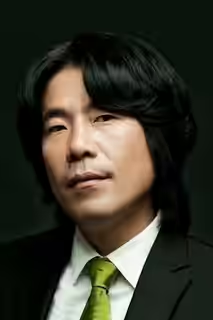
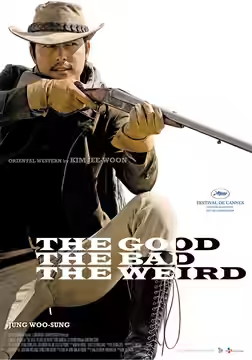
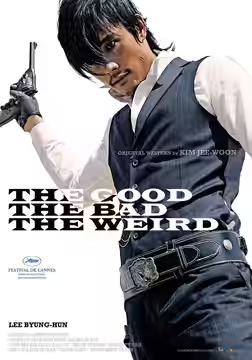
Song is the reason to see it. His Tae-goo is greedy, cowardly, resourceful and oddly sweet, and he keeps the film honest about what it is, which is a caper. Lee Byung-hun is given eyeliner and a fringe by Choi Eui-young’s costume department and told to be evil, and he is, with a stillness that is more frightening than the shouting around him. Jung has the dull job. The Good in this kind of film always does, and the script by Kim Min-suk and Kim Ji-woon gives him a rifle and a code and not much else.
What the script does not give anyone is a reason to care about the map. Bandits want it, a gangster called Kim Pan-joo (Song Yeong-chang) wants it, the Japanese want it, and the film shuffles these parties in and out of the middle hour without much interest in who they are. We lost the thread twice and did not mind much, which tells you the plot is a coat rack. Chang-yi is handed a grudge late on that is meant to give the whole thing weight, and it arrives too late to carry any.
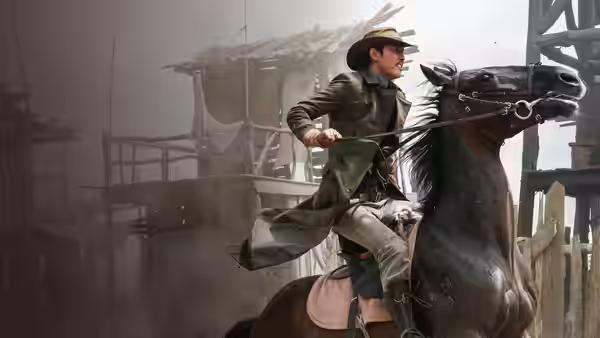
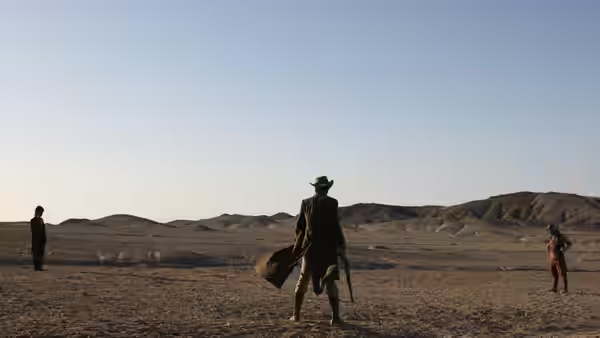
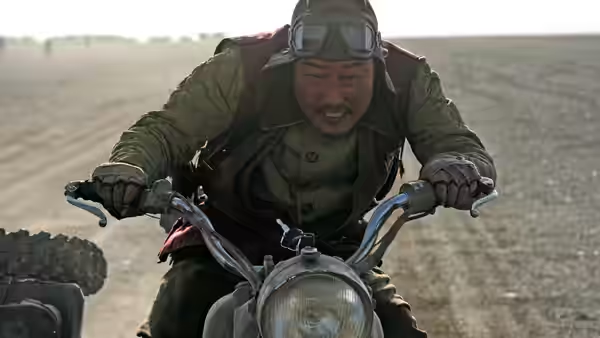
The last act is one long chase across open desert: men on horses, men in jeeps, men on motorcycles, and then the army arriving with artillery. Jang Young-gyu and Dalpalan score it with twanging guitar and brass, half spaghetti western and half surf record, and for a long while it is thrilling. Lee Mo-gae shoots the dust in gold and the riders in silhouette, and the editors keep every vehicle in its place. Then it keeps going. We admired the fifth time a jeep flipped, and we wanted to go home by the seventh. What follows the chase is a three-way standoff we will not describe, except to say that Kim knows his Leone and does not quite know when to stop paying his respects.
Set against the film it is named for, this is faster, funnier and shallower. Leone let his three men stand and sweat; Kim keeps his running, and the running is the point. Watch it with people who like to talk over gunfire, and do not try to follow the map.