Benedict Cumberbatch’s restrained grumbling and the detailed animation make The Grinch a decent choice for younger children. The humour is too mild, and the extra subplots too thin, to make it equally rewarding for the adults beside them.
The Grinch is a decent diversion for younger children, but it is too gentle and overextended to become a satisfying Christmas comedy. Directors Yarrow Cheney and Scott Mosier want us to understand the lonely creature beneath the bad temper, and make him easy to like almost immediately. That is reassuring, though it leaves his grumpiness with surprisingly little force. The jokes and decorated streets have to do a good deal of work across the film’s 85 minutes.
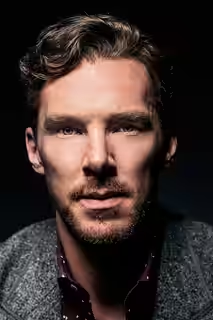
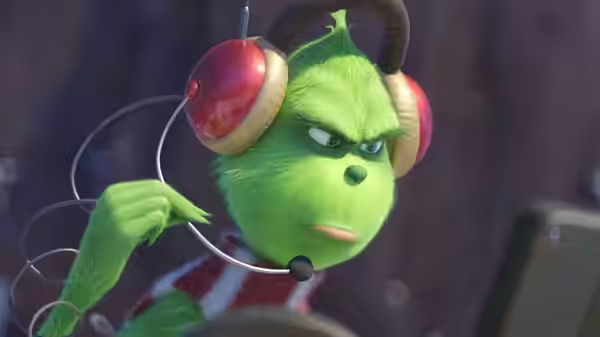
Benedict Cumberbatch gives The Grinch a dry, restrained voice, allowing irritation to register without turning every line into a performance of villainy. His grocery-shop antics are the useful exception to the general mildness: here his annoyance has an ordinary setting and a comic purpose. We laughed at the pettiness, which is easier to recognise than the bigger schemes. More of this small-scale bad behaviour would have given the character something firmer to resist when the film asks him to be sympathetic.
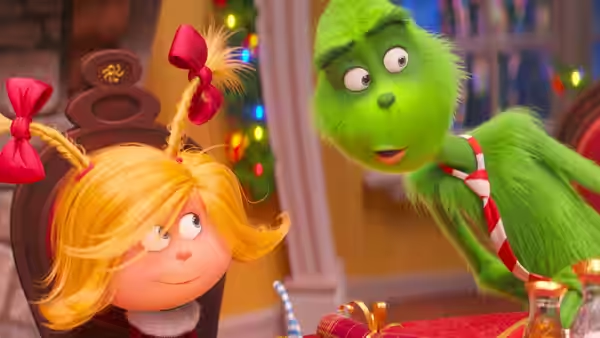
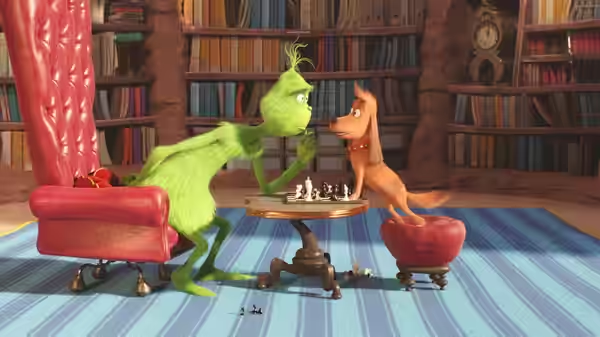
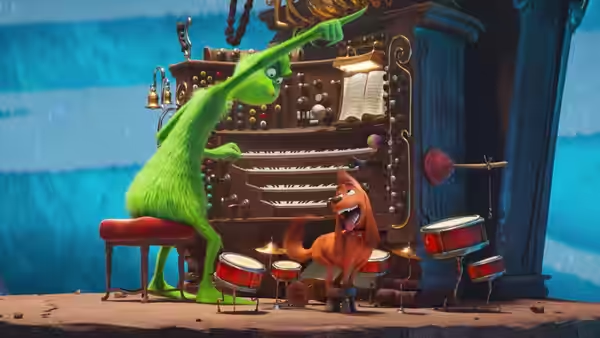
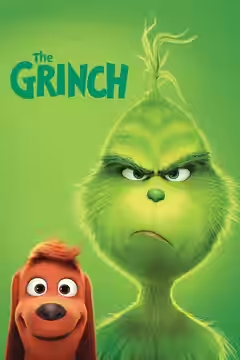
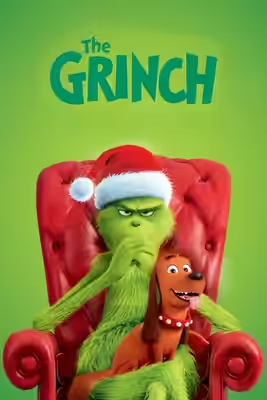
His relationship with his dog Max supplies the warmth more successfully than the explanations of his loneliness. The affection is easy to read, and the comedy benefits from putting his exasperation beside a companion rather than another Christmas spectacle. Cameron Seely’s Cindy-Lou Who brings a similarly welcome directness to the gentler scenes. Rashida Jones makes Donna Who sound like a person rather than someone employed to deliver the film’s lesson, although the surrounding subplots do not all justify the time spent on them.
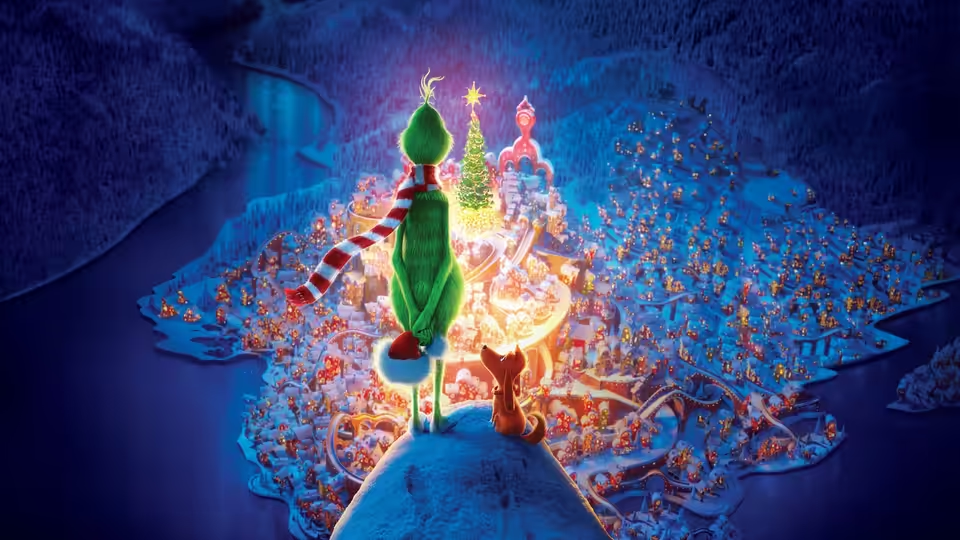
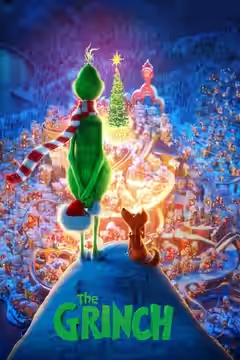
Whoville is crowded with Christmas decoration, and the animation makes its surfaces look satisfyingly tangible. For a while, simply looking around the town is a pleasure. The visual detail also gives the central complaint some weight: this is a place where escaping Christmas looks like a substantial undertaking. The trouble comes when the action accelerates and the plentiful detail competes with whatever we are supposed to be following.
Editors John Carnochan, Chris Cartagena and Ken Schretzmann keep the movement brisk, but speed does not solve the problem of a slender story stretched by extra business. The gadget-driven physical comedy is often neatly staged; the high-speed spectacle is less rewarding because it gives the jokes less room. Danny Elfman’s music fits the bustling mood without making the quieter emotions feel much deeper. The film could afford to pause more often, particularly when it has a relationship worth watching.
The screenplay by Tommy Swerdlow and Michael LeSieur has a workable idea in treating loneliness as something children can understand. The difficulty is that explaining a bad mood does not automatically make it more interesting, especially when its owner is already rather sweet. There is too little resistance to the kindness the film wants to encourage. Added characters and incidents keep the story occupied, but they cannot supply the comic bite missing from the central character.
A family Christmas comedy need not be cruel, but it does need to let someone behave badly enough for the goodness to matter. This one seems anxious that even its grump should never make the gathering uncomfortable. Its small domestic jokes and animal companionship are more persuasive than the rush of activity around them. Choose it for younger children who want a gentle festive outing, and save the argument about compulsory Christmas cheer for after they have gone to bed.