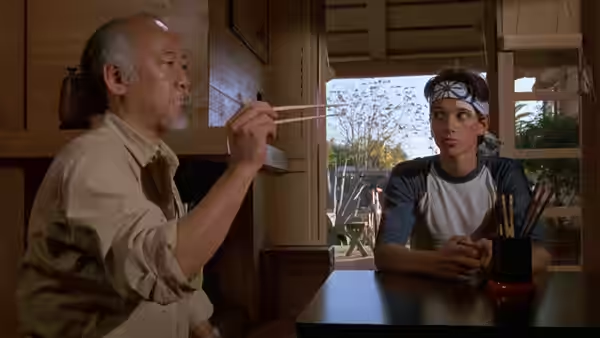
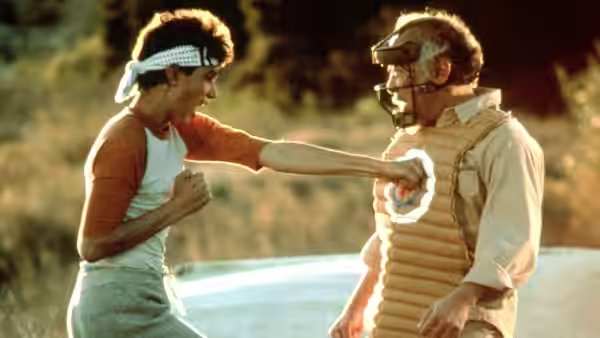
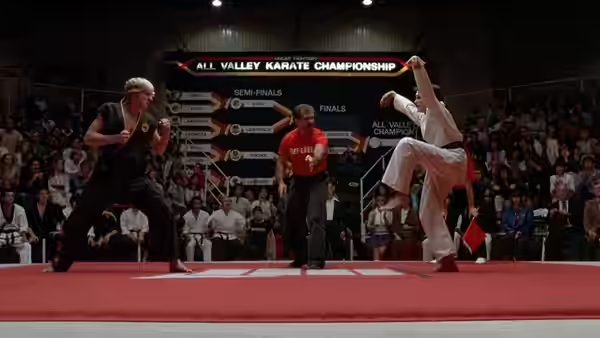
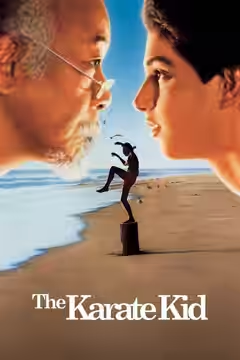
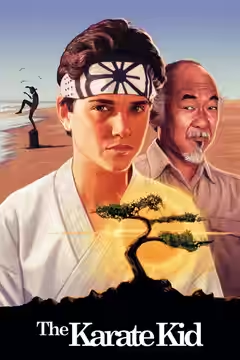
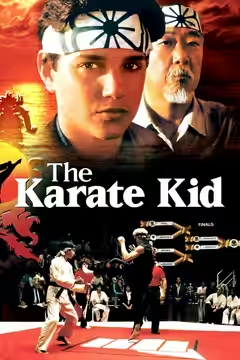
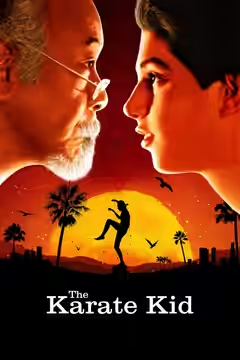
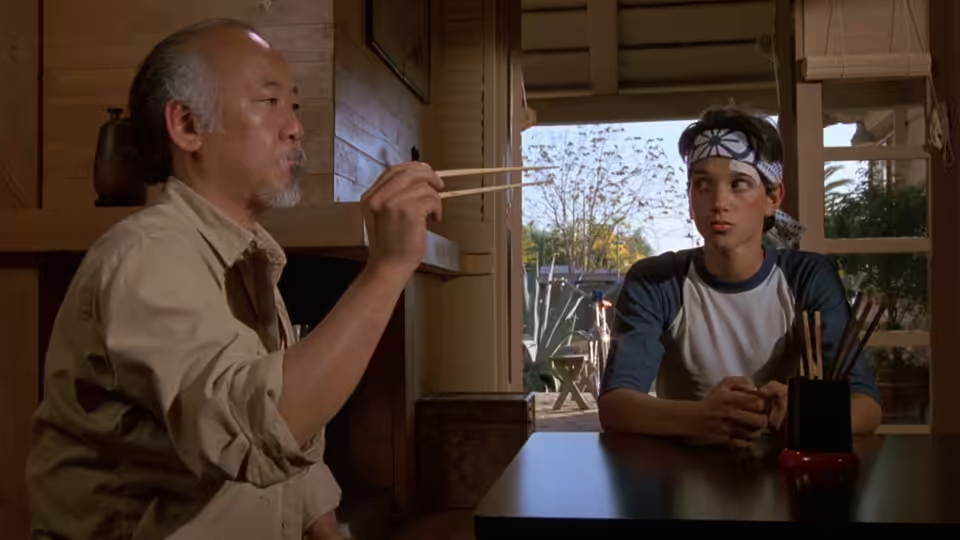
Miyagi (Pat Morita) eating with chopsticks while Daniel (Ralph Macchio) watches across the table
Film review

The Karate Kid

1984 · Directed by John G. Avildsen · 2h 07m

In a sentencePat Morita makes a karate lesson look like the first time an adult has bothered to listen

Ralph Macchio plays Daniel, a teenager struggling with bullying and looking for a way to stand up for himself. He finds a teacher in Miyagi (Pat Morita), whose approach to karate asks Daniel to work on his mind and temperament as well as his body. As the two begin to build a friendship, Daniel’s wish to defend himself meets a different idea of what strength involves. The story combines their lessons with teenage romance and the pressures of fitting in. Elisabeth Shue plays Ali, with William Zabka as Johnny and Martin Kove as Kreese.

Plays from YouTube when you press play; nothing loads from them until then.

Fi1m review

The Karate Kid earns its sentiment through Ralph Macchio and Pat Morita, whose teacher-pupil friendship makes a familiar story worth the time. The teenage distractions could be shorter; the lessons need no apology.

John G. Avildsen’s The Karate Kid is a good-hearted underdog film that earns most of its sentiment and could lose some of its running time. Robert Mark Kamen’s screenplay gives a bullied teenager a karate teacher, then finds its strongest scenes in the friendship that grows between them. The story is familiar enough that it does not need much explaining, which leaves room for two actors to make it matter. At 127 minutes, it also leaves room for distractions.

Ralph Macchio makes Daniel awkward without asking us to regard him as adorable. There is impatience in his performance as well as vulnerability, and that matters: a boy who wants help need not be pleasant every moment he is getting it. Macchio lets the need for approval show, but gives Daniel enough prickliness to keep the character from becoming a plea for sympathy. We want him to find his feet because he seems capable of making things harder for himself.

Pat Morita’s Miyagi gives him someone worth listening to. Morita is funny without making the teacher ridiculous, and he never plays him as a man too wise to bother listening. We were moved by the patience he gives Daniel; watching an adult take the boy seriously did more for us than the prospect of seeing him fight. The affection develops because both actors leave room for hesitation and irritation.

James Crabe’s cinematography is most persuasive when it lets us watch the two actors together. Macchio supplies the restlessness, Morita the stillness, and the difference remains readable without the camera insisting on it. William J. Cassidy’s production design gives the teenage story an everyday scale that helps: Daniel’s troubles belong to a recognisable life. The clothes are less easy to overlook, though their period fussiness is hardly a reason to dismiss the people wearing them. The film is more comfortable with ordinary embarrassment than its action label might suggest.

The padding is harder to forgive. Editors Bud S. Smith, Avildsen and Walt Mulconery give the central relationship welcome breathing space, but the teenage romance does not justify the same indulgence. The wider teenage material keeps interrupting the part of the film we came to care about, without making Daniel much more interesting. Bill Conti’s music is more persuasive when supporting the film’s tenderness than pressing its claims to excitement. The soundtrack also dates the film, although its eagerness to tell us what to feel is a greater nuisance than its age.

As a martial-arts story, it makes a sensible choice about what to teach. The emphasis on mind and temperament gives the lessons a purpose beyond Daniel’s wish to stop being bullied, and gives the friendship something to do. It is predictable, but knowing the shape of an underdog story does not prevent us from caring about the person inside it. Avildsen understands that we need to like spending time with Daniel before we can care about his progress.

The PG certificate should not be mistaken for a promise of constant bustle. This is a family film that asks for patience with another person’s unhappiness, and its gentleness is a large part of its appeal. It is worth sharing with anyone who suspects that learning something means being good at it immediately. Just allow for a little more teenage courtship than the karate lesson strictly requires.
Critical consensus AI synthesised

73
Positive
8
Mixed
1
Negative
1

Most critics like The Karate Kid, and they like it for the same reason: the friendship between Daniel and Mr Miyagi. The reviews return again and again to Pat Morita, whose calm, dignified performance is singled out as the film’s anchor, with Ralph Macchio’s earnest turn a close second. Several reviewers see the film as a Rocky for children and find the underdog story rootable and honest, corny as it can be.

The reservations cluster around age. Many find the 1980s fashions, soundtrack and teen romance dated, and a few call the plot predictable wish-fulfilment. The New York Times thinks the director and writer clutter what should be a gentle two-man drama with too much extra business. The one outright dissent is Time Out, which finds the film formulaic and short on intelligence or originality. The spread is otherwise narrow: warm, with a shrug at the cheese.

RogerEbert.com
· Roger Ebert
90*

The film is a sweet-tempered surprise with an engaging central friendship between a bullied teen and his wise mentor. The critic especially praises Pat Morita's original and serene performance as Miyagi.

Read the full review →
Slant Magazine
17 June 2009
85*

The critic recalls the film's impact as a heartfelt underdog story centered on an unlikely friendship between Daniel and Mr. Miyagi, praising its emotional honesty, strong performances, and nostalgic appeal despite some dated elements.

Read the full review →
The AV Club
24 November 2010 · Noel Murray
80*

The critic reappraises the film after initially dismissing it, finding it richer than its reputation as a simplistic self-actualization drama thanks to its low-key performances and everyday interactions. It singles out the warm, nuanced rapport between the leads and the film's nostalgic '80s details for praise while noting its corny elements.

Read the full review →
Empire
1 January 2000 · Caroline Westbrook
70*

The first instalment is starting to look slightly dated with its 80s fashions and soundtrack, but Ralph Macchio's transformation from geek to champion with Mr Miyagi's help is entertaining enough. It remains a soppy and predictable but enjoyable reminder of 80s teen flicks.

Read the full review →
The New York Times
22 June 1984 · Janet Maslin
70*

The movie has the makings of a heart-warming two-man drama thanks to charming performances by Pat Morita and Ralph Macchio. However, the director and screenwriter overload it with extraneous elements that undermine its gentle mood.

Read the full review →
Variety
31 December 1983 · Variety Staff
70*

The critic describes the film as a Rocky for kids, with an underdog story centered on a New Jersey teen who moves to California and learns karate from a wise maintenance man. It singles out Pat Morita for a terrific performance that brings authority and wisdom to the role.

Read the full review →

Straight answers AI written, from our review

Is The Karate Kid worth watching?
The Karate Kid is worth watching for anyone who wants an underdog film that takes a boy's unhappiness seriously, and we scored it 81. Ralph Macchio and Pat Morita make the teacher-pupil friendship the real subject, and their patience with each other moved us more than any fight. Allow for more teenage romance than the story needs.
How long is The Karate Kid, and what is it rated?
The Karate Kid runs 2h 07m. It is an action and drama film.
Where can I watch The Karate Kid in the UAE?
The Karate Kid is not on any streaming or rental service in the UAE at the moment. It is available in 28 other countries; change your country at the top of the page to see where. Availability is checked daily.
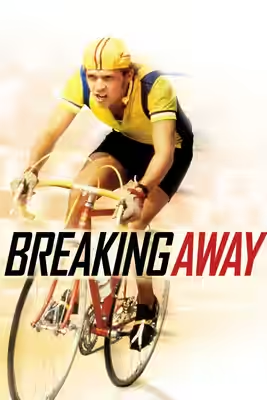
How does The Karate Kid compare to Breaking Away?
The Karate Kid is the gentler and more sentimental of the two, while Breaking Away is funnier and plainer about class. Both follow an awkward youngster finding confidence, with friendship keeping the sport human, but the earlier film is the tighter, and its parents are among the best we know. Choose The Karate Kid for a family evening and a teacher worth listening to.
What should I watch after The Karate Kid?
After The Karate Kid, try Breaking Away (1979, Fi1m 86): Another awkward youngster finds confidence, with friendship keeping the sporting ambition human. Then Wadjda (2012, Fi1m 80): A girl’s wish for a bicycle becomes a quietly stubborn pursuit of independence; and Billy Elliot (2000, Fi1m 81): A gifted boy needs a demanding teacher and room to be himself.
What order should I watch the The Karate Kid films in?
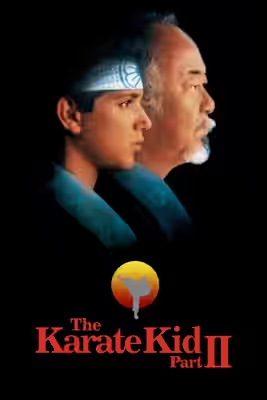
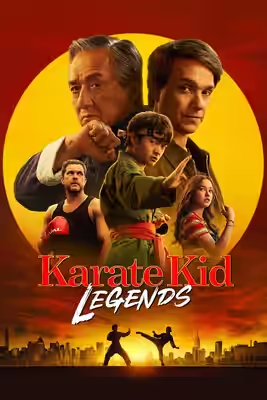
Release order is the safe choice for The Karate Kid, and it is the order our collection page lists them in. The Karate Kid is the first of the 3 The Karate Kid titles on Fi1m; after it The Karate Kid Part II. The full order.

Part of · 1 of 3

The Karate Kid

3 films on Fi1m · 1984–2025 · average 69 · best The Karate Kid 81

All 3 in order

Cast

Awards

Academy Awards, 1985

Nominated
Best Supporting Actor

If you liked this, try…

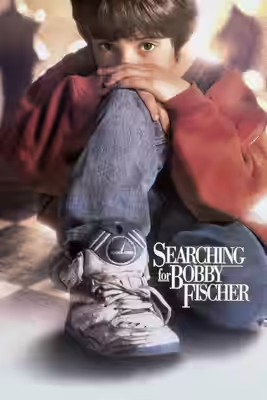
  1. Searching for Bobby Fischer (1993) · not reviewed yetPatient teaching and competitive pressure meet across a chessboard rather than a mat.

  2. Breaking Away (1979, Fi1m 86)Another awkward youngster finds confidence, with friendship keeping the sporting ambition human.

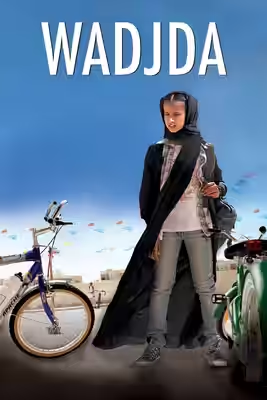
  3. Wadjda (2012, Fi1m 80)A girl’s wish for a bicycle becomes a quietly stubborn pursuit of independence.

  4. Billy Elliot (2000, Fi1m 81)A gifted boy needs a demanding teacher and room to be himself.

  5. Bend It Like Beckham (2002, Fi1m 76)Teenage sporting ambitions collide with family expectations, without losing their sense of humour.

Free account

Know what to watch tonight

Two lists that know where things are streaming, collections you can share, your own score beside ours, and Discover that remembers what you have seen.

  • Want to see, sorted by what is streaming now
  • Seen, with your score out of ten
  • No adverts, ever