Jon Favreau’s remake has some of the most convincing animals ever put in a family film and cannot make one of them look sad. Chiwetel Ejiofor’s Scar and a fine opening are the reasons to stay; the rest is the 1994 film with the expressions taken out.
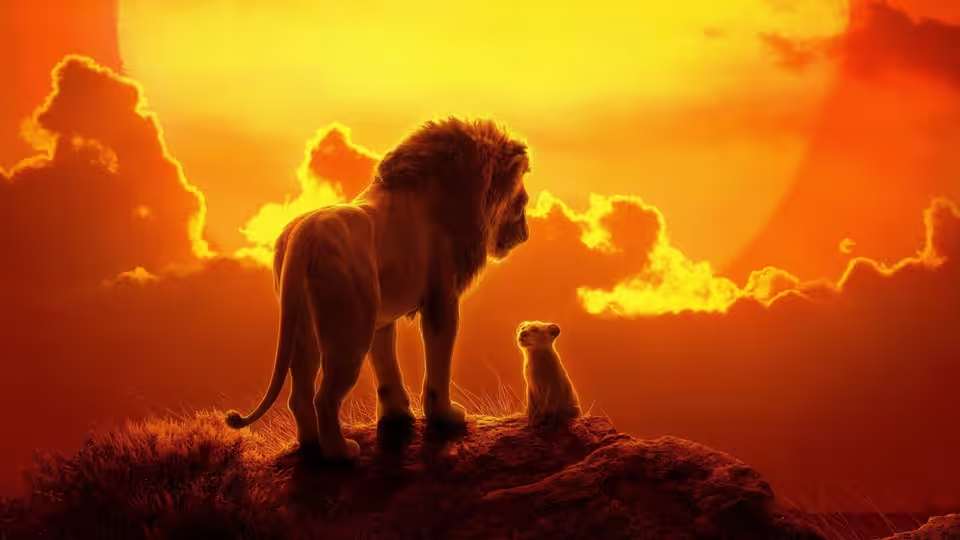
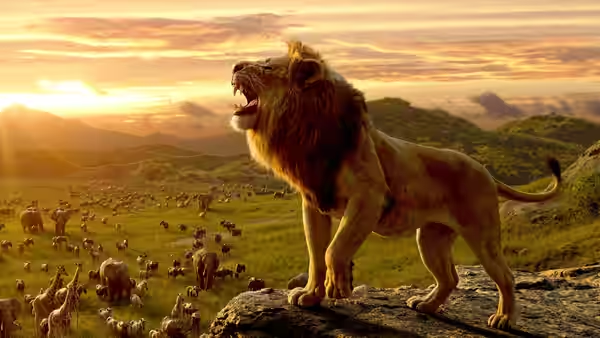
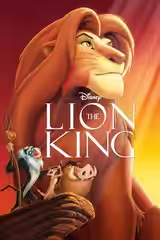
Jon Favreau has taken the 1994 animated film, kept its story, most of its songs and a good many of its shots, and rebuilt it with lions that look as though a documentary crew found them on the savannah. The engineering is remarkable. The film runs 118 minutes, and for most of them it is not much of a film. Jeff Nathanson’s screenplay follows the old outline so closely that you could set a watch by it, and the question the whole enterprise raises, and never answers, is what a talking lion gains by looking exactly like a lion.
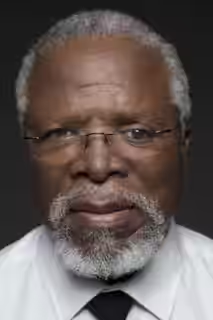
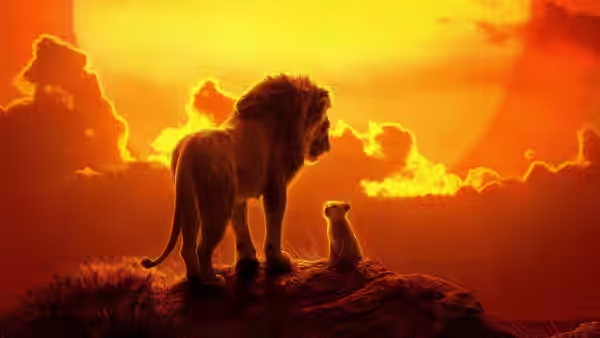
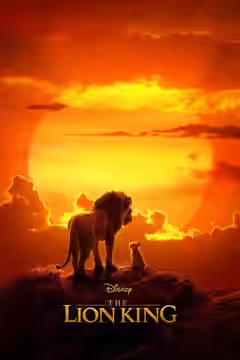
For the first five minutes we were got at. Caleb Deschanel lights the dawn over the Pride Lands as a slow orange wash, the herds come in across the plain, Hans Zimmer’s brass and choir rise under them, and when Rafiki (John Kani) climbs Pride Rock and lifts the cub, we felt the old catch in the throat exactly where we felt it twenty-five years ago. Then Zazu (John Oliver) opened his beak, the animals began to talk, and the feeling drained away over the next ten minutes and did not come back.
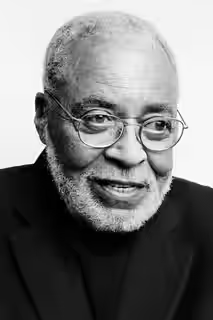
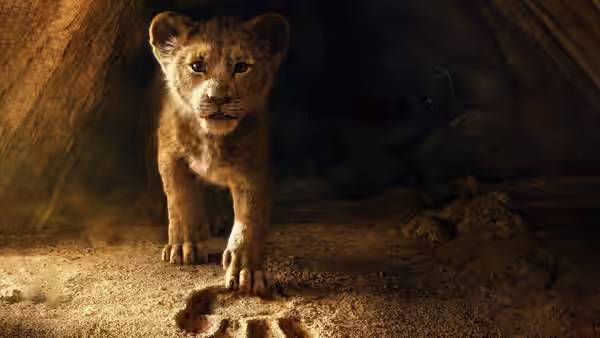
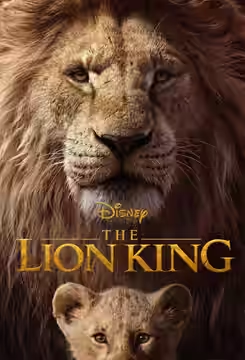
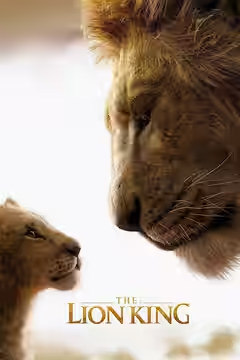
The trouble is faces. A real lion cannot raise an eyebrow or look sheepish, and Favreau has decided his lions must behave like real lions. So Mufasa (James Earl Jones) delivers his speech about the kings in the stars wearing the same expression he uses to survey the waterhole. Young Simba (JD McCrary) and Young Nala (Shahadi Wright Joseph) sing “I Just Can’t Wait to Be King” well, and the film stages it as a rush of ostriches and antelope, but the two cubs at the centre of it look the same throughout, alert and slightly blank, like cats waiting to be fed. Adam Gerstel and Mark Livolsi cut away to the herds whenever a line needs a reaction, which tells you they knew.
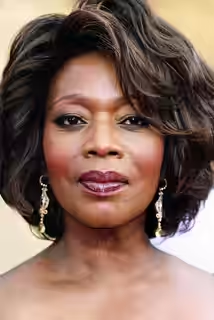
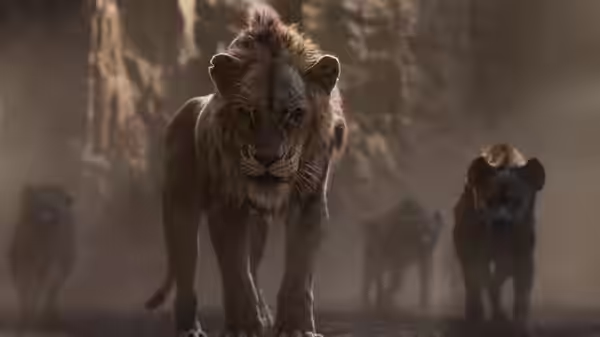
What survives is the voice work, and one voice above all. Chiwetel Ejiofor’s Scar is a low, reasoning growl, a lion who has thought about his grievances for years and states them as facts. He is more frightening than the cartoon because he is less amused. James Chinlund’s production design gives him and his hyenas an elephant graveyard of tusks and steam vents, the one place in the film where the realism adds dread instead of removing fun. Kamari (Keegan-Michael Key) and Azizi (Eric Andre) squabble in the bone piles and are the closest the first half comes to a laugh. Alfre Woodard’s Sarabi has two scenes of quiet steel.
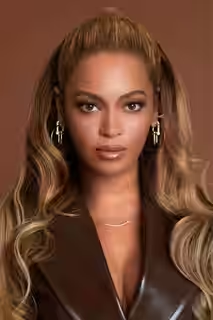
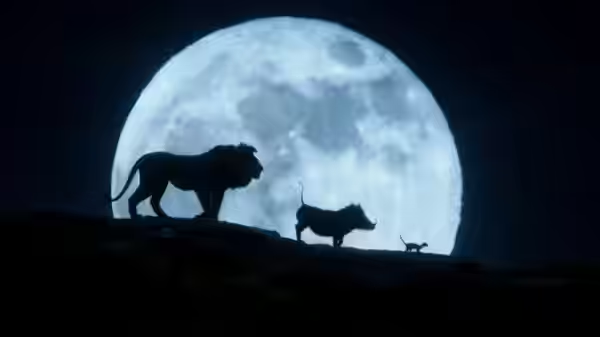
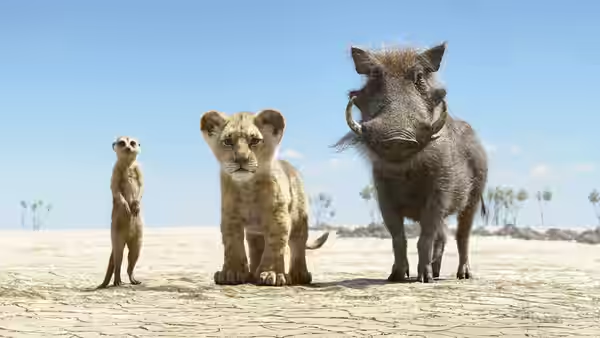
Simba grows up into Donald Glover, who is amiable and is asked to be little more. Beyoncé’s Nala arrives with authority and a singing voice the film seems slightly afraid of; the big duet is sung well and staged in broad daylight, two lions padding through a jungle, and we watched it wondering who had decided the word “tonight” was negotiable. Timon and Pumbaa, the meerkat and the warthog, are the loosest thing here, talking past the edges of the old lines, and for a quarter of an hour the film remembers it is allowed to be silly. We were grateful, and then aware of being grateful for a meerkat, which is not where a film this size should leave you.
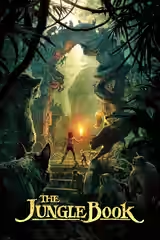
Favreau did this once before with The Jungle Book in 2016, and that film had a human boy in the middle of it, one real face for the animals to play off. Here there is no such face. Every scene is a conversation between two creatures who cannot show what they think, and Zimmer’s score does the emotional work in their place, swelling on cue like a hand on your shoulder. He wrote it the first time round, and here it is asked to carry far too much.
The reviews so far split three ways, and we understand every one of them. If you have a child who does not know the story, the PG certificate is fair, the animals are a pleasure to look at, and the graveyard is loud enough to make anyone grip the sofa. If you know the 1994 film, you will spend two hours checking, and there is not much else to do. At home it plays as a handsome nature programme with musical numbers, and you may find yourself waiting for the lions to stop talking.