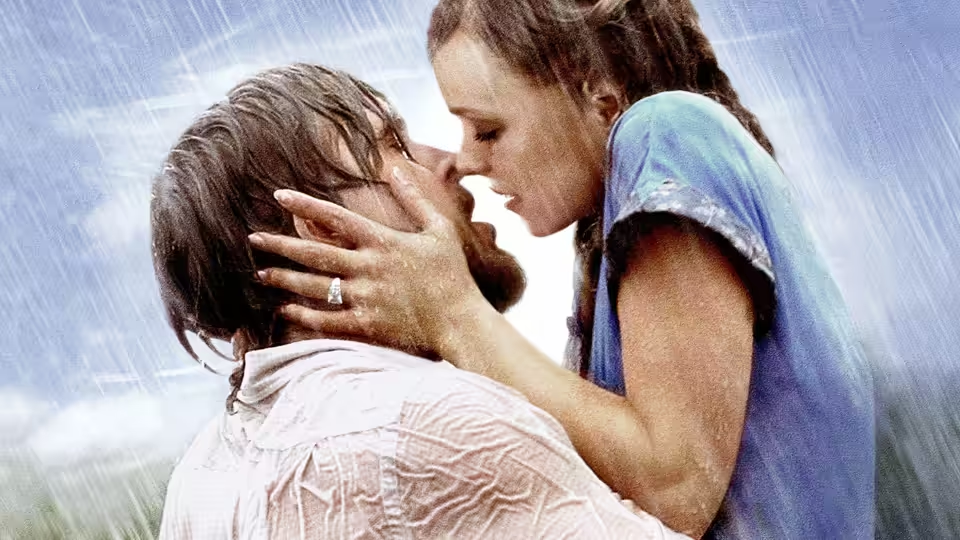
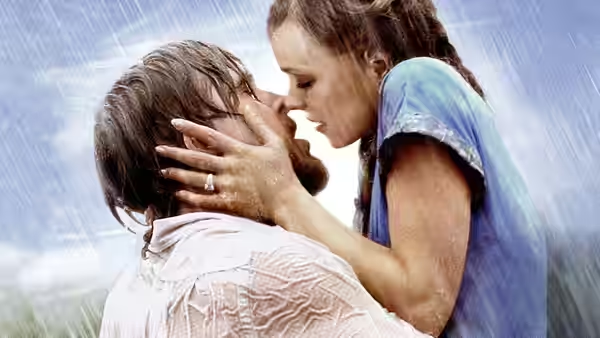
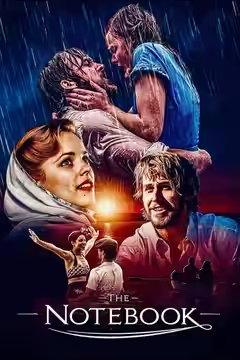
Ryan Gosling and Rachel McAdams make The Notebook worth the emotional expenditure. Nick Cassavetes trusts their romance less than he should, adding sentiment where the performances have already done the work.
Nick Cassavetes’s The Notebook is a good romantic melodrama that could afford to press a little less hard. It takes young love seriously and gives its actors room to make attraction look like pleasure. The trouble is its anxiety that we might fail to feel enough. Jan Sardi and Jeremy Leven’s screenplay, adapted from Nicholas Sparks’s novel, repeatedly underlines feelings that the cast has already made clear. If a determined tearjerker is what the evening requires, the performances make the pressure bearable.
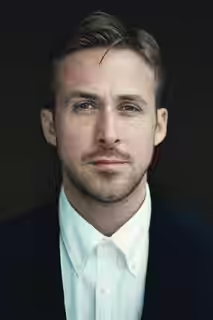
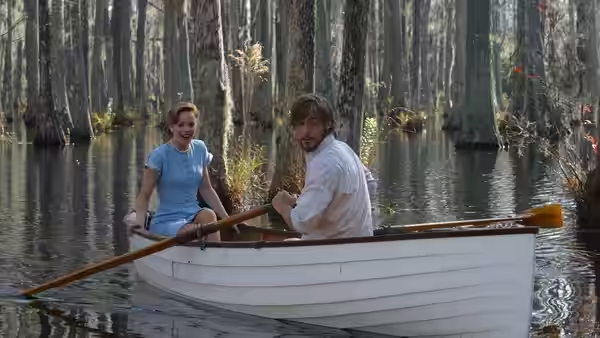
Ryan Gosling gives Noah Calhoun enough stubbornness to keep him from becoming a lover whose only quality is devotion. Rachel McAdams makes Allie Hamilton’s delight in him feel active and particular. She looks interested in the person in front of her, with opinions of her own about what should happen next. Their attraction is convincing because they seem to enjoy each other’s company. We believe that pleasure, which helps considerably when class starts doing the work of a villain.
The writing is less persuasive about what keeps them apart. Social difference gives the courtship a difficulty we can recognise immediately, but the screenplay is too content to let that difficulty explain everybody’s conduct. A romance needs obstacles; it also needs people whose objections amount to more than delaying the lovers. The writers favour declarations and emotional escalation over that less convenient business. We can care about the couple without believing every complication put in their way.
Robert Fraisse’s cinematography gives the courtship the polished look of a cherished memory. That choice makes sense for a story being read aloud, though we sometimes wanted an image that did not seem so determined to please. Sarah Knowles’s production design and Karyn Wagner’s costumes make the period setting easy to accept. Their careful work gives the lovers a credible place to meet, even when the writing grows less credible. The prettiness suits the romance, although it makes the differences in their circumstances look rather comfortable.
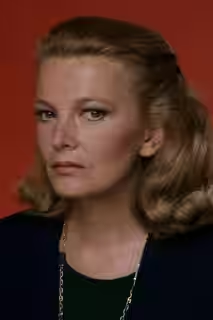
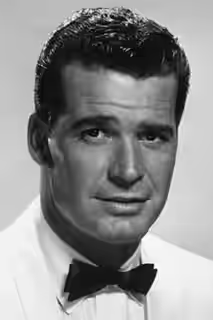
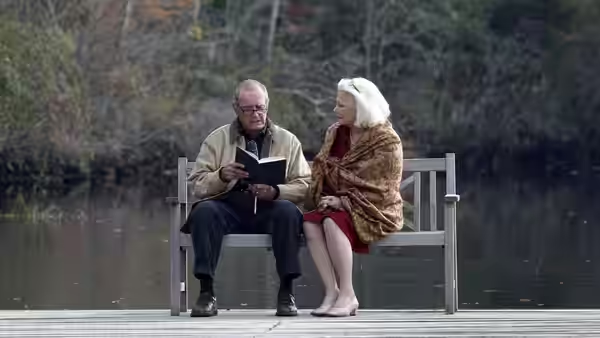
The older pair make the film’s strongest case for staying with it. James Garner’s patience as he reads gives Gena Rowlands space to respond without hurrying the moment along. We were moved by that simple exchange of attention. The dementia framing can be uncomfortably sentimental, but she keeps the woman listening from becoming merely a reason for us to feel sad. These scenes work because both actors allow the relationship to matter at the pace of an ordinary conversation.
Alan Heim’s editing is less assured at making the two strands feel equally necessary from moment to moment. At 123 minutes, the film occasionally seems to be sustaining an emotion because it has nowhere new to take it. Aaron Zigman’s music adds further encouragement when quiet would let us judge the performances for ourselves. These choices become more noticeable as the film goes on. We begin registering how often it asks for the same response, even while the actors continue to earn it.
As romantic melodrama, The Notebook has the considerable virtue of believing that its lovers deserve our full attention. There is no need to apologise for that, or to pretend that a film stops working because its intentions are obvious. What matters is whether the people can persuade us, and this cast usually does. Save it for an evening when subtlety is not a requirement.