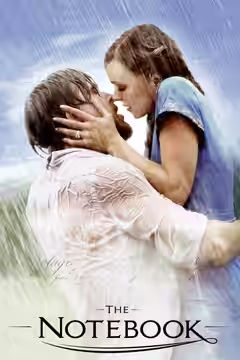
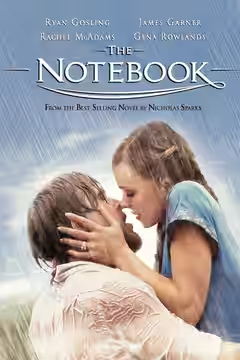
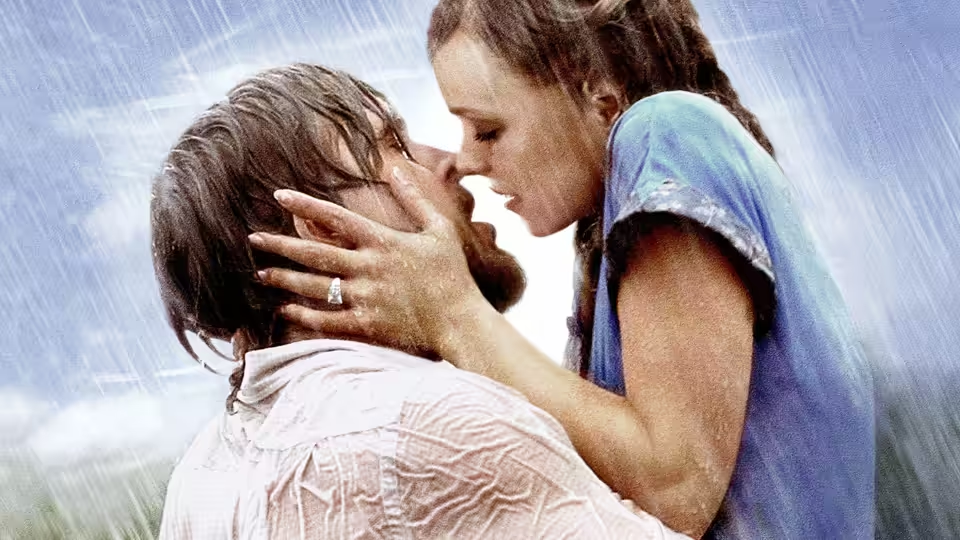
Noah (Ryan Gosling) and Allie (Rachel McAdams) kissing in the rain
Film review

The Notebook

2004 · Directed by Nick Cassavetes · 2h 03m · IFCO 12A

In a sentenceWe believe the lovers; the soundtrack still seems worried

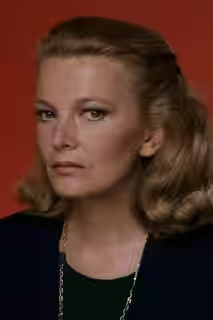
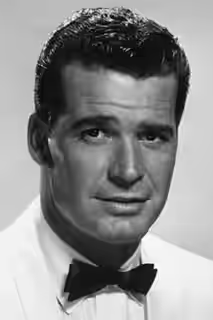
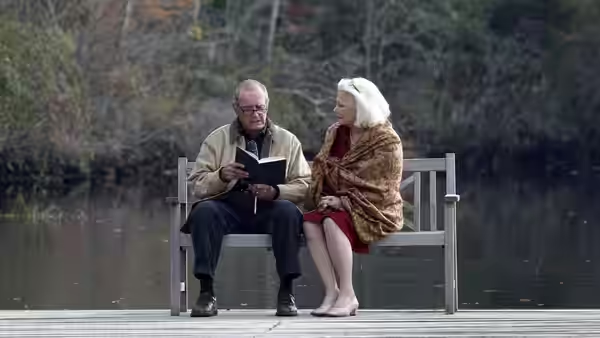
Duke (James Garner) reads a story of young love to a woman with dementia (Gena Rowlands). In the Deep South of that story, Noah Calhoun (Ryan Gosling) falls for Allie Hamilton (Rachel McAdams), whose social circumstances differ from his own. Noah wants to be with Allie, but their courtship has to contend with the class divide between them. The film moves between the young couple beginning their relationship and the older pair sharing its written account. While Noah and Allie try to pursue their romance, the act of remembering presents a separate difficulty.

Plays from YouTube when you press play; nothing loads from them until then.

Fi1m review

Ryan Gosling and Rachel McAdams make The Notebook worth the emotional expenditure. Nick Cassavetes trusts their romance less than he should, adding sentiment where the performances have already done the work.

Nick Cassavetes’s The Notebook is a good romantic melodrama that could afford to press a little less hard. It takes young love seriously and gives its actors room to make attraction look like pleasure. The trouble is its anxiety that we might fail to feel enough. Jan Sardi and Jeremy Leven’s screenplay, adapted from Nicholas Sparks’s novel, repeatedly underlines feelings that the cast has already made clear. If a determined tearjerker is what the evening requires, the performances make the pressure bearable.

Ryan Gosling gives Noah Calhoun enough stubbornness to keep him from becoming a lover whose only quality is devotion. Rachel McAdams makes Allie Hamilton’s delight in him feel active and particular. She looks interested in the person in front of her, with opinions of her own about what should happen next. Their attraction is convincing because they seem to enjoy each other’s company. We believe that pleasure, which helps considerably when class starts doing the work of a villain.

The writing is less persuasive about what keeps them apart. Social difference gives the courtship a difficulty we can recognise immediately, but the screenplay is too content to let that difficulty explain everybody’s conduct. A romance needs obstacles; it also needs people whose objections amount to more than delaying the lovers. The writers favour declarations and emotional escalation over that less convenient business. We can care about the couple without believing every complication put in their way.

Robert Fraisse’s cinematography gives the courtship the polished look of a cherished memory. That choice makes sense for a story being read aloud, though we sometimes wanted an image that did not seem so determined to please. Sarah Knowles’s production design and Karyn Wagner’s costumes make the period setting easy to accept. Their careful work gives the lovers a credible place to meet, even when the writing grows less credible. The prettiness suits the romance, although it makes the differences in their circumstances look rather comfortable.

The older pair make the film’s strongest case for staying with it. James Garner’s patience as he reads gives Gena Rowlands space to respond without hurrying the moment along. We were moved by that simple exchange of attention. The dementia framing can be uncomfortably sentimental, but she keeps the woman listening from becoming merely a reason for us to feel sad. These scenes work because both actors allow the relationship to matter at the pace of an ordinary conversation.

Alan Heim’s editing is less assured at making the two strands feel equally necessary from moment to moment. At 123 minutes, the film occasionally seems to be sustaining an emotion because it has nowhere new to take it. Aaron Zigman’s music adds further encouragement when quiet would let us judge the performances for ourselves. These choices become more noticeable as the film goes on. We begin registering how often it asks for the same response, even while the actors continue to earn it.

As romantic melodrama, The Notebook has the considerable virtue of believing that its lovers deserve our full attention. There is no need to apologise for that, or to pretend that a film stops working because its intentions are obvious. What matters is whether the people can persuade us, and this cast usually does. Save it for an evening when subtlety is not a requirement.

Critical consensus AI synthesised

61
Positive
7
Mixed
3
Negative
3

The reviews lean favourable, with most critics finding enough feeling and strong acting to make The Notebook’s unabashed sentimentality work. Praise clusters around Gena Rowlands and James Garner, whose scenes lend credibility to material often described as sugary or contrived. Ryan Gosling and Rachel McAdams also win broad approval for bringing passion and character to the young romance. Several reviews credit the period detail and Nick Cassavetes’s direction with giving a familiar story emotional weight.

The spread is wide, however, and sentiment is the dividing line: what persuades some critics strikes others as manipulation. Reservations centre on the dementia framing, implausible plotting and, occasionally, length and editing. The Los Angeles Times departs from the general praise for the young leads, finding them unpersuasive while admiring Garner and Rowlands. The harshest reviews find the romance derivative and too polished to convey much real passion.

RogerEbert.com
25 June 2004 · ★★★½/4 · Roger Ebert
88

The film is a good tearjerker that respects the passion of young romance and the sentiment of enduring love in old age without pushing too hard. Ebert praises the strong performances, especially from the older cast of Gena Rowlands and James Garner, and the director's ability to find truth beyond soap opera.

Read the full review →
Screen Daily
25 June 2004
76*

The critic calls it premium romantic schlock but notes its appeal as counter-programming with sumptuous production values and a strong cast. The young leads Gosling and McAdams are singled out for their passionate and radiant performances that lift the film.

Read the full review →
Variety
21 May 2004 · Robert Koehler
75*

The unashamed tearjerker is a determined and often affecting romance that doesn't speak down to audiences, with a gifted cast and classical Hollywood textures deftly balanced by director Nick Cassavetes. Koehler highlights the strong performances from the young leads and the emotional force of the older couple's scenes.

Read the full review →
Time Out
10 September 2012 · JW
74*

The review notes the sticky-sweet script but highlights how Rowlands and Garner emerge with near-miraculous credibility in their scenes together amid the sentimental framing device.

Read the full review →
Evening Standard
10 April 2012 · Derek Malcolm
70*

The film is a conventional Deep South romance with strong period detail and an able cast, though hampered by length and editing issues; patience is partially rewarded by the performances.

Read the full review →
Film Comment
18 December 2014 · festival review · Eric Hynes
70*

The critic reflects on a 10th-anniversary screening of the film at the Savannah Film Festival, where a 35mm print was projected to an emotional audience. Gena Rowlands participated in a post-screening Q&A, and the piece notes the film's reputation as a notorious weepie while welcoming its reclamation.

Read the full review →

Straight answers AI written, from our review

Is The Notebook worth watching?
The Notebook is worth watching for its convincing central couple and moving older pair, especially if we want a determined tearjerker; we score it 74. Ryan Gosling and Rachel McAdams make the romance persuasive, though the screenplay and music keep pressing for feelings the actors already earn.
How long is The Notebook, and what is it rated?
The Notebook runs 2h 03m and is rated 12A by the IFCO in Ireland. It is a romance and drama film.
Where can I watch The Notebook in Ireland?
The Notebook is streaming on HBO Max in Ireland, and it is also available to rent from Apple TV from €3.99. Availability is checked daily; the links above go straight to each service.
How violent or frightening is The Notebook, and is it suitable for children?
The Notebook carries a UK 12A certificate, so it is not a film to assume suits every child, and under-12s need an accompanying adult at the cinema. We would weigh its emotionally difficult dementia framing when deciding on a family watch; the certificate alone does not establish how much violence or frightening material it contains.
How does The Notebook compare to Brief Encounter?
The Notebook is the more emphatic tearjerker, while Brief Encounter expresses romantic longing through restraint and the difficulties of ordinary routines. We recommend Brief Encounter more strongly for its handling of longing and anxiety, though Alec is less fully drawn; The Notebook suits an evening when convincing attraction matters more than subtlety.
Is The Notebook based on a true story or a book?
The Notebook is adapted from Nicholas Sparks’s novel, with a screenplay by Jan Sardi and Jeremy Leven. No prior reading is needed to follow the romance and its framing story about remembering. We find the screenplay too insistent about the characters’ feelings, rather than faulting it for departing from the book.
What should I watch after The Notebook?
After The Notebook, try Brief Encounter (1945, Fi1m 90): For romantic longing expressed through restraint, with ordinary routines making everything harder. Then In the Mood for Love (2000, Fi1m 91): A more restrained romance, attentive to the cost of keeping feelings unspoken; and Brooklyn (2015, Fi1m 83): Another period romance that gives its heroine room to weigh competing futures.

Cast

If you liked this, try…

  1. Brief Encounter (1945, Fi1m 90)For romantic longing expressed through restraint, with ordinary routines making everything harder.

  2. The Umbrellas of Cherbourg (1964) · not on Fi1m yetYoung love faces practical obstacles, with music allowed to do the talking.

  3. In the Mood for Love (2000, Fi1m 91)A more restrained romance, attentive to the cost of keeping feelings unspoken.

  4. A Moment to Remember (2004) · not on Fi1m yetA Korean romance that takes memory and commitment into similarly tearful territory.

  5. Brooklyn (2015, Fi1m 83)Another period romance that gives its heroine room to weigh competing futures.

The Notebook (2004) review: fine actors make the sentiment work (Ireland) | Fi1m