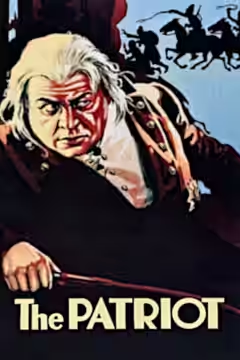
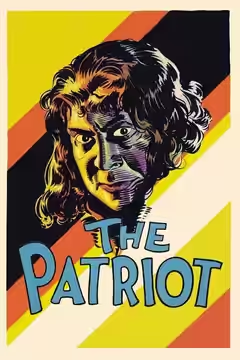
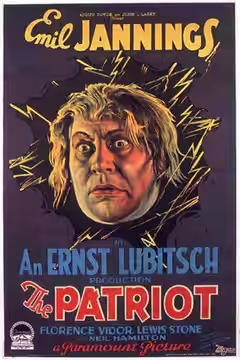
Lubitsch’s silent about the murderous court of Czar Paul I was praised to the skies in 1928, and it is lost. What survives is a trailer and a handful of scraps, enough to make you want the rest and not enough to judge it.
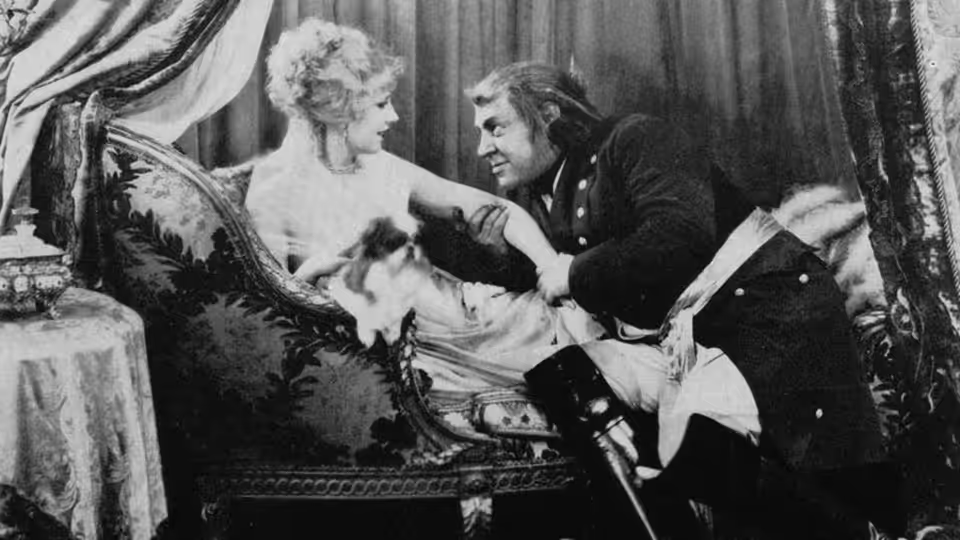
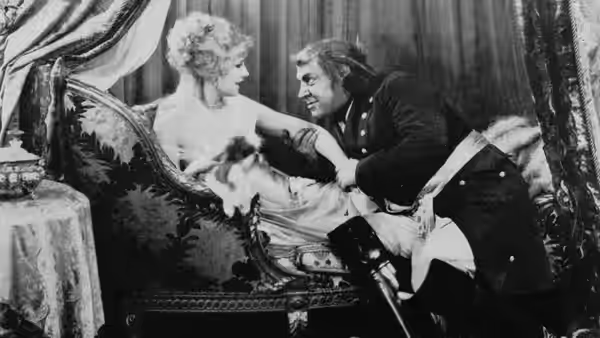
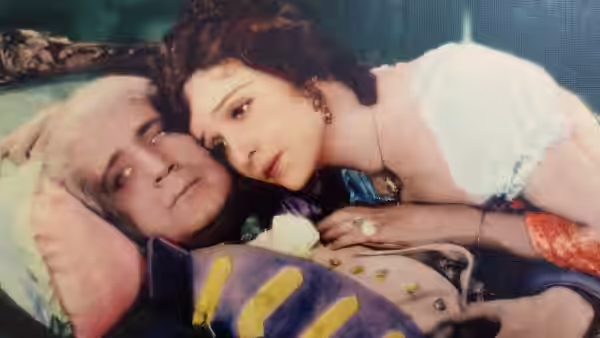
In 1928 Ernst Lubitsch directed, produced and edited a 113-minute silent about the last months of Czar Paul I of Russia. Emil Jannings played the Czar. Lewis Stone played Count Pahlen, the minister who decides his master must be removed for the country’s good, and Florence Vidor the Countess Ostermann, the woman between them. Hanns Kräly and Julian Johnson wrote it from Alfred Neumann’s play. The notices were the kind a director keeps in a drawer. Then the film went missing. No complete print is known to exist, and what survives is a trailer and a few stray minutes.
We should say at once what that means for anyone reading this on a sofa: you cannot watch The Patriot tonight, or any night, and neither can we. All three of the reviews we have read from its release rank it near the top of its year, and all three single out Jannings above everything else. We are in no position to argue with them. Our score is for what can be seen, which is a few minutes; the rest of the gap between our number and theirs belongs to the film we have not seen.
The story, as far as it can be told, is this. Paul rules Russia in fear of his own court, sees conspirators in every corridor and trusts one man, Pahlen, who commands the capital’s soldiers and hears his confidences. Paul suspects his own son, the Crown Prince Alexander (Neil Hamilton), and keeps a mistress, Mademoiselle Lapoukhine (Vera Voronina), in the palace. Pahlen loves Russia more than he loves Paul and sets about using the trust he has been given. Russian history will tell you how the reign of Paul I ended. The film’s business is how Pahlen gets there, and we will not describe it, which is an easy rule to keep with a film nobody can check.
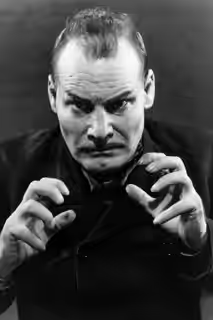
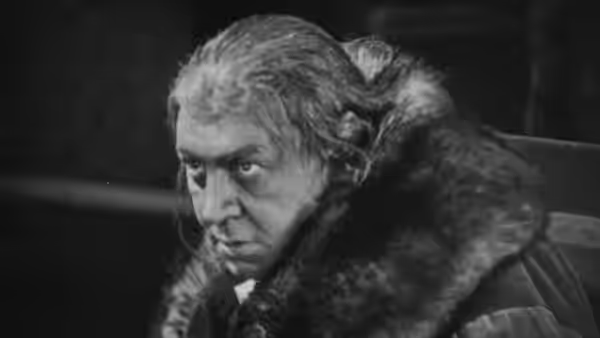
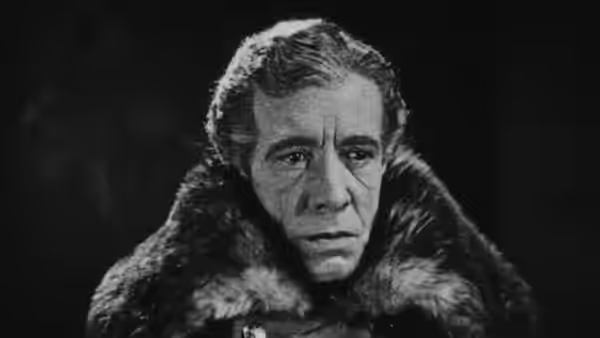
We watched the surviving trailer twice and felt something close to bereavement, which is not what publicity material usually does to us. What did it was a few seconds of Jannings as Paul: the body slumped and heavy, the eyes quick and frightened and somewhere else, a man listening for footsteps in a room where nobody is walking. The 1928 reviews describe a mad Czar played without ranting, and in those seconds you can see it. Then a card promises that these characters will fascinate you, and the film stops, because there is no more of it.
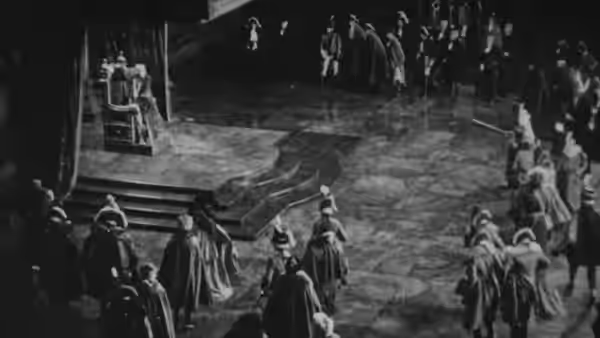
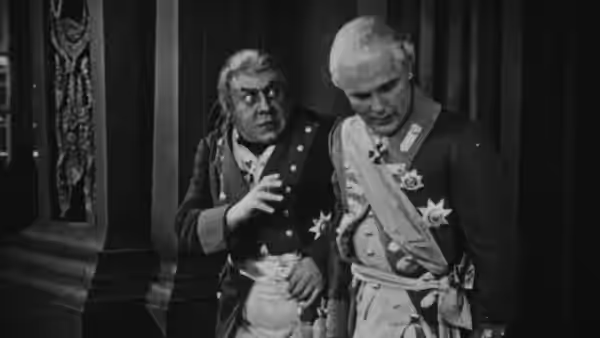
The scraps allow a little more than that. Bert Glennon’s photography puts small people at the bottom of tall rooms, and the light comes from high up, so the floors are bright and the ceilings are not. Ali Hubert’s uniforms are heavy with braid and cut so the men look bound into them, which is right for a court where everyone is watching everyone. Lubitsch cut the film himself, and we cannot judge the cutting from a trailer, which is put together to sell the picture and shows nothing of its rhythm. Domenico Savino, Gerard Carbonara and Max Bergunker are credited with the music that accompanied it, and we have heard none of it as intended.
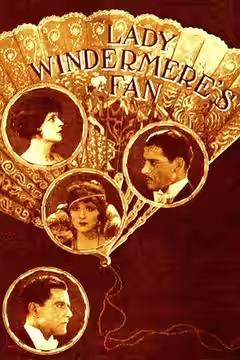
The film sits oddly in Lubitsch’s work. In Hollywood he was already the man for the drawing-room comedy, The Marriage Circle and Lady Windermere’s Fan, and The Patriot was a return to the costumed history he had made in Berlin with Jannings, in Madame DuBarry and Anna Boleyn. The release reviews mention comic touches inside the horror, which sounds like him: the doors, the glances, the joke that arrives while someone is being terrified. Whether the two halves held together for 113 minutes is the question we cannot answer. It is also the question that would have made the review.
Spend ten minutes with what survives if you are interested in Lubitsch or Jannings, and then read about the rest. If a print turns up in an attic somewhere, we will be first in the queue, and we will owe this page a rewrite.