Peter Greenaway’s The Pillow Book makes writing on skin absorbing to watch, but struggles to make its people matter. The visual invention rewards curiosity; the thin drama makes 126 minutes feel a considerable commitment.
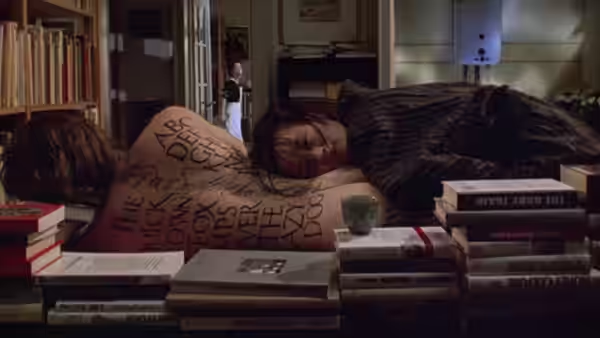
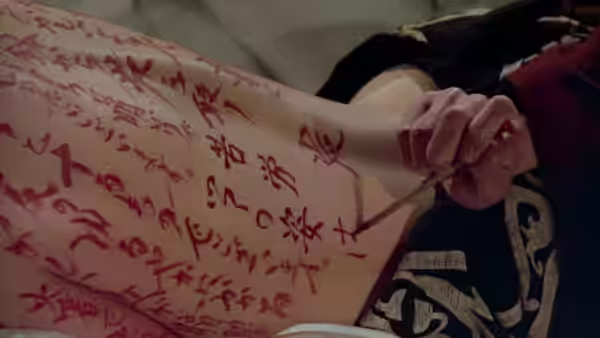
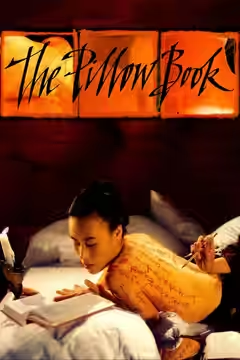
Peter Greenaway’s The Pillow Book is an absorbing visual experiment with a thin romance running through it. Writing on skin gives him a subject that can be sensual, peculiar and quite literal about the physical pleasure of words. He keeps finding ways to make us look at it. The trouble is that our interest in the lettering does not necessarily extend to whoever is wearing it, and the film needs that interest to sustain a romance.
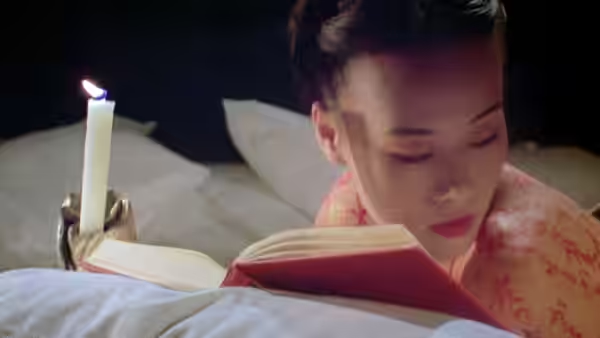
Vivian Wu plays Nagiko, and her presence keeps the writing on skin from becoming an entirely decorative exercise. Her part needs us to care about the person beneath the lettering, which is harder than it should be. The birthday rituals offer something particular to hold on to amid the elaborate imagery. Elsewhere, Peter Greenaway gives the characters too little to do that feels independent of his wish to arrange and embellish them.
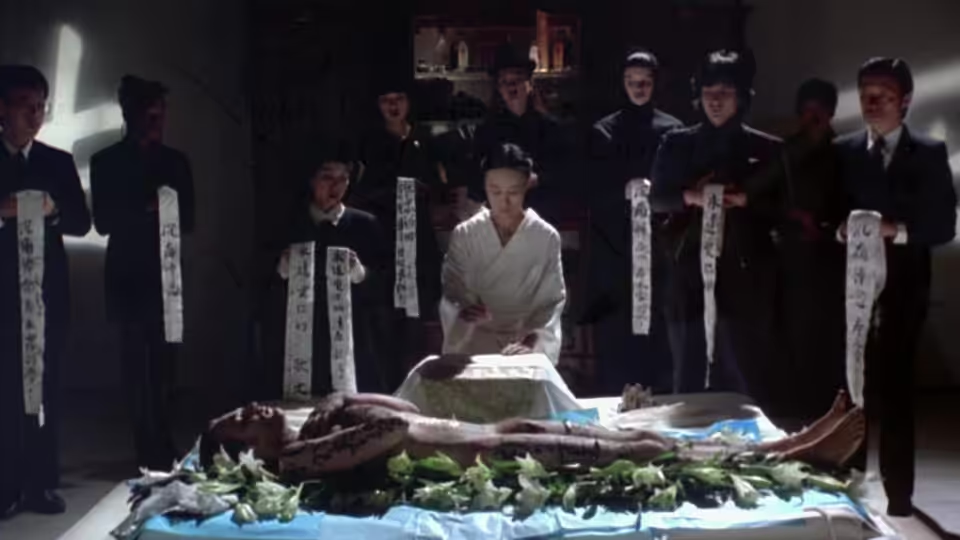
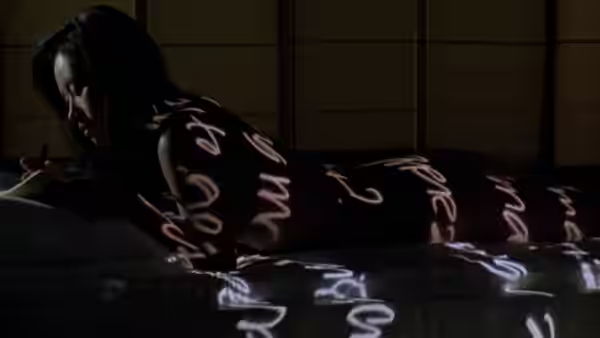
Sacha Vierny’s cinematography makes bodies covered in writing worth looking at long after we have understood the idea. Lettering and skin keep competing for attention, and the split screens add further choices about where to look. We were absorbed by those divided images, which made the act of looking feel unusually active. The sensuality is there, but it comes from watching shapes and surfaces, and it only intermittently makes us care about the people.
The editors, Chris Wyatt and Peter Greenaway, have plenty to organise, with words and bodies competing for space. The imagery accompanying the classical text’s lists gives that busy approach a purpose: the film lets reading and looking happen together. Elsewhere, further variations on the same device begin to feel like reasons to postpone the next piece of drama. At 126 minutes, it asks for more patience than its characters can reliably earn.
The production design team, which includes Wilbert Van Dorp and Andrée Putman, contributes to the film’s air of painstaking arrangement. The density of the images can be pleasurable, but after a while there seems too little space for anyone to behave untidily. Brian Eno’s music helps sustain the sensual atmosphere. It cannot make the relationships feel close when the script has left them so remote.
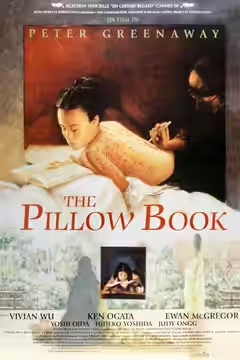
As an experimental romance, the film has good reason to avoid the usual reassuring exchanges and explanations. Ewan McGregor’s Jerome belongs to a cast willing to work within those limits, and the actors deserve credit for taking the material seriously. But we still need some sense of what these people mean to one another. Too often, Peter Greenaway seems satisfied once he has found another way of presenting the body, leaving us to supply the longing.
The film’s patience with its own devices will divide even viewers who enjoy experimental cinema. We would not suggest it as a first choice for an evening of romance. Choose it when the prospect of looking closely at pictures is enough, and do not expect the characters to repay all that attention.