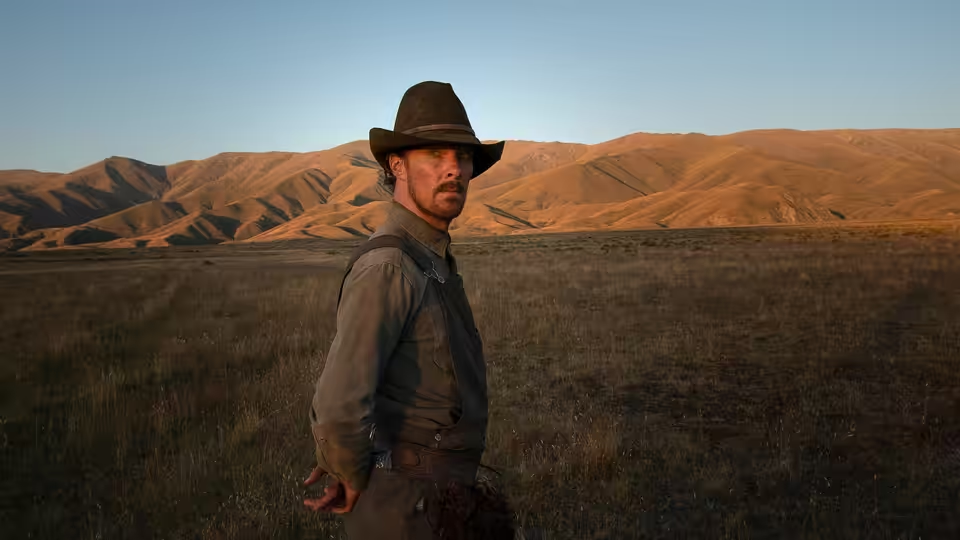
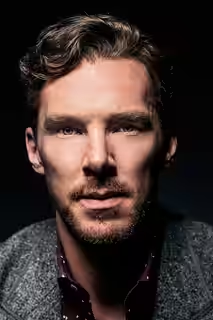
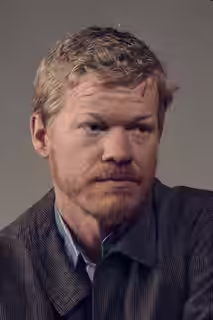
Jane Campion’s first film since Bright Star is a slow, cruel western about a rancher who sets out to break his brother’s new wife, shot and cut with great care. Cumberbatch’s Phil is frightening, and once or twice you can see him deciding to be.
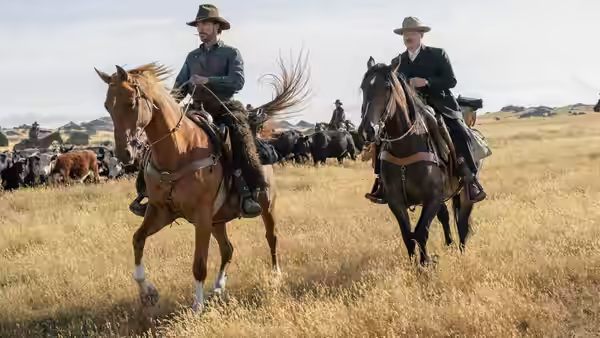
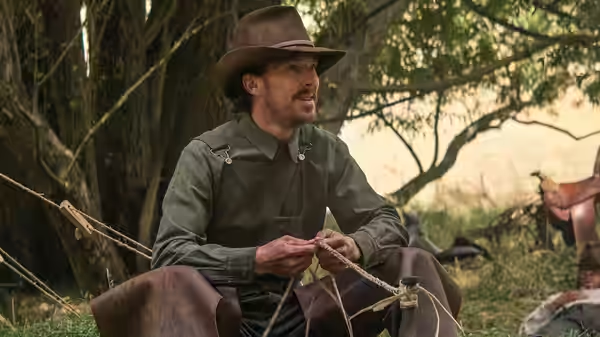
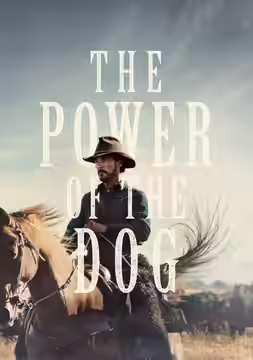
Phil Burbank (Benedict Cumberbatch) and his brother George (Jesse Plemons) run a cattle ranch in Montana in 1925 and still sleep in the same room. Phil is the one who talks. He rides, ropes, castrates calves with his hands and a knife, and washes in the river rather than the bath. George is quiet, plump, wears a suit and a bowler and rarely answers back. Jane Campion, writing and directing from Thomas Savage’s novel and making her first feature since Bright Star in 2009, spends the opening stretch just letting us watch the two of them. By the time anything happens we know which brother to be afraid of.
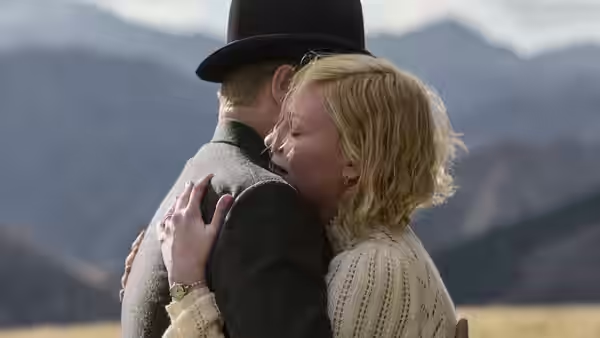
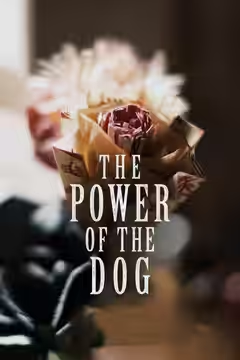
What happens is a widow. On a drive the brothers stop at the Red Mill, an inn run by Rose Gordon (Kirsten Dunst), whose thin, bookish son Peter (Kodi Smit-McPhee) has made paper flowers for the tables. Phil mocks the flowers and the boy. George stays behind to comfort the mother, and within a few scenes has married her and brought her home to a house that already has a piano and a mother of its own (Frances Conroy, credited only as Old Lady). Phil cannot bear the wife and sets about breaking her. He never raises a hand. He whistles, he watches from doorways, and he says her name as if it were a small stone he was throwing.
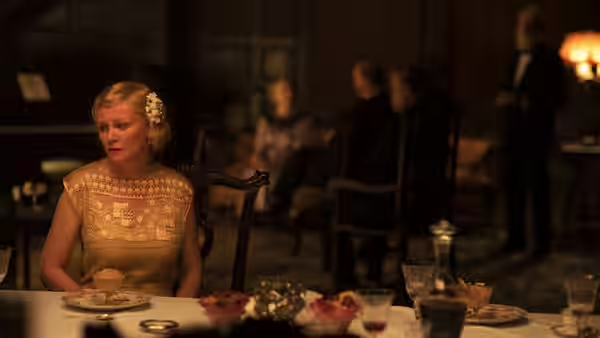
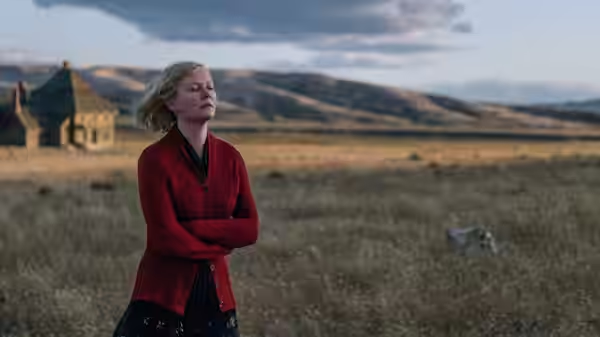
It is a superbly made film. Ari Wegner shoots the hills, New Zealand standing in for Montana, in wide flat light with the cattle as dots, and shoots the house so dark that going indoors feels like going underground. Grant Major’s ranch house is a great timber thing of stuffed heads and shut doors, and the piano sits in a room too large for it. Kirsty Cameron puts Phil in chaps and shirts stiff with dirt, George in clean cloth, and Peter in a white shirt, black trousers and white canvas shoes, an absurd outfit for a ranch, which is the point. Jonny Greenwood’s score has a cello plucked to sound like a banjo and a piano slightly out of tune, so the music seems to come from inside the walls.
The scene we could not sit still through comes when Rose is practising for a dinner the Governor (Keith Carradine) is to attend. She picks out a tune downstairs, badly. Upstairs, Phil takes it up on the banjo, faster and better, and stops when she stops. Peter Sciberras cuts between the two floors and holds the takes long enough that there is nowhere for her, or us, to go. We squirmed, and then we wanted to go down and take her hands off the keys ourselves. Dunst plays the whole film a beat behind, flinching before the blow lands, and it is the best work in it.
Cumberbatch is frightening. He has found a walk, a way of leaning on a frame, a habit of not blinking. The trouble is the voice. The accent is careful, and once or twice the drawl and the bare chest and the mud look like an actor’s idea of a cowboy rather than a cowboy. Plemons, beside him, does almost nothing and is never caught doing it. Smit-McPhee is a long pale stalk of a boy who watches everything, and the second half belongs to him and Phil, and takes a turn we will not describe. We will say that Campion explains her ending more carefully than she explains anything else, and that we had not needed the help.
At 127 minutes it is slow, and there is a stretch in the middle where the mood is the only thing moving. Most critics have called it her best since The Piano, and on the evidence of control they are right; it is the most disciplined film of hers we have seen. What it lacks is the mess of that earlier film, the sense that anyone on screen might do something the director had not planned. Here everybody arrives exactly where they were sent.
It is a 12A, which tells you nothing. No shot is fired in anger and a calf loses its future in the first ten minutes. The cruelty is all in the sound, so do not watch it on a laptop speaker.