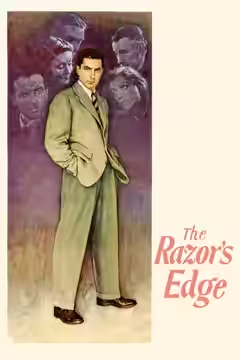
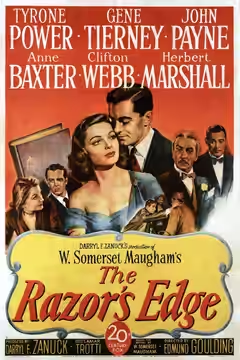
Edmund Goulding’s Maugham adaptation is a handsome, well-acted film about society with a spiritual quest stuck in the middle of it. Gene Tierney and Clifton Webb make the society worth the visit; the quest is a man on a painted mountain.
Edmund Goulding’s film of W. Somerset Maugham’s novel runs 145 minutes and is about a man who wants to know why there is evil in the world. That is a hard thing to put on a screen, and Lamar Trotti’s screenplay makes the sensible decision to surround him with people who want simpler things: money, a good marriage, a seat beside the right duchess. Those people are the best thing in the film, and the question keeps interrupting them.
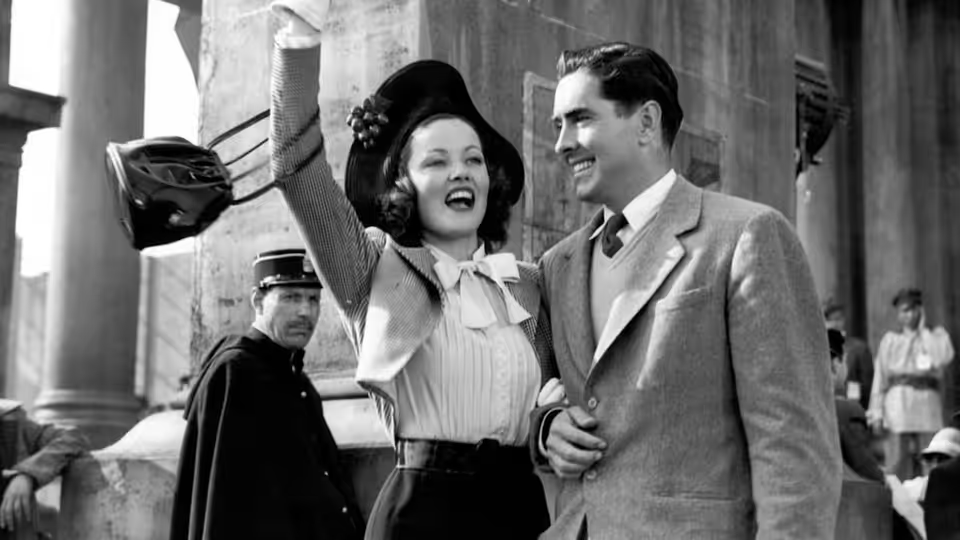
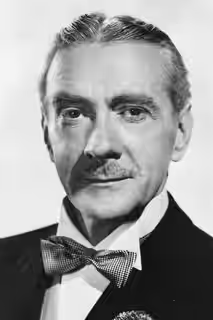
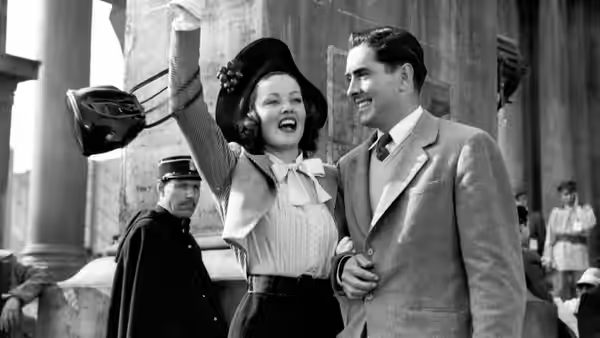
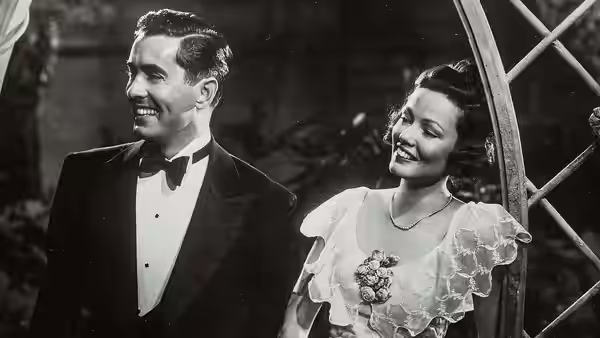
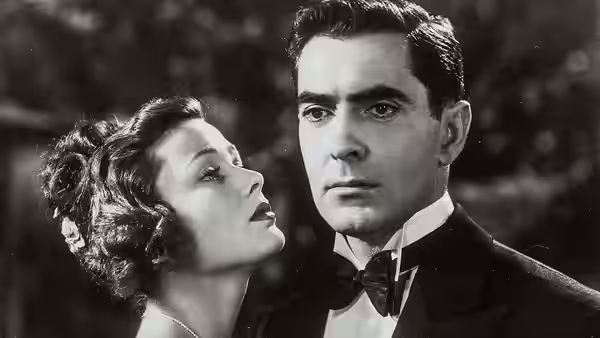
Gene Tierney is the reason to watch. Isabel begins as a pretty, practical girl who wants a house and a husband who goes to an office, and Tierney plays her with her chin up and her eyes doing something else. The second half gives her a stretch we will not describe, and she takes it with both hands; she is the only person on screen who seems to have noticed that Maugham was writing about appetite. Clifton Webb’s Elliott Templeton is the other pleasure, a snob who has made a career of knowing where to sit, and Webb delivers every line as if handing you his card. We laughed at him more than at anything else here.
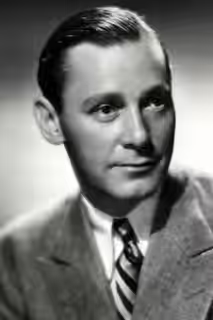
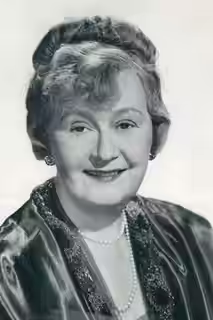
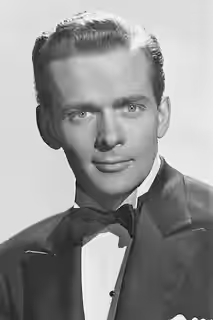
Anne Baxter’s Sophie is a small part that becomes a large one. In the early scenes she is a happy young wife who reads poetry, and Baxter plays her so lightly that you barely notice her. What the film does with her afterwards moved us more than the first hour had led us to expect, and the reason is that Baxter never asks for sympathy. Herbert Marshall plays Maugham himself, drifting through the story in a good overcoat, watching people at dinner and occasionally reporting what they said when he was not there. It is an odd device, and Marshall makes it work by declining to be interesting.
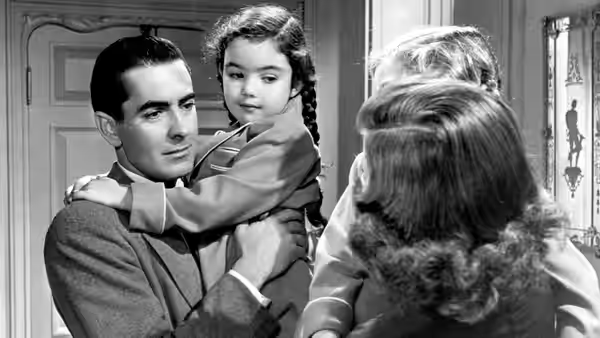
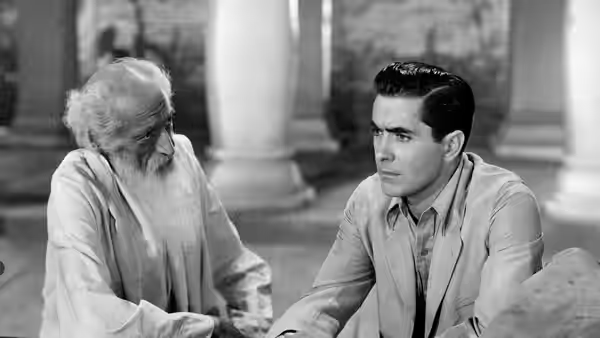
Tyrone Power is the problem, or rather the part is. Larry Darrell is a man to whom things happen on the inside, and Power, who is handsome and sincere and photographs like a statue, is left to look thoughtful while other people explain him. When the film follows him down a coal mine to Fritz Kortner’s drunken, learned Kosti, it briefly finds a rhythm. When it follows him up a mountain, it stops dead. Cecil Humphreys’s Holy Man sits in front of a painted sky and tells Larry that the path to salvation is hard, and Alfred Newman’s strings rise as if something had been said. We were bored, and then a little embarrassed on the film’s behalf, because it so plainly believes it has just shown us the meaning of life.
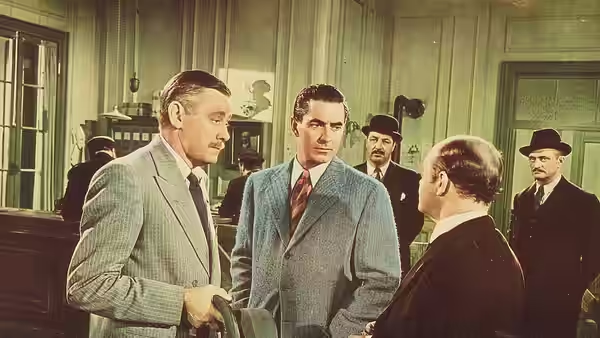
The studio work elsewhere is handsome. Arthur Charles Miller lights the Chicago drawing rooms and Paris cafés in a bright, even gloss with deep blacks behind, and the European sets have the right clutter of glasses, mirrors and waiters; the Indian ones do not, and the film seems to know it, because it hurries through them. J. Watson Webb Jr. cuts the parties with some snap and the sermons with none, though we suspect there was nothing to cut to. Newman’s score does its best work in the bars.
Goulding’s next film, Nightmare Alley, made the following year, was about a man who fakes a spiritual gift, and it is a sharper picture than this one about a man who is supposed to have the real thing. Darryl F. Zanuck’s production spends freely on manners, and the film is at its best when it is being a little cruel about them.
See it for Tierney, Webb and Baxter, and treat Larry’s enlightenment as the price of admission. At 145 minutes it is long, and the mountain is where you will feel it. At home you can make tea during the sermon and be back for the next dinner party, which is where the film wanted to be all along.