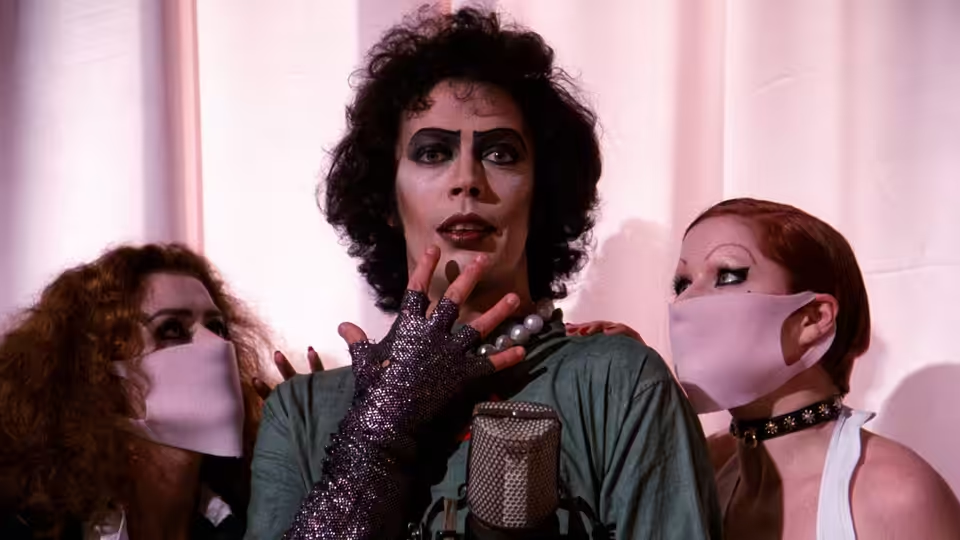
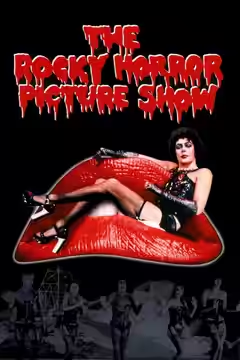
Tim Curry steps out of a lift in a corset and the film is his from then on. Richard O’Brien’s songs have survived decades of midnight singalongs; the story runs out long before they do, and the last act is a mess we mostly forgave.
Most of what has been written about The Rocky Horror Picture Show is about the audience: the rice, the water pistols, the shouting at midnight. That is real and it is not the film. Watched on a sofa, with nobody throwing toast, this is a 100-minute rock musical adapted by Jim Sharman and Richard O’Brien from O’Brien’s stage show. It is good, the songs are better than good, Tim Curry is something else again, and the last half hour does not know what it is doing.
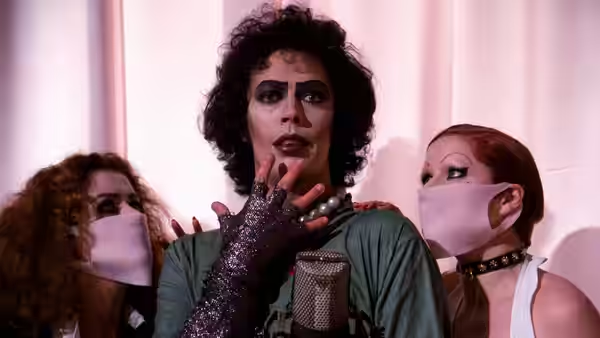
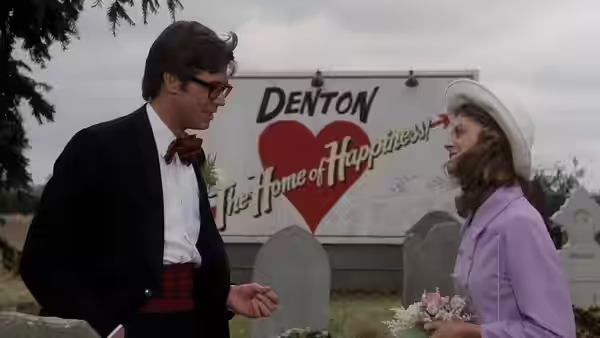
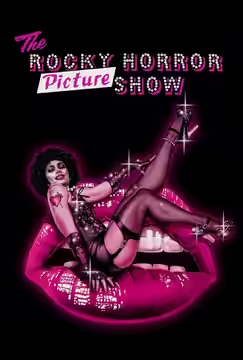
Barry Bostwick and Susan Sarandon play Brad and Janet as if cut off the back of a cereal box, which is the joke, and they hold it. Then Curry comes down in the lift in a corset, a lab coat and a string of pearls and sings Sweet Transvestite to two people dripping on the doormat, and we grinned like idiots. He moves like a man who expects the furniture to get out of his way, and he never once asks the camera to find him funny. Frank is a spoilt genius and also, plainly, a menace, and the film is better whenever it remembers the second part.
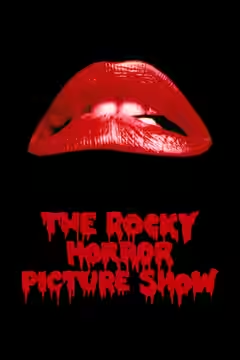
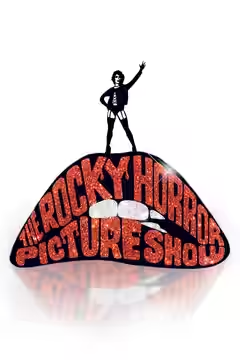
O’Brien wrote the songs, and Richard Hartley’s arrangements give them a proper band, with a piano that sounds as if it has been up all night. Science Fiction/Double Feature, sung over a pair of red lips on a black screen, lists the B-pictures the film is about to raid. Time Warp, with Charles Gray’s Criminologist rising from his desk to demonstrate the steps from a diagram, is a dance-craze record from a decade that had stopped having them, and it is why the film has never gone away. Graeme Clifford cuts back to Gray’s book-lined study often enough that the whole thing plays as a lecture with songs, which suits it.
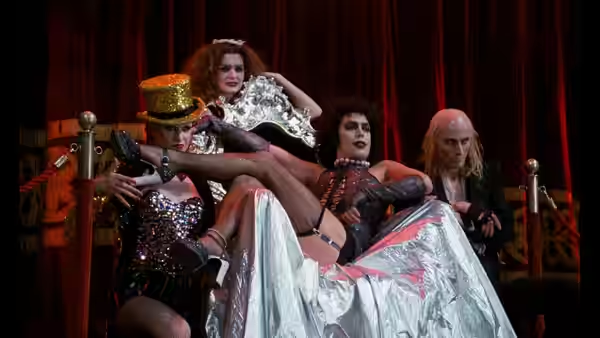
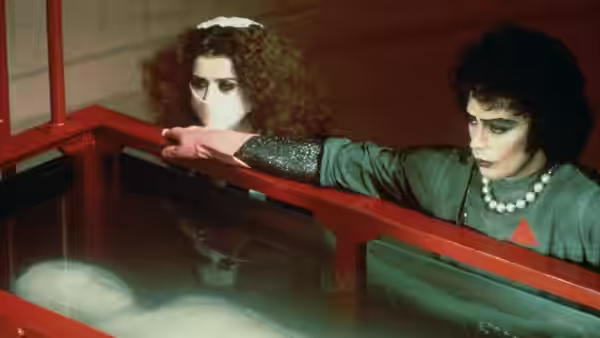
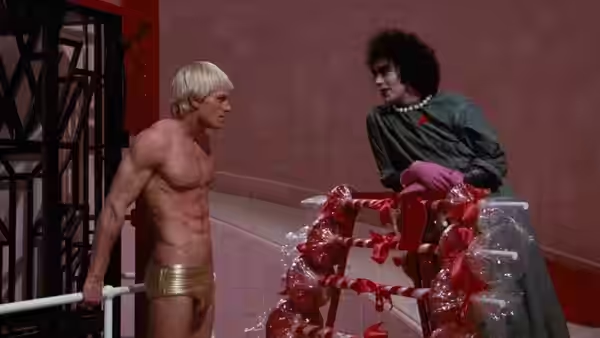
Brian Thomson’s castle is a Hammer house on a budget that would not have paid for Hammer’s cobwebs, and Peter Suschitzky lights it that way, rain on the windows and not much else. The laboratory is a change of key, pink tiles and a tank and a surgeon’s gallery for the guests. Sue Blane’s costumes have outlasted everyone’s memory of the plot: Frank’s corset, Columbia’s sequinned tailcoat and gold top hat, Riff Raff’s coat gone shiny at the elbows, and gold shorts for Peter Hinwood’s Rocky that do a great deal of the acting.
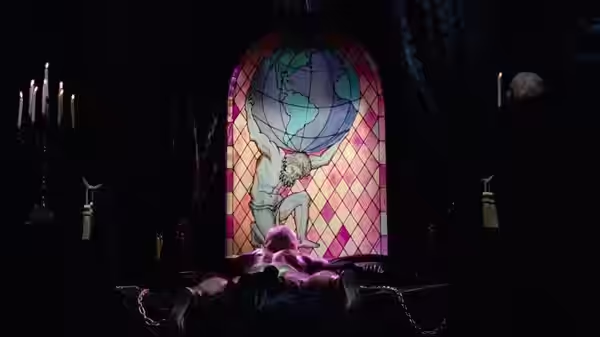
The problem is Sharman. He directed the stage show and films this one from the back of the stalls: the camera sits square to the set, the cast walk on and off, and when a number wants to build he cuts wider. After the dinner scene, which we will not describe, the script stops being a story about Brad and Janet and becomes a series of things that happen to them, and then things that simply happen. There is a stretch near the end, on a stage with a swimming pool in front of it, where we lost track of who wanted what and nobody on screen seemed to know either. We were bored, twenty minutes from the end of a film that had held us by the lapels for an hour.
O’Brien gives himself a butler with a hunch and a grievance and plays him dead straight, which is funnier than any line. Patricia Quinn’s Magenta owns the lips in the opening and a laugh like a drain. Meat Loaf arrives on a motorcycle out of a freezer for one song, the loudest three minutes in the film. Sarandon is the surprise: her Janet goes from prim to willing inside Touch-a, Touch-a, Touch Me, and she plays it as a joke and a confession at once.
Most critics put it a little higher than we do, and most of them are half reviewing the party. The film underneath it is a good hour, a puzzled last reel, a handful of songs that have outlived their story, and a lead performance nobody since has got near. Watch it at home first, so that the next time someone hands you a newspaper and a water pistol you know what you are shouting at.