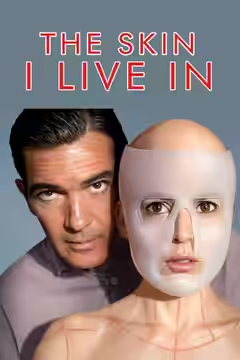
Pedro Almodóvar’s surgical thriller is disturbing, carefully made and held together by Antonio Banderas and Elena Anaya. An overextended flashback costs it momentum, but the performances keep its cruelties from becoming merely clever.
The Skin I Live In is a gripping surgical thriller that loses some force by explaining itself at length. Pedro Almodóvar treats the doctor’s experiment with a seriousness that makes the grotesque premise harder to shrug off. He also allows the melodrama to be melodramatic, which takes nerve when the subject already risks seeming absurd. The combination works because the people involved remain interesting while the plot keeps its information to itself.
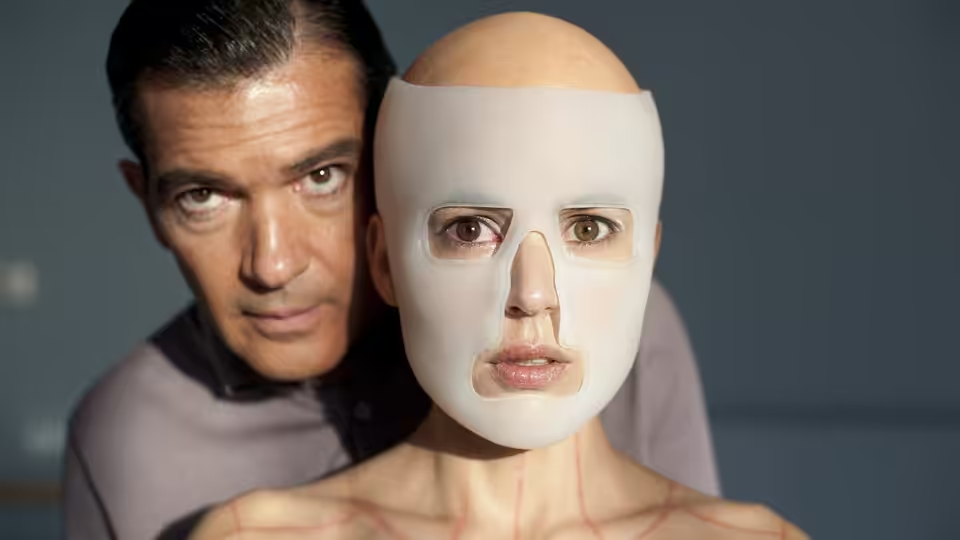
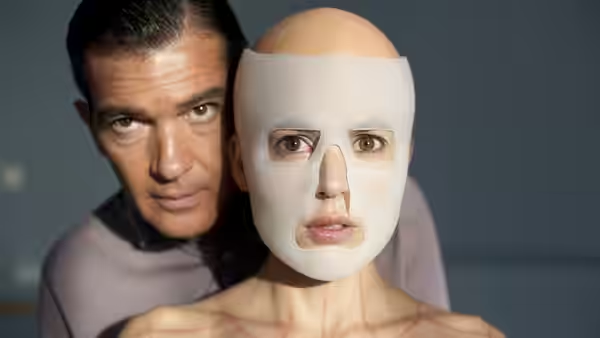
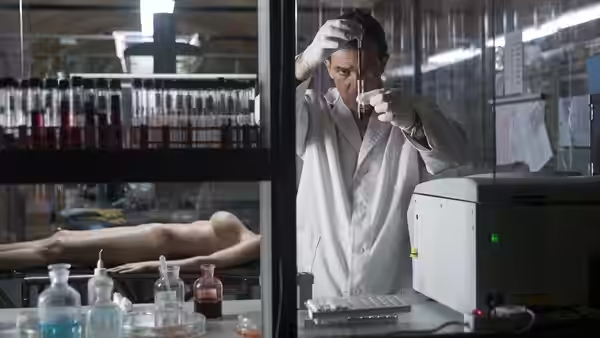
Antonio Banderas makes Dr. Robert Ledgard convincing because the performance never begs us to recognise a monster. There is assurance in his manner, and enough charm to make that assurance uncomfortable. The actor’s restraint lets the doctor’s obsession register without making every moment a warning, which is useful in a film already carrying so much mystery. We were unnerved by how readily we accepted his authority: the confidence with which he approaches the experiment makes it harder to dismiss him as merely deranged.
Elena Anaya has the more difficult task as Vera Cruz, since the screenplay withholds so much about her. She gives that uncertainty enough feeling to prevent it becoming merely an invitation to guess. Her performance keeps our attention on the person involved in the experiment, even when the plot encourages us to concentrate on how it all fits together. She makes it possible to care about Vera without knowing everything about her.
José Luis Alcaine makes the surgical imagery disconcertingly attractive. The control of the compositions encourages us to keep looking, rather than granting the easy relief of turning away from something crudely horrible. Antxón Gómez’s production design adds to that discomfort through its richness: these are settings we are invited to enjoy before we consider what happens within them. Paco Delgado’s costumes belong to the same carefully pleasing visual scheme. There is a risk that all this good taste will soften the horror, but for us the temptation to admire the image makes the experience worse.
Alberto Iglesias supplies music with enough force to support the film’s unabashed melodrama. The score can be enjoyed for its own extravagance, but it also helps the film move between dread and something closer to fascination. José Salcedo’s editing is persuasive when the story slips between past and present without stopping to announce how clever it is being. Those changes ask us to reconsider what we think we know, and mostly arrive before curiosity becomes impatience.
The extended flashback is where that patience is tested. Pedro Almodóvar’s screenplay spends too long explaining earlier events, and José Salcedo cannot make the interruption feel as tense as the mystery it interrupts. We do not need every answer quickly, but we do need the telling to retain some pressure of its own. After a while we found ourselves listening chiefly for information. That is a poor use of this cast.
As a mad-doctor film, it places an unusually large burden on the performances. It asks us to believe that someone could carry out this experiment, and that someone else must live with it. The actors make those people credible even when the plotting grows cumbersome. Leave it for a night when being unsettled is part of the plan.