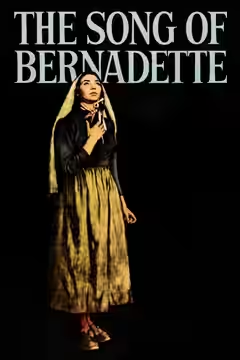
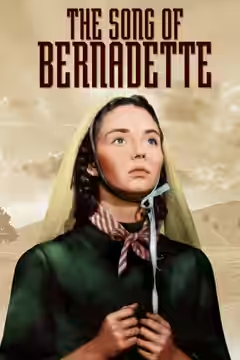
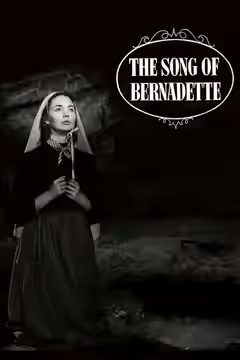
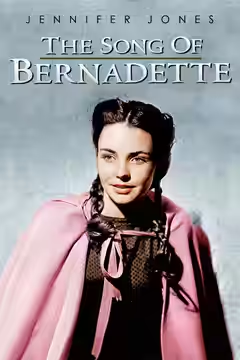
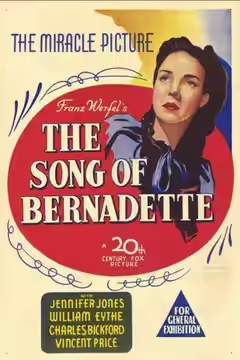
Henry King’s film of Franz Werfel’s novel is sincere, handsomely lit and a good hour too long. Jennifer Jones plays the visionary as a plain, puzzled girl with no cunning at all, and that is the main reason it survives its own solemnity.
Henry King’s film of Franz Werfel’s novel opens on a title card. For those who believe in God, it says, no explanation is necessary; for those who do not, no explanation is possible. It then spends 156 minutes explaining. The Song of Bernadette is sincere, careful and handsomely lit, and it is an hour too long, and the hour it could lose is the one in which men in frock coats ask a fourteen-year-old the same question in different rooms.
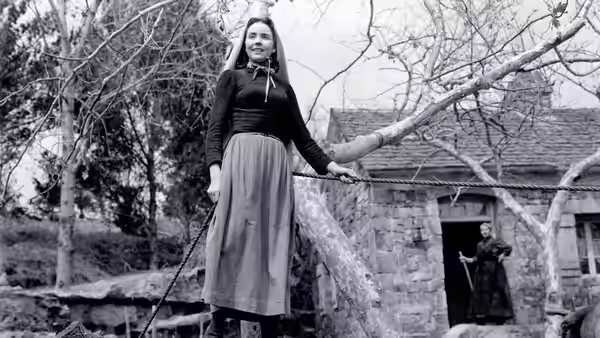
The first half hour is the best. The Soubirous family have fallen into poverty and live in the town’s disused jail, and George Seaton’s script takes its time over it: Roman Bohnen’s François going out each morning to look for a day’s work and coming back without one, Anne Revere’s Louise counting what is left, damp on the walls. Arthur Charles Miller shoots this in hard grey daylight with proper blacks in the corners, and it looks like a place where people are cold. Jennifer Jones plays Bernadette as a slow, dutiful girl, dull at her lessons, who never understands why anyone is interested in her and has nothing to protect herself with. It is the right choice and she holds it for two and a half hours.
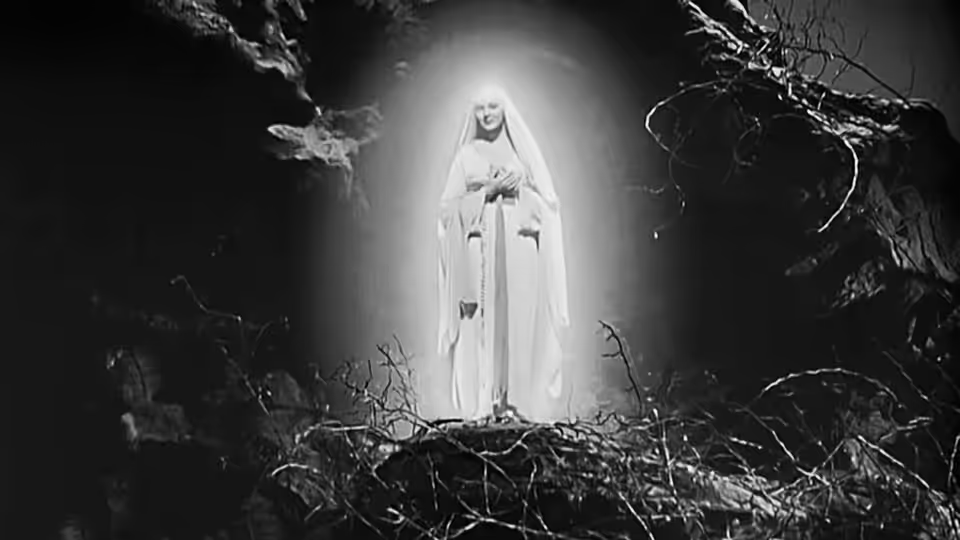
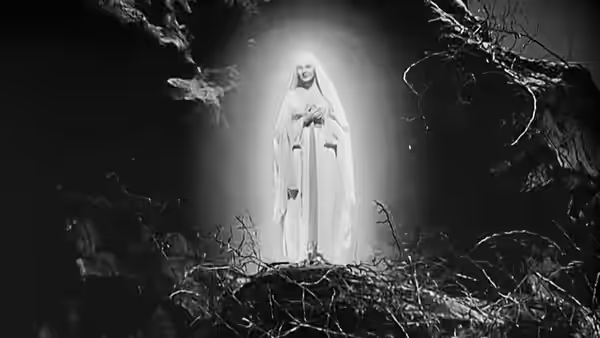
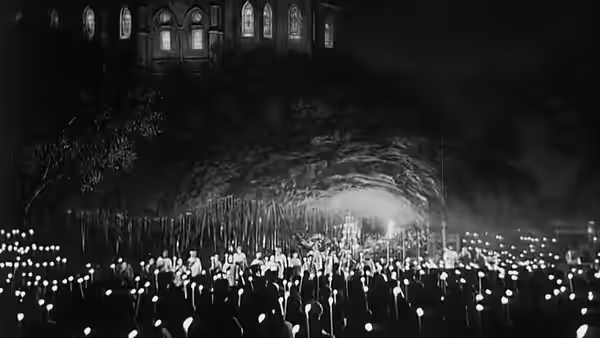
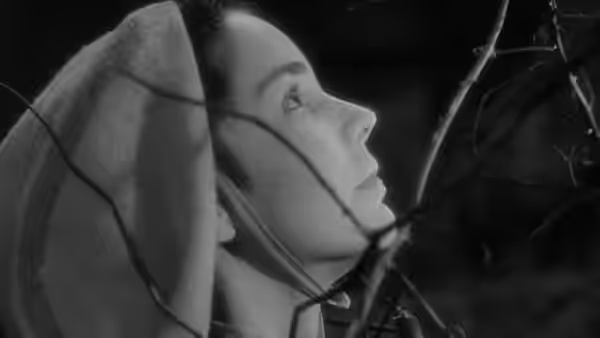
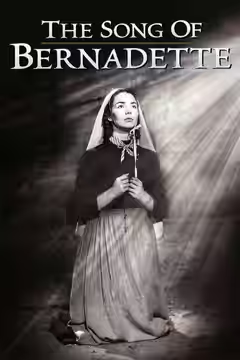
Then she goes to the grotto, Miller’s light goes soft, Alfred Newman’s choir comes in, and we see what she sees. That is the film’s real decision and its chief weakness. Werfel’s card promised not to explain; King shows us the lady in a haze of white so that we need not make up our own minds. Once the vision is on screen the doubters are simply wrong, and two hours of watching people be wrong is a long time, however well they are dressed.
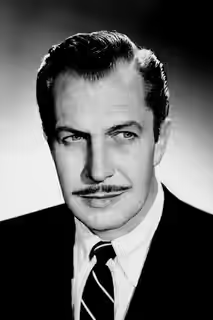
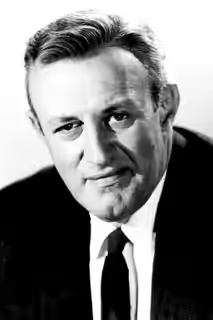
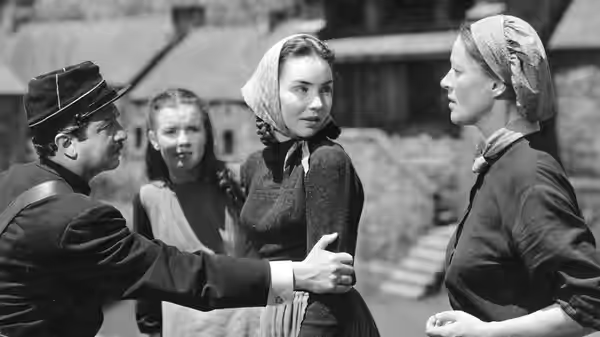
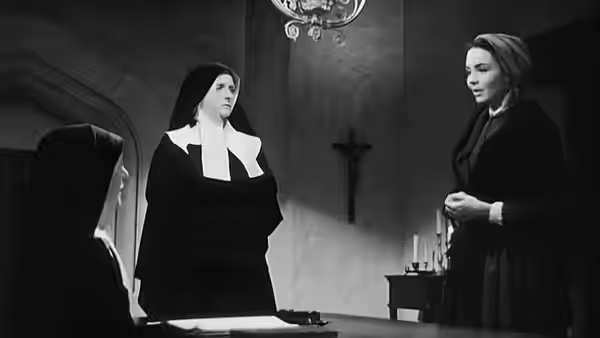
They are well dressed. René Hubert puts the prosecutor Dutour (Vincent Price), the police commissioner Jacomet (Charles Dingle) and Mayor Lacade (Aubrey Mather) in black broadcloth and Bernadette in a white hood and patched wool, so each frame has made its case before anyone speaks. Price is good, dry and quietly contemptuous, a man who does not believe and resents being asked to. Lee J. Cobb’s Dozous examines the girl, finds nothing wrong with her and says so. But the interrogations come one after another and each ends where the last did, and Barbara McLean lets every scene run to its natural close and then a little past it. Somewhere in the middle hour we were bored, and then irritated, because the film had already told us who was right and was now making us wait for the characters to catch up.
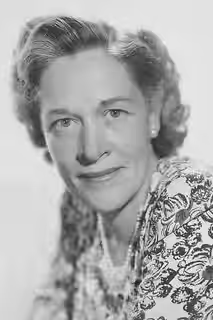
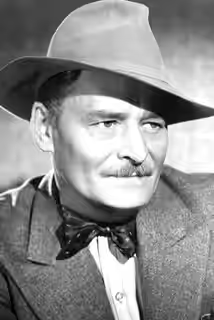
The two who matter are the priest and the nun. Charles Bickford’s Father Peyramale is a big, tired man who wants the child to go away and cannot make her, and Bickford lets us watch him lose the argument with himself one visit at a time. Gladys Cooper’s Sister Vauzous has suffered for God all her life and cannot forgive a lazy pupil for being chosen instead; it is the film’s one honest look at envy and it arrives late. What moved us, more than we expected, was smaller. Dutour asks Bernadette what the lady wants, and Jones answers that she does not know. No tears, no light on her face, just a fact given by someone with nothing to gain from it. For the length of that scene we believed her.
Newman’s score has a hymn at its centre that swells whenever the grotto glows, and it tells us what to feel at every turn. His quieter writing for the family scenes is better. William Eythe’s Antoine is given almost nothing to do, and Patricia Morison’s Empress Eugenie belongs to the second half, which we will leave alone.
Hollywood’s religious pictures of the 1940s tend towards either the circus or the sermon. This is the sermon, but it is a decent one: it never sneers at the men who doubt, and it never pretends Bernadette is clever. See it for Jones, for Bickford and for the first half hour of poverty, which is the truest thing in it. It runs 156 minutes and carries a U, and it is a Sunday afternoon film in the exact sense that it will still be on when you wake up.